Skin Booster Pain: How Numbing and Treatment Area Shape the Experience
Where skin booster treatment discomfort comes from, what topical numbing, cooling and nerve blocks each reduce, and how the treatment area and injection volume change what you feel.
Written by ATTITUDE Clinic Editorial Team
Most people asking about skin boosters open the consultation with the same questions: "How much does it hurt?" and "Do I have to have numbing?" Not a few put the treatment off because of the needle. How much discomfort you feel depends less on the product name than on where and how deep the needle goes, how much goes in at once, and how numbing was prepared.
The short answer first
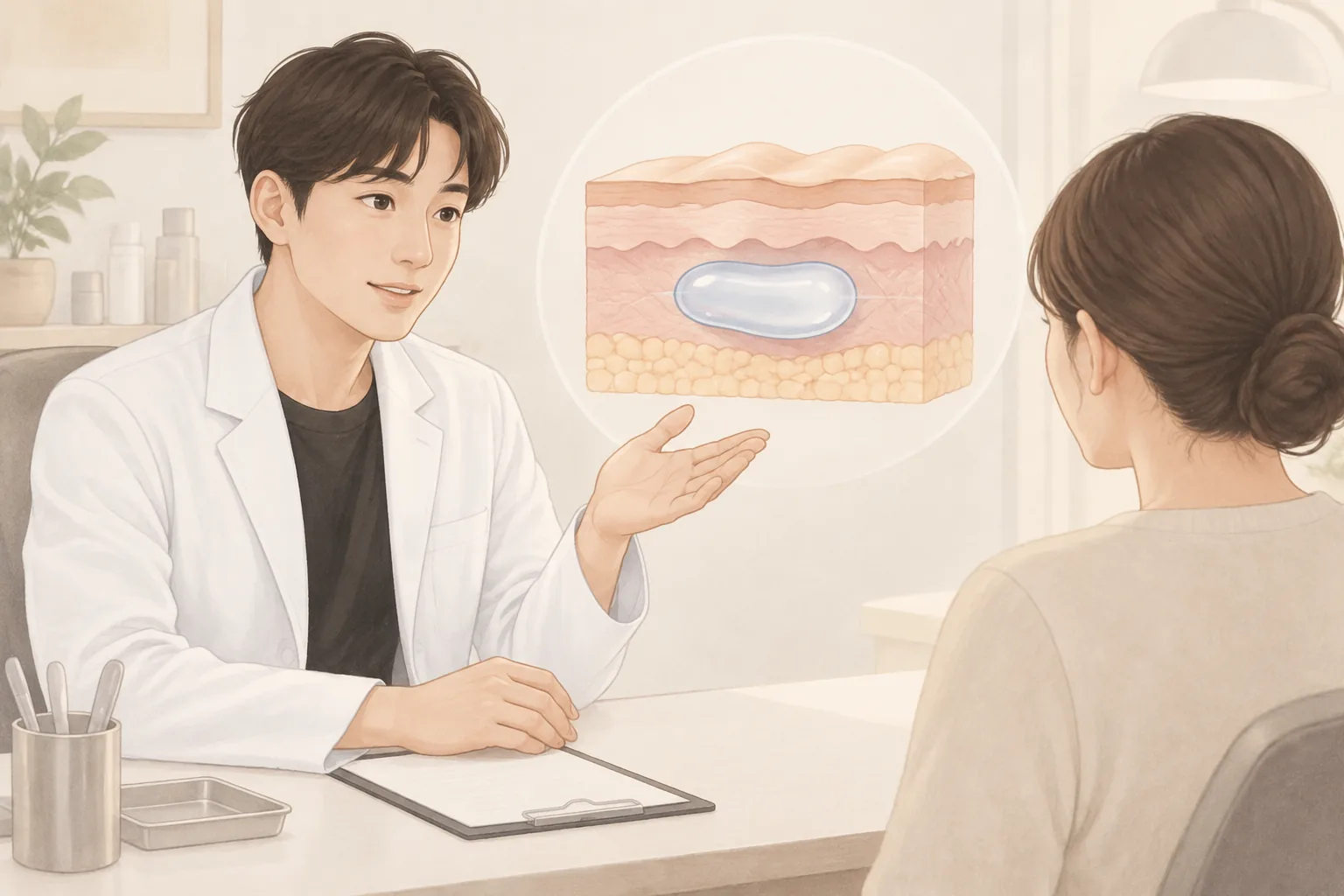
Discomfort during a skin booster treatment comes from two things overlapping: the sensation of the needle passing through the skin, and the pressure of tissue stretching as viscous hyaluronic acid is pushed in. The same product feels stronger in sensitive areas like under the eyes or the lips, and when more volume means more injection points, the treatment also takes longer. Numbing starts with topical numbing, with cooling or a nerve block (an injection that temporarily blocks sensory nerves) added when needed. Rather than promising no pain at all, the realistic goal is to reduce it as much as the area and depth allow. How much you will feel is estimated at consultation based on skin thickness, sensitivity and the areas to be treated.
Where does needle pain come from?
Discomfort from an injectable treatment is a mix of two things: the prick as the needle enters the skin, and the pressure of the injected fluid spreading and making room in the tissue. Skin boosters such as Hilowave are hyaluronic acid based, and because the fluid is not thin, pushing the syringe takes force, which leaves a heavier sensation.
Skin differs by layer and by area in how much pain it registers. The same needle feels different depending on how deep it reaches, and on the same face the under-eye area and the cheek produce entirely different sensations. The American Academy of Dermatology's filler guide notes that numbing methods vary by area. It gives the example that lips often get a nerve block, while hands rarely need numbing at all.
Under the eyes, around the lips and beside the nose are thin-skinned, frequently moving areas that feel the same stimulus more keenly. The cheeks and cheekbones, by contrast, need the product spread over a wide area, so the number of injection points rises, the treatment runs longer and fatigue builds. What sets the total amount of discomfort is less the force of a single needle pass than the number of injection points and the speed of pushing.
How is numbing prepared?
Numbing does not come down to a single method. According to the AAD filler guide, the method used before a treatment — ice (cooling), a numbing agent applied to the skin, or a nerve block injection — depends on what is needed.
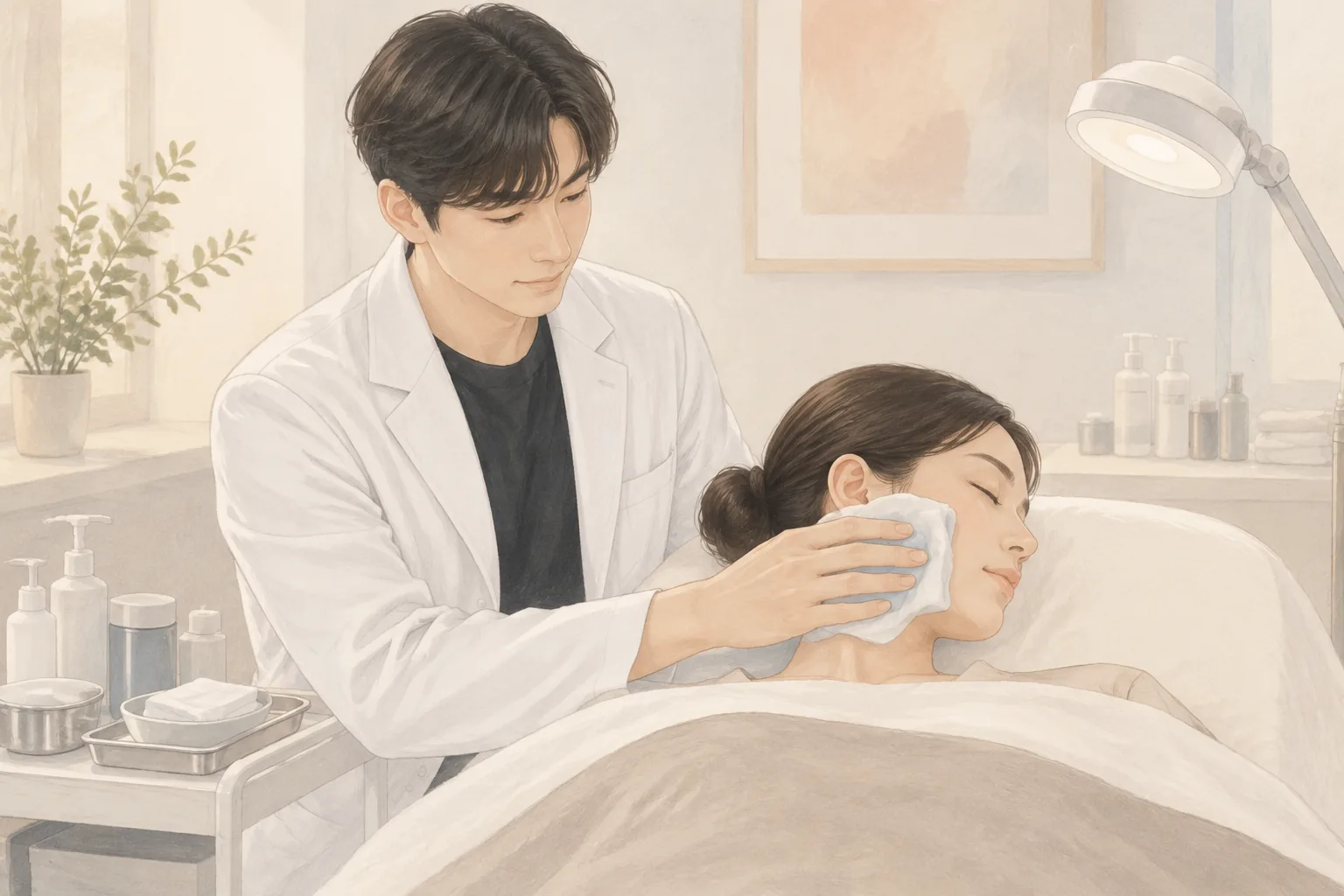
Cooling chills the skin just before treatment to dull sensation. Preparation is short and it can be reapplied during the treatment, so it works well alongside other methods when there are few injection points or surface sensation is the main issue. Topical numbing means applying a cream and waiting, which takes separate time. It mainly reduces the pricking at the surface and does not erase the pressure felt deeper down.
A nerve block is an injection that temporarily blocks sensory nerves. It is considered for sensitive areas like the lips, and because it means one more injection for numbing, the treatment sequence and total time have to be considered together. ATTITUDE Clinic, as explained in its laser treatment guide, reduces discomfort with methods such as topical numbing when needed, and the doctor performs the treatment directly.
If you have ever reacted to a numbing cream or an injectable numbing agent, be sure to say so before treatment.
Area and volume change the experience
A volume of Hilowave 2cc is not placed in one spot but divided across several injection points. Treating the nasolabial folds and cheeks together naturally adds injection points, and thin areas like under the eyes are injected in small amounts, several times. The same 2cc takes different amounts of time depending on whether it is concentrated on one side of the face or split between both cheeks, and as time goes on, tension turns into fatigue and sensitivity can rise. That is why the consultation settles which area comes first, and whether everything is done in one visit or split up.
How it feels after the numbing wears off also varies by area. The collagen injection column notes that redness and stinging at the injection site can last from a few hours to the same day, temporary fullness and mild swelling 1–3 days, and bruising can take 1 week or more to fade once it appears. Frequently touching the injection marks makes soreness linger, so it is better to avoid pressing or rubbing hard.
Should you tough it out if it hurts during treatment?
You do not have to. ATTITUDE Clinic advises patients to speak up right away if anything feels hard to endure, and strength and speed are adjusted each time. Enduring pain for a long time raises tension, so the same stimulus feels stronger, and breathing shortens while the treatment drags on.
Some things are worth agreeing on in advance: where to pause and rest, whether to split the volume injected at one time, and whether to add numbing. The AAD's guidance on asking questions also recommends asking beforehand whether numbing will be used. Simply asking makes the conversation on treatment day much easier.
Table 1 Should you tough it out if it hurts during treatment?
Preparation
What it does
Characteristics
Best suited to
Cooling (ice, cooling device)
Chills the skin just before and during treatment to dull sensation
Quick to prepare and can be used immediately
Few injection points, or surface sensation is the main issue
Topical numbing cream
Applied and left to reduce surface sensation
Needs separate application and waiting time
Standard preparation for facial injectables
Nerve block (injectable numbing)
Temporarily blocks sensory nerves
Requires one more injection and more time
Sensitive areas such as the lips
Adjusting injection speed and volume
Reduces the amount injected at one time and the speed of pushing
Changes the experience most when combined with numbing
When pressure is strong, or over wide areas
Swipe sideways to see the whole table.
In summary Numbing works best when combined to suit the area and depth. Surface pricking is managed with cream and cooling; deep pressure with injection speed and volume. Which combination fits you is decided at consultation based on skin thickness, sensitivity and the treatment area.
If this sounds like you
When a wedding or a shoot is a few weeks away
Injection marks and swelling can be noticeable on the day and the day after. Scheduling a few days of buffer rather than the day right before an important date leaves room to adjust. Telling the clinic your schedule at consultation lets the area and volume be planned around it.
When it is your first injection and you are worried about the needle
For a first time, tension about the needle can amplify how much pain you feel. Deciding in advance which numbing will be used and which area comes first makes treatment day easier. During the treatment, simply squeezing your hand lightly or lengthening your breathing can release tension.
Skin that reddens easily or is sensitive
If cosmetics usually sting or redness lingers after treatments, say so first. That history becomes the baseline when choosing the numbing method and treatment intensity. Afterwards, allow extra time for soothing and sun protection.
Visitors on a short stay
With a fixed itinerary, how far the treatment date sits from your flight matters. Allow for the time injection marks and swelling take to settle, count the numbing preparation time, and book with room to spare.
Tell us before your consultation Please mention recent sun exposure, medications you take along with the skincare ingredients you use, any past reaction to numbing cream or injectable numbing, whether you are pregnant or breastfeeding, inflammation at the treatment site or a history of lip herpes, and the dates of any wedding, shoot or flight.
How ATTITUDE Clinic handles this
AI skin analysis and records Pigmentation, redness, texture, dryness and previous treatment history are recorded and organized with a device. The analysis tool records information to support the consultation and is not a medical diagnosis.
Doctor consultation Your records, together with pain sensitivity, schedule and any history of reactions to numbing, set the areas, volume and numbing method. Which numbing will be used and what will guide adjustments during treatment are agreed in advance.
Numbing preparation and treatment by the doctor Discomfort is reduced with methods such as topical numbing, and the doctor performs the treatment directly. If anything feels hard to endure during treatment, you can say so right away, and speed and volume are adjusted on the spot.
Post-treatment check and aftercare guidance Redness, swelling and the progress of injection marks are checked, and aftercare is explained in the order of soothing, moisturizing and sun protection.
Four steps your doctor sees to in person
From the diagnostic device to the treatment bed, the doctor you first consult takes care of everything.
01
Precision diagnosis
In a private diagnosis room the whole face is photographed, recording even skin conditions that are hard to see with the eye.
02
Skin analysis
The doctor goes through your pore, pigmentation, wrinkle and firmness results with you on screen and explains what comes first.
03
One-to-one design
With your skin, the balance of your face, the change you want and your schedule in view, you decide the treatment and its extent together.
04
Treatment by your doctor
The doctor who consulted you performs the treatment from start to finish in a private treatment room. No one takes over halfway.
“I take injection pain seriously.”
Co-Director Dr. Lee Dong Hun
Many people hesitate over injection treatments because they hurt. So we went back over everything, from the anesthetic to the products used.
Careful numbing, unhurried timingWe allow plenty of time for a special numbing cream to take full effect, and add anesthetic injections for the treatments and areas that need them.
Fine needles, finished quicklyInjection treatments use fine needles, and the doctor finishes them personally in a short time, adjusting along the way by watching how you are doing.
Even the product formulation countsThe same treatment can feel more or less demanding depending on the product, so we take that into account too.
The anesthetic method and whether it is used are decided after an examination, according to the treatment, the area and your condition. How much it hurts varies from person to person.
ATTITUDE Clinic follows the principles of genuine product, exact dose and fixed price. The treatments and pricing page lists Hilowave 2cc at a fixed price of KRW 880,000 (VAT excluded).
Aftercare and side effects
Soothing Redness and heat may remain right after treatment, so the skin is cooled to calm it. Do not press hard or massage the injection sites.
Moisturizing Once the skin has calmed, replenish moisture so the skin barrier can recover. Avoid exfoliation and harsh scrubs for the period you are advised.
Sun protection Reapply sunscreen carefully throughout the recovery period. Avoid saunas, alcohol and strenuous exercise on the day.
Checking progress Watch whether injection marks, bruising and swelling are fading, and come in if nodules or pain persist.
Common reactions are injection marks, redness, stinging, swelling, bruising and soreness to the touch. As the collagen injection column notes, nodules, foreign-body reactions, allergic reactions and infection can occur less commonly. If the injection site turns white, mottled, bluish or black, or you have worsening pain or changes in vision, do not wait — seek care right away. If swelling, pain or fever persist, bruising lasts a long time, or you feel a lump, it is safer to have it checked rather than wait for your next appointment.
Frequently asked questions
How much does a skin booster hurt?
There is a mix of the prick at the moment of injection and the pressure as the fluid spreads, and it varies with the area, the volume and the numbing preparation. Under the eyes and on the lips are sensitive, while the cheeks and cheekbones need wide spreading, which tends to make the session longer. Topical numbing reduces surface sensation, but pressure deeper down can remain. It is hard to put a number on it in advance; at consultation it is estimated based on skin thickness, sensitivity and the number of injection points.
How long before treatment should numbing cream be applied?
Numbing cream needs time to be applied and to sit, so preparation can take longer than the treatment itself. When booking, including preparation time as well as treatment time keeps you from feeling rushed. Application time and products differ by clinic, so it is more accurate to check at consultation. At your pre-treatment consultation, ask how long the numbing cream should be applied and left on, and whether that time is included in your appointment. Starting treatment before numbing has taken full effect can increase discomfort, so it is better to allow generous preparation time.
Can numbing get you through sensitive areas like the lips or under the eyes?
Numbing methods differ by area. The AAD filler guide notes that a nerve block is often used for sensitive areas like the lips. Under the eyes, the skin is thin, so volume and depth must be handled carefully, and pressure can remain even with numbing. Which method to use is decided based on the area and skin condition. Pressure can remain even after numbing, so speak up right away if you are uncomfortable during treatment. Deciding at consultation which numbing will be used for each area and how injection speed will be adjusted makes the treatment much more comfortable.
Should I tough it out if it hurts during treatment?
You do not have to. If anything feels hard to endure, say so right away, and the injection speed and volume are reduced or a short break is taken. The longer you hold in pain, the more tension builds and the stronger it feels. Asking about numbing and recovery time before treatment, as the AAD's guidance on asking questions suggests, helps for the same reason.
What should I check before choosing a clinic?
What a clinic checks before treatment matters more than its equipment list. The key points are who performs the treatment, how much experience they have with it, how numbing is prepared, and whether recovery time and risks are explained. The AAD's guidance on asking questions recommends the same items as questions to ask. Also consider whether the clinic is a place where you can be checked if something feels off after treatment.
At a glance
Table 2 At a glance
Item
Key point
What pain is
Needle sensation and injection pressure combined
Difference by area
Lips and under-eyes are sensitive; cheeks and cheekbones depend on injection points and time
Numbing basics
Topical numbing as standard, with cooling and nerve blocks added when needed
Adjusting during treatment
Reduce speed and volume, and speak up right away
After treatment
Injection marks, redness, swelling and bruising are common; nodules are rare
When to call right away
Worsening pain, changes in skin color, changes in vision
This article offers general health information. It is not a substitute for diagnosis or treatment based on your own condition, so please talk through your situation with a doctor.