Skin Treatment Consultation Notes: What to Record Before You Consent?
What to write down before consenting to a skin treatment in Gangnam, Seoul — diagnosis, goals, alternatives, priorities, who performs the procedure, risks, recovery and costs — and how to review them at your next consultation.
Written by ATTITUDE Clinic Editorial Team
After a skin treatment consultation, there is often a moment when you think, "What exactly was I told today?" In the consultation room, the diagnosis, goals, alternatives and costs all come at once, so even with a consent form in front of you, it can be hard to sort out. This article looks at what should be recorded before consent — diagnosis and goals, alternatives and priorities, who performs the procedure, and risks and costs — and in what order to organize it.
The short answer first
There are 5 things to leave in writing before consent. How your skin was assessed, what you want to improve, what the alternatives are, why this treatment is recommended first, and who will perform it and what risks and costs were explained. The American Academy of Dermatology advises confirming expected results and risks, alternatives, the number of sessions needed and their duration, recovery, preparation and aftercare, and costs during a cosmetic consultation (AAD). If you want to postpone the decision, say so on the spot and ask for the plan and estimate again.
What changes when you keep consultation notes?
What you only keep in memory fades. When you return months later with the same concern, having a record of what judgment was made and in what order makes it much easier to compare progress. Treatments often do not end in a single session, so you need a record that connects the changes and decisions between visits.
According to AAD materials, cosmetic procedures are medical procedures that carry risks, and the process of learning enough during the consultation to make your own decision affects the safety of the outcome (AAD). So notes are less about monitoring the clinic and more about having material to make the same judgment again under the same conditions.
How should you word the diagnosis and goals?
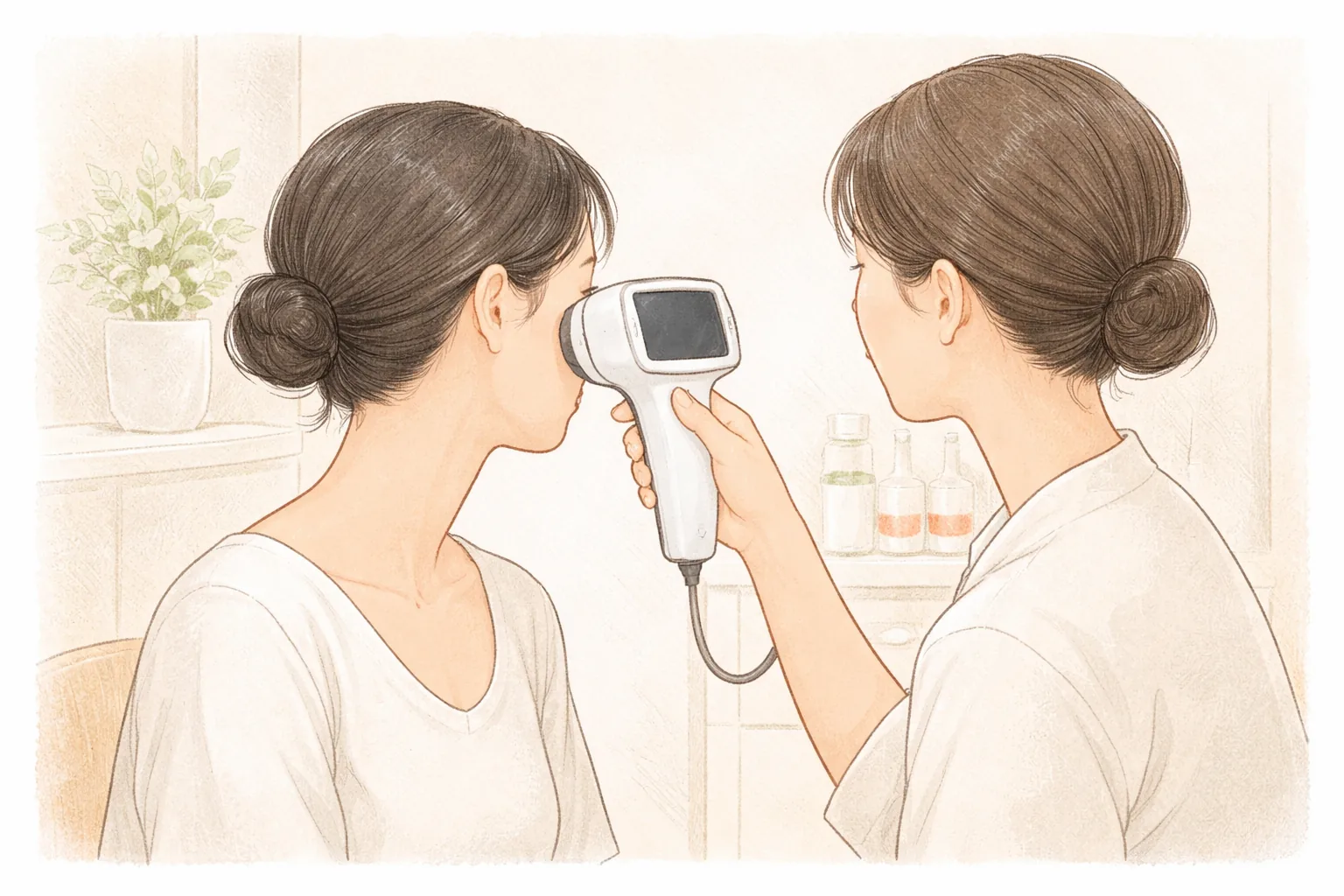
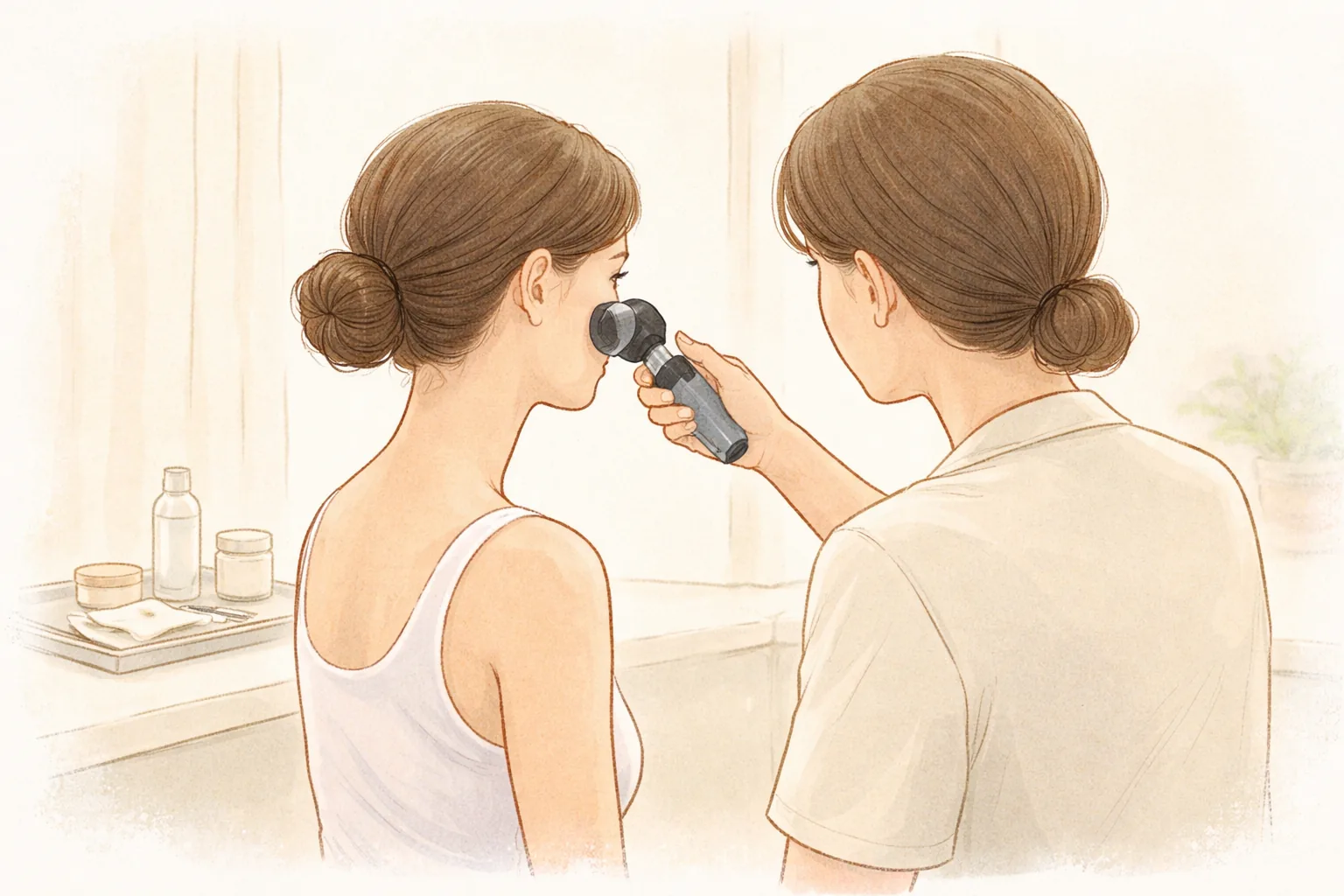
Rather than "my skin feels thinner," it helps the diagnosis to note the area and timing, such as "the temple area has felt hollow since 1 year ago, and it has bothered me more over the past 3 months." In the consultation, you can ask what basis was used to assess your skin. The next step differs depending on whether it was a visual finding, an analysis tool record, or a judgment made together with your history.
It is better to narrow your goal to 1 sentence. Rather than "get rid of spots," writing it in parts, such as "in what order to address pigment and redness separately," also helps set how much of a result to expect. AAD guidance also considers skin condition, age and health status when choosing a treatment, and notes there may be several options (AAD).
How do you check alternatives and priorities?
"Are there other options?" and "What happens if I don't do this now?" are questions you are allowed to ask during a consultation. Alternatives include not only other treatments but also delaying the timing or watching with lifestyle management. For priorities, if you write down why this treatment is recommended first and at what interval the next session is planned, your judgment will not waver at the next consultation.
In the ATTITUDE Clinic column, lasers are not viewed as better the stronger and more often they are done, and the principle is to proceed only as much as needed, with intensity and intervals suited to your skin (Laser column). It is good to check how this principle was applied to your plan during the consultation.
Devices and treatments aim at different targets first
Even for the same "laser," the target differs by wavelength. A laser targeting pigment and a laser targeting red blood vessels use different devices. If you note only the treatment name, it is hard to compare later, so it is better to also note what it targets and which concern it suits.
Table 1 Devices and treatments aim at different targets first
Treatment/device
Target
Concerns mainly considered
What to check in consultation
PicoPlus
Pigment
Pigment concerns such as spots and melasma
Whether low-energy toning is used and the interval
Vbeam
Superficial vessels
Redness, facial flushing
Possibility of bruising and recovery schedule
Erbium YAG laser
Skin surface
Texture refinement, shallow scar texture
Crusting and recovery period
Potenza
Dermis (microneedle radiofrequency)
Pores, scars
Tip type and treatment area
Re2O (hADM)
Dermal extracellular matrix
Thinned skin, elasticity
Injection area, number of sessions, maintenance plan
Swipe sideways to see the whole table.
In short — Even on the same face, spots come from pigment, redness from blood vessels, and rough texture from the surface. So rather than "which device is best," it is natural to first confirm "where my concern comes from," then record the matching treatment name, dosage and area.
How do you record who performs the procedure, the risks, and the costs?
It is good to check and record whether the person who consulted you is the same person who performs the procedure. The ATTITUDE Clinic column explains the sequence in which the doctor judges the cause of the concern based on analysis records, designs the direction, and then performs the procedure personally (Laser column). If the consultant and the practitioner are different, you can also ask who takes over which judgment.
For risks, separating common reactions from rare reactions reduces panic during recovery. Redness, heat sensation and swelling that subside within a few days differ in response from blisters or scars, which are rare but need checking. Also record the recovery period and where to contact if something goes wrong.
For costs, request an itemized estimate and check separately whether VAT, anesthesia and aftercare are included. The ATTITUDE Clinic treatment guide states that all amounts exclude VAT and are listed separately by treatment and product, area, volume and number of sessions (Treatment guide). Because the total cost changes according to the plan the doctor recommends after consultation, it is more accurate to record unit prices and the actual plan separately.
If this sounds like you
If you have a ceremony or photo shoot coming up
A treatment you receive for the first time right before a ceremony can be a burden because redness or sensitized skin may overlap with your schedule. The more room you leave based on the date, the more options you have to adjust intensity and type (Laser column). If you tell them your ceremony date and photo shoot schedule first during the consultation, they can calculate the plan backward.
If you want consistent management
Rather than going strong at once, keeping the interval for your skin to recover and managing regularly is less of a burden. A plan that sets goals and arranges only the necessary treatments at the right times determines the result (Laser column). If there are multiple sessions, recording when to book the next appointment also keeps your schedule from slipping.
If your skin is sensitive or flushes easily
If you repeat treatments before recovery is complete, or if the intensity is high relative to your skin condition, the barrier can weaken and leave sensitivity or redness for longer (Laser column). If cosmetics sting during this period, tell them during the consultation. Treatment intervals vary by laser type, purpose and skin condition, so they are adjusted by observing progress rather than by a uniform number.
If you visited during a short stay
If your stay is fixed, redness or dryness right after treatment can affect your schedule. If you tell them your return date and next event schedule in advance, they can consult on intensity and type accordingly (Laser column). Requesting an appointment and confirming an appointment are different, and it is confirmed after the clinic contacts you (Appointment guide), so if your visit date is tight, it is better to apply with room to spare.
Please tell them before the consultation — Your recent UV exposure, medications and cosmetics you are taking or using (including anticoagulants), allergy and skin disease history, pregnancy or breastfeeding status, previous treatments and how you reacted then, and unavoidable schedules such as ceremonies or travel. Timing and settings change depending on this information.
How ATTITUDE Clinic proceeds
AI skin analysis record — Current skin condition such as pigment, redness, texture and pores is recorded with an analysis tool. This tool records and organizes information to assist the consultation and is not a medical diagnosis; the judgment is made by the doctor (Laser column).
Direction design through doctor consultation — Analysis records are combined with your schedule, pain sensitivity and skin history to decide the treatment type, intensity and timing (Laser column).
Treatment performed directly by the doctor — Topical anesthesia is used as needed to reduce discomfort, the doctor performs the procedure personally, and treatments beyond what is needed are not recommended (Laser column).
Recovery and care guidance — Aftercare precautions and the time to check progress are explained, and that record carries into the next consultation.
Devices listed in the treatment guide for this topic include laser and radiofrequency devices such as PicoPlus, Vbeam, Erbium YAG laser and Potenza, as well as Re2O and Rejuran-line skin boosters (Treatment guide). In the consultation, you check together which device will be used at what intensity, and how dosage and area will be set.
Aftercare and side effects
Soothing — Redness and heat right after treatment are common reactions. Do not press or massage the injected area hard (Collagen column).
Moisturizing — Dryness slows recovery, so maintain moisture. Wash your face lightly after 4–6 hours, and makeup is possible from the next day (Collagen column).
UV protection — Apply sunscreen carefully throughout the recovery period. Avoid saunas, strenuous exercise, drinking and exfoliation for the period you are advised (Collagen column, Laser column).
Progress check — Get checked again at the advised time and keep that state as a record.
Common reactions include redness, heat, swelling and stinging. Treatments targeting vessels, such as Vbeam, can cause bruising, and lasers that work on the surface can leave thin crusts. If your skin is dark or tanned, temporary hyperpigmentation can occur (Laser column).
Rare reactions include blisters, hypopigmentation, infection, scarring, and pigment returning. Injection treatments can cause infection, allergic or foreign body reactions, and small nodules, and rarely the injected product can block or damage blood vessels (Collagen column). If redness or heat lasts longer than expected or pain worsens, if the skin at the injection site turns white or mottled, or blue-gray or black, or if there is any change in vision, do not wait and visit to get checked.
Frequently asked questions
Do consultation notes have to be written?
Your own notes are helpful enough. However, if you ask for the plan, estimate and aftercare contact method to be left in writing or by message, it is much easier to check later. Write down what was explained during the consultation as it was, mark anything you did not understand, and ask again at the next consultation. If there are multiple sessions, it is better to also record the plan for each session and the next visit timing.
Can I sign even if I don't understand the explanation?
You can ask for an explanation again for parts you do not understand and postpone the decision. AAD guidance emphasizes the process of making your own decision after sufficiently understanding alternatives and risks during the consultation (AAD). Before signing, if you separate "items explained" and "items still unclear," it becomes clear what more you need to hear when you cannot decide.
How far can I expect treatment results and recovery time?
Each treatment targets different things and reacts differently. AAD's general guidance covers treatment types as a whole and does not define the ingredients or recovery time of a specific device or product (AAD). Even with the same laser, the experience differs by intensity, interval and skin condition (Laser column), so rather than a number like "it heals in a few days," it is more realistic to confirm the settings and recovery plan suited to your skin during the consultation.
Can I get treatment right after the first consultation?
Sometimes that is possible, but you can also make a plan first and split the timing. Requesting an appointment and confirming an appointment are different, and it is confirmed after the clinic contacts you (Appointment guide). If you want consultation and treatment on the same day, leave enough time, and if the treatment requires recovery, it is safer to tell them your next schedule first. At this point, if you get the plan and estimate set during the consultation again, you can calculate the recovery schedule and next visit timing in advance. If you proceed on the same day, also ask about the time needed for topical anesthesia, and keep the aftercare precautions in your notes up to the point you were advised.
What should I compare when choosing a clinic?
Look at the order of the consultation rather than the device list. Does it confirm the cause of the concern first, explain alternatives together, recommend only the necessary treatments, and guide you on pain, recovery and how to contact them afterward? AAD guidance also explains that results depend heavily on the skill and experience of the person performing the procedure (AAD). If there are multiple sessions, whether booking and returning are convenient also has a real impact.
At a glance
Table 2 At a glance
Item
Key point
Diagnosis
Record what basis was used to assess your skin
Goals
Narrow to 1 sentence and note the expected level
Alternatives/priorities
Leave other options and the conditions under which you do not have to do it now
Practitioner
Check whether the consultant and practitioner are the same and whether the doctor performs it personally
Risks/recovery/costs
Separate common and rare reactions, recovery period, and itemized estimate
Aftercare
Keep the progress check timing and contact point in the record
This article offers general health information. It is not a substitute for diagnosis or treatment based on your own condition, so please talk through your situation with a doctor.