Thermage FLX vs Other Thermage Types: How to Choose (Korea Guide)
Thermage FLX vs eye Thermage, and 600-shot vs 900-shot, 225-shot vs 450-shot: we break down what actually differs. From tip types and shot distribution to eye protection, pain and recovery, and what drives results. Here is what to check before you book in Gangnam, Seoul.
Written by ATTITUDE Clinic Editorial Team
How is Thermage FLX different from earlier generations, how do face Thermage and eye Thermage differ, and what exactly determines 225-shot versus 450-shot? Even after booking a consultation, Thermage is one of those treatments where the device names and numbers catch your eye first. In this article, we walk through what actually changes within the Thermage family and what you should use to judge those differences.
The bottom line first
The differences within the Thermage family come down to three things: which tip targets which area, how many shots are delivered, and how the energy is distributed even with the same device. The generation label or total shot count is just a starting point. Actual results depend on skin thickness, where sagging occurs, the area you want to treat, and how much recovery time you have. That is why even with the same Thermage FLX 600 shots, which areas to focus on and which to touch less are decided during consultation. These are also the points to raise at your consultation.
How is Thermage FLX different from earlier generations?
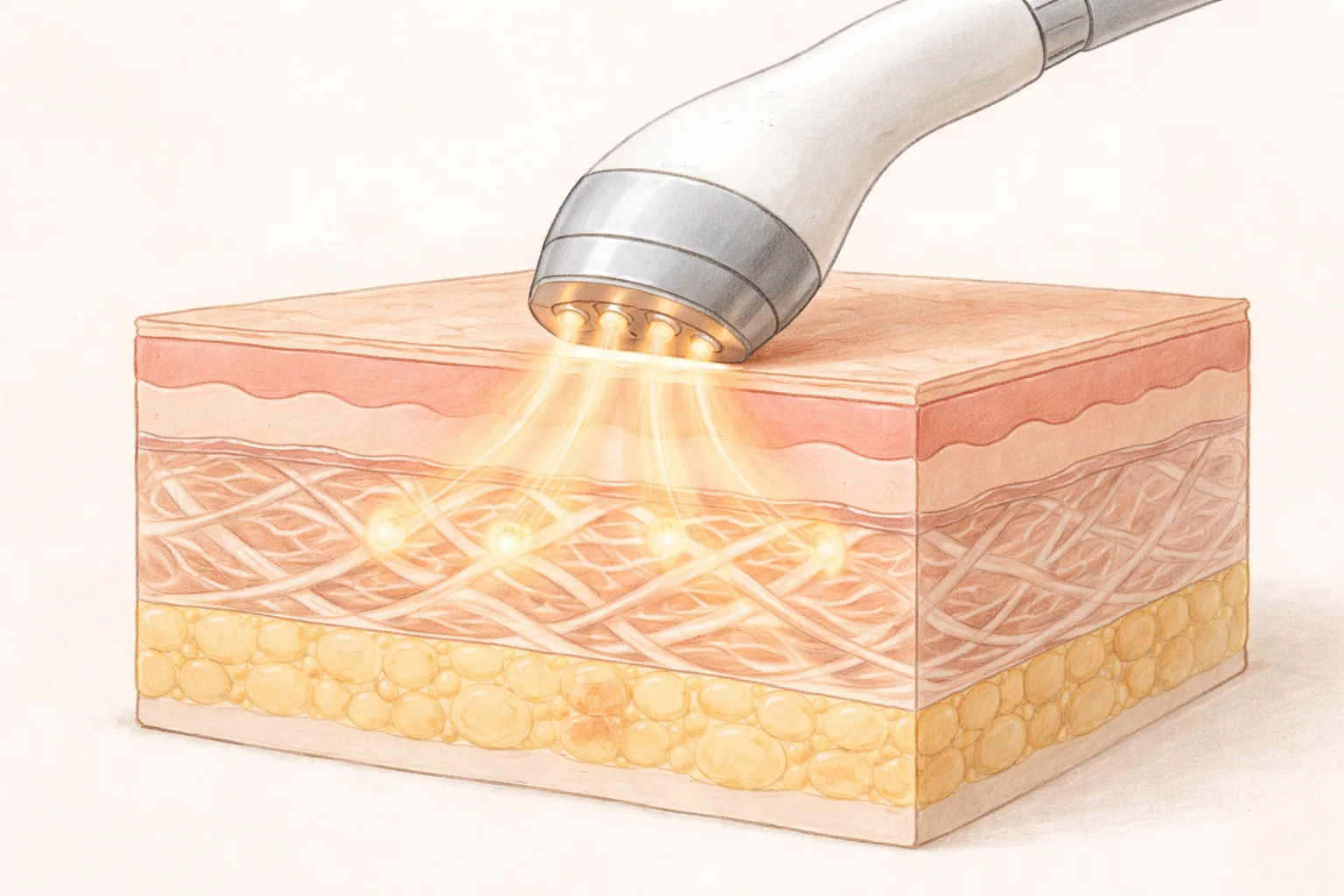
Let us first look at what happens inside the skin. Thermage uses radiofrequency (RF, an electrical energy that turns into heat as it passes through tissue). This heat spreads broadly from the dermis to the subcutaneous fat layer, contracting collagen (the protein that keeps skin firm) and triggering remodeling. ATTITUDE Clinic's column explains this method as broadly heating relatively shallow layers, in contrast to Ultherapy and Shurink, which focus ultrasound on a single point.
Overseas medical sources describe the same flow. DermNet's radiothermoplasty guide explains that a dedicated tip delivers a controlled amount of radiofrequency to the collagen layer, and this heat contracts and tightens collagen while new collagen grows over about 6 months. It also notes that treatment time varies with the area treated and the number of passes, and the entire procedure can take 1–2 hours.
So what differs between FLX and earlier generations? A common misconception here is that the generation label equals a grade of results. In the FDA adverse event report on Thermage, two device names appear together—Thermage CPT and Thermage FLX—and the report cannot confirm which device was actually used. FDA adverse event report This means you cannot rank them by device name alone.
ATTITUDE Clinic's treatment page lists Thermage FLX (Solta) and Thermage Eye. What actually drives results is not the generation label but the tip type, shot placement, energy settings, and how the procedure is performed. Even with the same device and the same shot count, the fine-tuning of intensity per area and adjusting based on skin response during treatment cannot be covered by a manual alone. Why results differ even with the same treatment points to exactly this.
How do face Thermage and eye Thermage differ?
The eye area is the thinnest and most curved part of the face. It is hard to apply the same tip at the same intensity there, so a dedicated eye tip is used separately. According to ATTITUDE Clinic's guide, the face is divided into Thermage FLX 600-shot and 900-shot options, and the eye area into Thermage Eye 225-shot and 450-shot options.
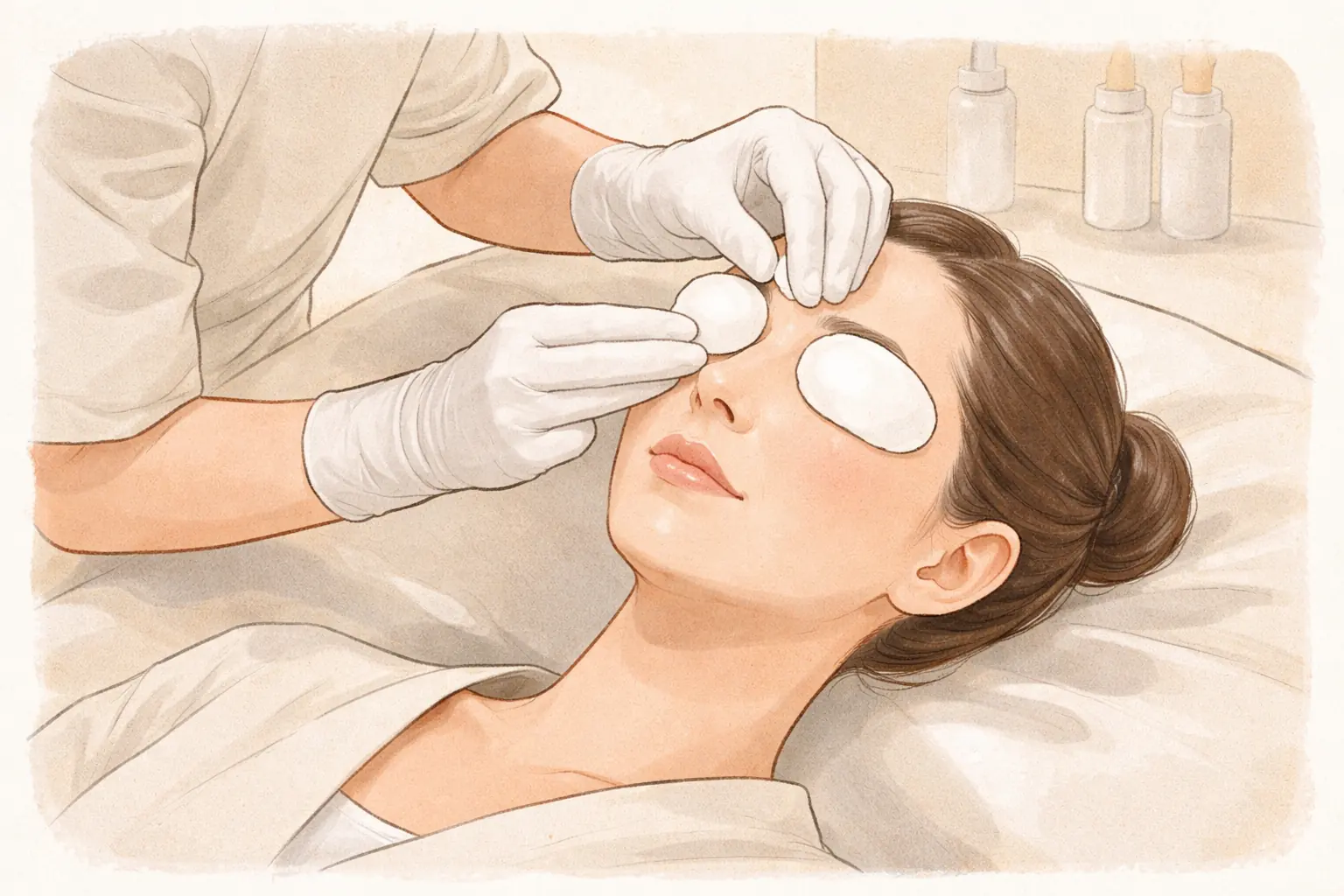
In eye area treatment, eye protection becomes a separate issue. The FDA adverse event report includes a case of eye burns after Thermage, and the manufacturer states that a correctly sized plastic eye shield must be used when treating the eyelids. Metal shields can transmit radiofrequency heat directly to the eye and cause damage, making them unsuitable for Thermage. Corneal damage is also documented as a possible risk during the procedure.
So the face and eye area are not the same Thermage applied to different areas; it is more accurate to view them as separate treatments with different tips and plans. If your concern is overall facial elasticity and the cheeks or jawline, the face tip is the standard. If the concern is thin wrinkles on the eyelids and under-eye area, the eye-specific tip is the standard. Whether to treat both areas on the same day or split them depends on skin response and recovery time.
What determines 600-shot vs 900-shot, and 225-shot vs 450-shot?
Shots are the number of passes. This is the configuration that determines how many times heat is delivered with the same tip, so a larger number generally means a wider area is covered or the same area is covered more densely. Overseas sources also note that treatment time varies with the area and the number of passes.
However, be careful interpreting a higher total shot count as a better treatment. The total amount of heat stimulation and pain are affected by both energy intensity and shot count, and cases requiring strong energy for significant sagging versus low energy for prevention feel very different even for the same treatment.
So the decision order is this: first decide the area to treat, then set the number of shots needed to cover that area, then decide how to distribute energy per area. If your face is thin or certain areas look hollow, you need a consultation that identifies areas to reduce stimulation and areas to touch less. Rather than comparing total shot counts, asking where and how much goes into your face helps you understand the actual plan.
Table 1 What determines 600-shot vs 900-shot, and 225-shot vs 450-shot?
Category
Energy method
Primary target areas and concerns
What to check in consultation
Thermage FLX face (600-shot, 900-shot)
Radiofrequency broadly from dermis to subcutaneous fat
Overall facial elasticity, cheeks and jawline, large areas
How shots are divided across areas, areas to touch less
Eye Thermage (225-shot, 450-shot)
Radiofrequency, eye-specific tip
Thin wrinkles on eyelids and under-eye, eye area elasticity
Eye protection equipment, eye area skin thickness
XERF and Eye XERF
Radiofrequency-based device
Facial and eye area elasticity
Shot configuration and treatment area
Ultherapy and Shurink (comparison)
High-intensity focused ultrasound creating heat points at set depths
Deeper layer sagging, jawline
If sagging is deep, also consider this family
Swipe sideways to see the whole table.
In summary The criteria for choosing within the Thermage family is not the generation name or total shot count, but which tip targets which area and how energy is divided across that area. Face and eye areas require separate tips and separate plans, and shot count follows after the area is set. In consultation, it is better to check where and how the shots go rather than how many there are.
Why do results differ with the same Thermage?
Because starting points differ. How thick your skin is, how much collagen-producing capacity remains, and how quickly your skin responds and recovers vary from person to person. This is hard to judge from a mirror alone, so the doctor examines the skin directly and asks about previous treatment history before deciding the direction.
Plans should also vary per person. Even with the same analysis, which area to treat first, what intensity to use, and when to add other treatments depend on the person's concerns, recovery time, and skin sensitivity. Details of the procedure also affect results. Adjusting intensity per area and adapting based on response during treatment are areas that vary even with the same plan.
Where you set expectations also matters. Overseas sources note that results of Thermage-family treatments are hard to predict. Some see changes immediately or within weeks, some only after 2–3 months, and some see almost no improvement. It tends to suit people with thin faces and early aging especially well, while those with a lot of loose, sagging skin may see smaller improvement. It is also worth remembering that this is not a substitute for surgery. The fact that it can be applied regardless of skin type is a feature that distinguishes it from laser-based treatments.
If this sounds like you
If a ceremony or photo shoot is a few weeks away
Most people can return to daily life immediately after Thermage, but redness and swelling can last 1–2 hours, or several days at most. Late-appearing changes progress over 2–3 months, so if you have a major event, tell the clinic at consultation so the timing can be adjusted.
If the eye area concerns you first
The eye area is thin and highly curved, making it hard to approach the same way as face tips. Whether an eye-specific tip is used, how the eye is protected during treatment, and whether eye thickness is checked before setting energy become the topics of consultation.
If your face is thin or you worry about hollow cheeks
Even with the same total shots, where and how much is distributed changes results and impressions. Whether it is possible to reduce stimulation in hollow areas and concentrate shots in areas with lost elasticity is an item to check. This distribution process is what the director consultation is for.
If you are an international visitor on a short stay
The procedure itself can take 1–2 hours, and redness usually subsides within 1–2 hours, but can last several days in some people. If your return date is fixed, it is better to decide the treatment timing and follow-up method together.
Before your consultation, let us know Recent sun exposure and outdoor activity, medications you take and skincare ingredients you use (retinol, acids, etc.), previous lifting, filler, or skin booster treatments and how you responded, unavoidable events like ceremonies, photo shoots, or business trips, and your sensitivity to pain or anesthesia. If you are considering eye treatment, also mention any eye conditions or lens use.
How ATTITUDE Clinic proceeds
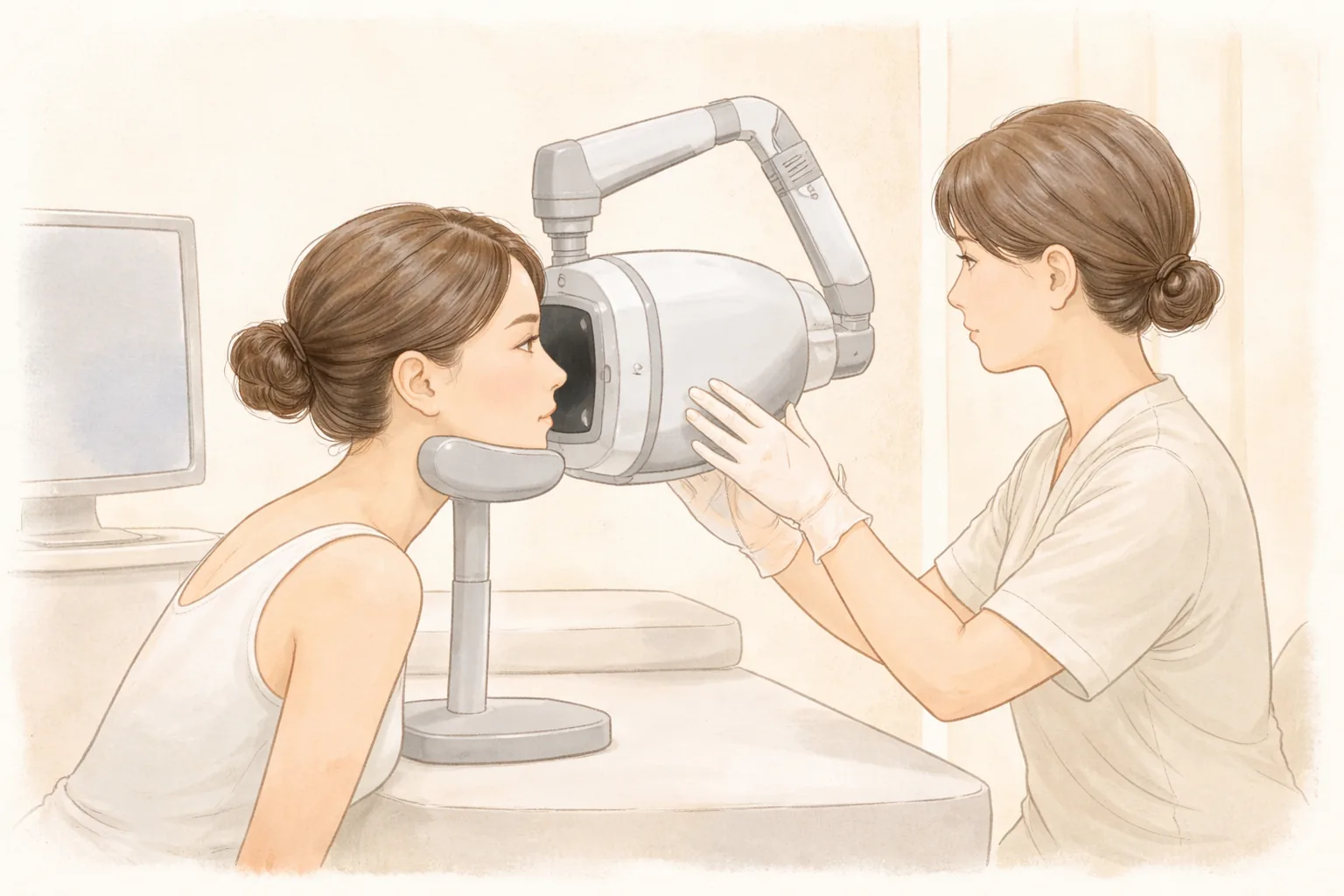
AI skin analysis record — We record and organize your skin condition so you and the doctor look at the same information. The analysis tool is a reference that records and organizes information to support consultation; it does not make medical diagnoses, and judgment rests with the director.
Director consultation — We add your concerns, lifestyle habits, and previous treatment experience to the analysis record to decide together whether to use a face tip or eye-specific tip, where to distribute shots, and what energy intensity to use. What is needed and what is not is also determined here.
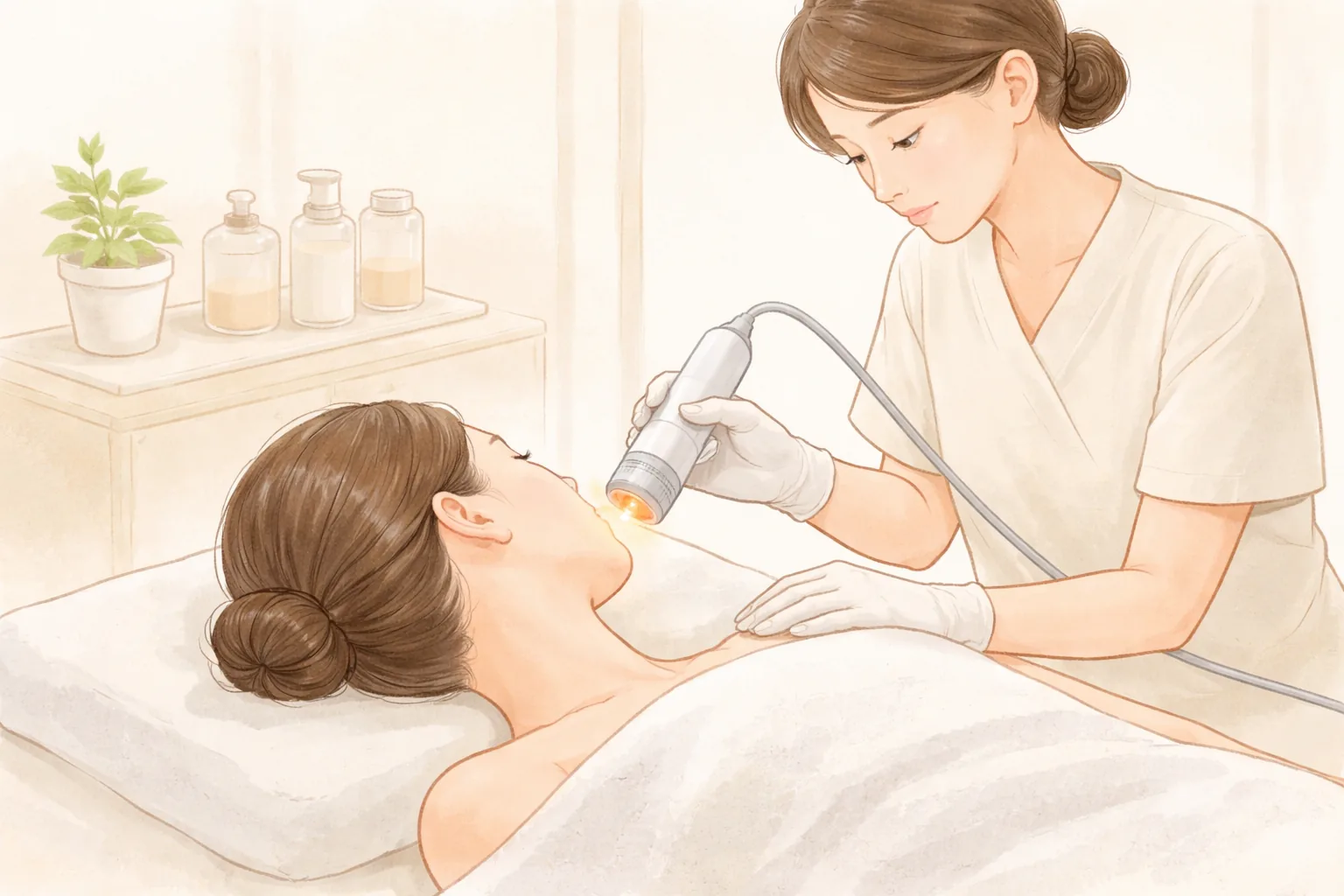
Treatment performed by the director — The director personally performs the treatment according to the plan set in consultation, adjusting intensity based on skin response during the procedure. This flow ensures design and execution stay aligned.
Recovery and aftercare — Focus on sun protection and moisturizing, and the next visit is set after reviewing progress. Treatment prices are published by unit such as shots and area, identical across all language pages, with VAT separate.
Regarding this topic, ATTITUDE Clinic's listed devices are Thermage FLX (Solta), Thermage Eye, the radiofrequency-based XERF and Eye XERF, and Ultherapy and Shurink for comparison.
Aftercare and side effects
Soothing — Heat sensation and redness right after treatment can be helped by cold compresses. Avoid saunas, intense exercise, and alcohol on the same day.
Moisturizing — Skin that has received heat stimulation tends to dry out, so continue moisturizing.
Sun protection — Apply more carefully than usual for several days. During this period the skin barrier is temporarily weakened, so protection is especially important to recover without pigmentation.
Progress check — Changes tend to appear late, so taking photos at 1–2 month intervals after treatment helps with assessment.
Common reactions are redness, swelling, tenderness when pressed, small bruises, and temporary numbness or reduced sensation, usually subsiding within a few days. Rarely, burns, blisters, small scars, temporary facial muscle weakness, and unwanted fat layer volume loss can occur. Overseas sources list the reported side effect frequency for the Thermage family as under 1%, citing swelling and redness along with possible burns, blisters, and scars. The FDA adverse event report also contains the manufacturer's explanation that blisters and redness are known side effects and burns, crusting, and rarely scars can occur.
If blisters form, pain progressively worsens, or after eye treatment the eye remains swollen, painful, or sensitive, it is safer to have it checked at the clinic where you were treated rather than waiting.
Frequently asked questions
What is the difference between Thermage and Thermage FLX?
The Thermage series includes several device names with generation labels, and the FDA adverse event report lists both Thermage CPT and Thermage FLX together. However, the report could not confirm which device was actually used, and no data concludes which is better by name alone. ATTITUDE Clinic lists Thermage FLX (Solta) and Thermage Eye. More than the generation label, what drives results is which tip is used, how shots are distributed across areas, what energy level is set, and the adjustment process based on response during treatment. So in consultation, checking the tip type and per-area distribution plan along with the device name helps you understand the actual plan.
How do eye Thermage 225 shots and 450 shots differ?
Both configurations use an eye-specific tip and differ in the number of passes. Whether you cover the entire eye area broadly or focus on specific areas like the outer corners or under-eye determines the number needed, so the larger number is not always the better configuration. Eye area skin thickness, wrinkle location, and previous treatment history are reviewed together. ATTITUDE Clinic's guide offers 225-shot and 450-shot configurations for the eye area. In eye treatment, how eye protection equipment is used is as important as the shot count, so it is worth checking that as well.
Is Thermage FLX painful?
Pain varies with energy intensity, shot count, and nerve density per area. Areas close to bone with dense nerves like the jawline, cheekbones, forehead, and eye area are relatively sensitive, while thicker areas like the cheeks feel less even with the same energy. Thermage broadly heats near the surface, so it is often described as a lasting warm sensation, with a stinging sensation possible at the moment of each pass. Cases requiring strong energy for significant sagging versus low energy for prevention feel very different even for the same treatment. Anesthesia method and energy adjustment range are decided in consultation.
When do Thermage results appear and how long do they last?
Collagen remodeling does not end right after treatment but progresses over months. Overseas sources show some see changes immediately or within weeks, some only after 2–3 months, and some see almost no improvement. New collagen grows for up to 6 months after treatment, so it is common to observe changes until then. ATTITUDE Clinic's column notes that some of the early firm feeling may be swelling, and additional changes usually appear over 2–6 months. Maintenance duration varies greatly between individuals, so repeat timing is set around 1 year after reviewing progress.
How do you identify a good place for Thermage?
Looking at the clinical flow rather than the device name makes judgment easier. Which device and which tip are used, who sets the treatment plan and who performs it, and whether they explain how shots are distributed across areas are the first items. For eye treatment, also look at how eye protection equipment is used. For pricing, checking whether it is published per unit such as shots or area rather than only a total, and whether conditions are the same across all language pages, makes comparison easier. ATTITUDE Clinic publishes unit-based prices and explains a flow where the director handles everything from consultation to treatment. There is no standard that declares which place is best, so it is more realistic to check whether the specificity of explanations and scheduling approach fit you.
At a glance
Table 2 At a glance
Item
Key point
Mechanism
Radiofrequency broadly heats from dermis to subcutaneous fat, contracting and remodeling collagen
Face and eye area
Face tips and eye-specific tips are separate, and eye area requires separate eye protection
Shot configuration
Face 600-shot and 900-shot, eye 225-shot and 450-shot; distribution is set after the area
Pain
Varies with energy intensity, shot count, and nerve density per area
When changes appear
Immediately or within weeks, later at 2–3 months, collagen up to 6 months
What drives results
Starting skin condition, plan, procedure execution; repeat timing decided around 1 year
This article offers general health information. It is not a substitute for diagnosis or treatment based on your own condition, so please talk through your situation with a doctor.