Thermage FLX vs Oligio: How Tips and Shot Design Change the Result
What Thermage FLX does in the skin, plus the tips, shot counts, pain, recovery and longevity points to check when you compare it with Oligio.
Written by ATTITUDE Clinic Editorial Team
Search for Oligio and Thermage FLX side by side and the first question is usually "both are radiofrequency, so what's different?" Even lifting devices with similar names differ in how widely the tip delivers heat to which layer, and how shots are divided, so the feel and recovery change. The starting point for comparison is the tip that actually touches the skin and the shot design.
The short answer first
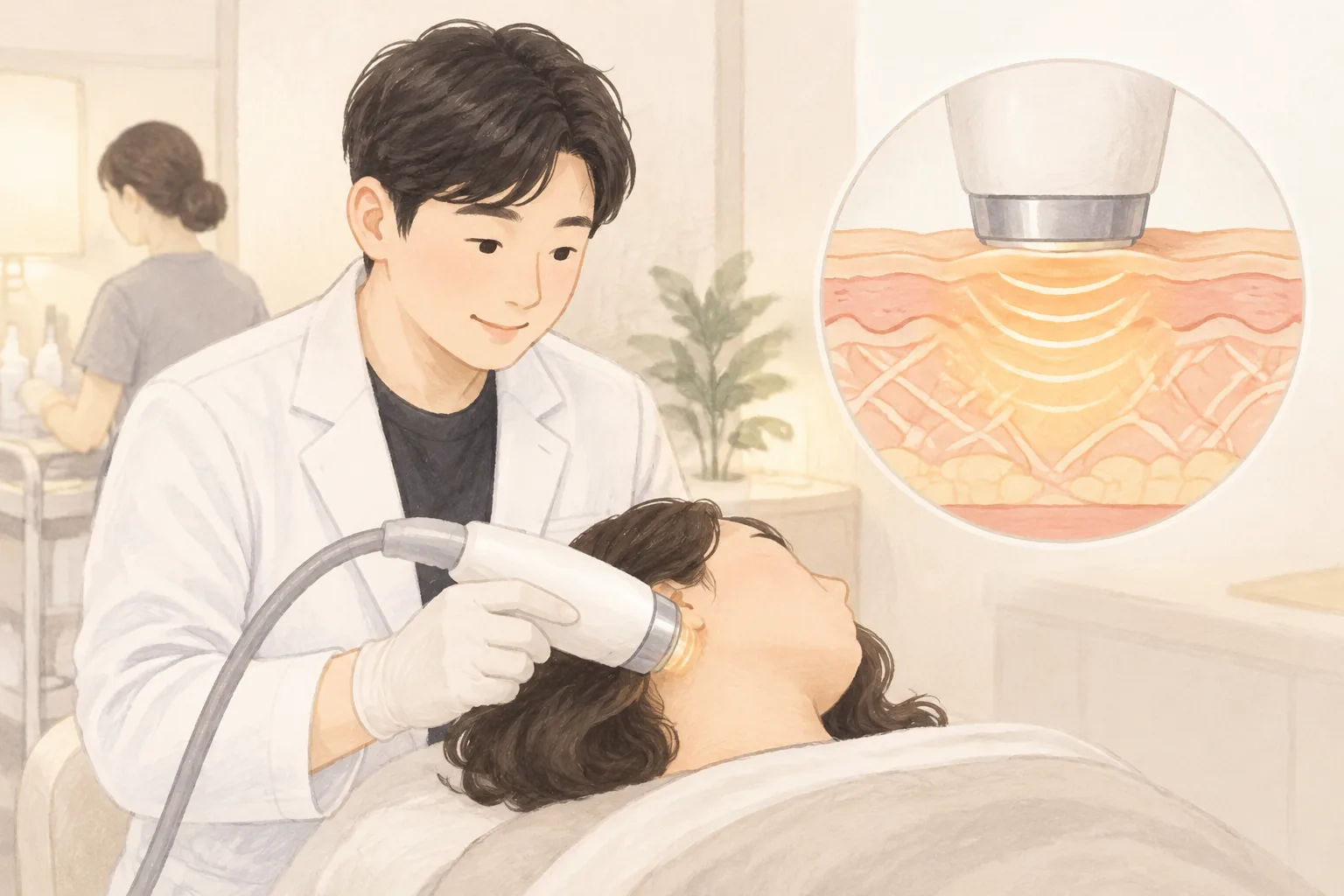
Thermage FLX is a device that uses radiofrequency (RF, where electrical energy passes through tissue and turns into heat) to heat the collagen layer of the dermis broadly. When comparing it with Oligio, it's more practical to check tip size, cooling and vibration, shot count, the layer being targeted, and how the eye area is protected than to compare device names. Thermage FLX results appear gradually over several weeks to 2–3 months, and new collagen is described as forming over up to 6 months. For Oligio, detailed design, pain and shot configuration are settled at consultation by checking the device name and tip directly.
What does Thermage FLX heat inside the skin?
DermNet's guide to radiothermoplasty explains that Thermage FLX delivers radiofrequency (RF) to the collagen layer with a special tip. As the energy turns into heat, collagen contracts, and over about 6 months new collagen grows, working in the direction of tightening the skin. RF is a method in which electrical energy passes through skin tissue and turns into heat, like friction heat, and the ATTITUDE Clinic column describes Thermage FLX as heating a broad area at once from the dermis down to the subcutaneous fat layer.
Before treatment, a grid is drawn on the face so passes don't overlap, and during treatment you speak up about heat and discomfort so the intensity can be adjusted. According to DermNet, one Thermage FLX session can take 1–2 hours from start to finish. It is usually done without local anesthesia or sedation, and the heat you feel during treatment is the basis for raising or lowering the intensity.
Redness and swelling right afterward can last 1–2 hours, or several days at most, and can be covered with makeup. This early change is not the final result. It is hard to judge the result by how you look on the day of treatment. Collagen is remodeled gradually.
Oligio vs Thermage FLX: what should you look at in a comparison table?
Using the facts confirmed on the Thermage FLX side as your reference makes it clear what to ask during an Oligio consultation. The table below summarizes Thermage FLX information from the DermNet guide, the ATTITUDE Clinic treatment guide and an FDA MAUDE report, along with questions for checking the same items in an Oligio consultation. Knowing the benchmarks confirmed for Thermage FLX makes clear what to ask in an Oligio consultation.
Table 1 Oligio vs Thermage FLX: what should you look at in a comparison table?
Item to check
What is confirmed for Thermage FLX
What to ask in an Oligio consultation
Energy and target layer
Delivers RF to the dermal collagen layer
Which tip heats which layer
Tip and treatment area
Face and eye tip configurations are described
Area of the tip used and whether it is single-use
Heat control
Intensity adjusted by heat feedback during treatment
How cooling, vibration and output are controlled
Shot design
FLX 600 and 900 shots; Eye 225 and 450 shots
Proposed shot count and distribution by area
Eye safety
Plastic eye shields for the eye area; metal shields risk conducting RF
Type and size of eye shield used
Recovery
Redness and swelling from 1–2 hours to several days
Expected downtime and anesthesia plan
Swipe sideways to see the whole table.
In short What separates Thermage FLX and Oligio is the layer the tip reaches, how heat is controlled, shot distribution, and eye protection. Checking these items at consultation lets you compare the two devices on the same footing.
What determines pain and anesthesia?
Pain is driven less by the device name than by energy intensity, shot count, nerve density of the area, and the anesthesia method. According to the ATTITUDE Clinic column, areas close to bone with dense nerves, such as the jawline, cheekbones, forehead and eye area, are more sensitive, while thicker areas like the cheeks tend to hurt less at the same energy.
Thermage FLX is usually performed without local anesthesia, and you report the heat you feel during treatment so the RF intensity can be adjusted. DermNet notes that the practitioner receives feedback on heat and pain to raise or lower intensity. If anesthesia is needed, the plan is set at consultation. Among FDA reports there are also cases where numbing cream was used.
If you are comparing with Oligio, confirm output, treatment time and anesthesia plan at consultation. If pain is severe, it is safer to say so right away rather than endure it. Feedback is the basis for adjusting intensity. Pain is driven less by the device name than by energy intensity, shot count, nerve density of the area and the anesthesia method.
How should you read the results and how long they last?
Thermage FLX results vary from person to person. Some feel a change right away or within a few weeks, while others need 2–3 months to notice. New collagen grows for up to 6 months after treatment, so it is hard to call the result before then. DermNet describes this course as new collagen growing for up to 6 months after treatment.
Results are thought to last 5–10 years, but this can only be known with more time. The ATTITUDE Clinic column notes that the doctor decides the retreatment interval, roughly around 1 year, after reviewing progress. Oligio longevity depends on the device, treatment design and skin condition, so confirm it at consultation.
Which skin suits Thermage FLX better?
Thermage FLX is not a facelift that replaces surgery. DermNet notes it suits early signs of aging such as fine lines around the nose and mouth, and that where skin is very loose or jowls have sagged, improvement may be limited and surgery may be more suitable. It also describes it as working well at the stage when the face is thin and you are starting to consider surgery. Being usable on all skin types is a point that differs from lasers. Thermage FLX is not a facelift that replaces surgery.
According to the ATTITUDE Clinic column, Thermage FLX suits broad areas of laxity, while localized sagging in deeper layers may be better served by another approach. Whether Oligio is right is also judged by the depth of sagging, skin thickness and recovery allowance. Even with the same laxity, responses differ with skin type and healing speed, so analysis records and examination are reviewed together.
If this sounds like you
If a wedding or shoot is a few weeks away
Thermage FLX can leave redness and swelling for 1–2 hours, or several days at most, so plan with a buffer around your schedule. Results appear gradually over 2–3 months, so it is better to allow time rather than book right before a shoot. For Oligio too, confirm downtime and when results appear at consultation using the same criteria.
If you want ongoing maintenance
The retreatment interval for Thermage FLX is roughly around 1 year, decided by the doctor after reviewing progress. Rather than bunching sessions together, adjust the interval while recording skin response. Oligio's retreatment cycle also varies with the device and shot design, so it is set at consultation.
If your skin is sensitive or flushes easily
Redness and swelling right after Thermage FLX are common. When the skin barrier is weak, adjust the schedule so irritation doesn't stack up. If heat is hard to tolerate, discuss anesthesia and output adjustment at consultation.
If you are an overseas visitor on a short stay
Since follow-up takes time, first check whether consultation, treatment and follow-up can fit within your stay. A Thermage FLX session itself can take 1–2 hours, so a tight schedule before your flight is not realistic. Oligio is also planned including anesthesia and recovery time.
Tell us before your consultation Please mention recent sun exposure and outdoor plans, medications you take and products you apply to the skin (including retinoids and acids), reactions after previous lifting, laser or injection treatments, and important dates such as weddings or shoots. If you have records of previous treatments, showing the device and shot count, products, dates and how you reacted at the time helps with planning.
How ATTITUDE Clinic proceeds
Precision diagnosis and skin analysis Skin condition is recorded with a device, and previous treatment history and concerns are organized together. Analysis tools only record and organize information and do not make a medical diagnosis; the doctor makes the judgment.
Doctor consultation Based on records and examination, the shot count and energy for Thermage FLX and the anesthesia plan are set. If you are comparing with Oligio, confirm the actual device and tip used and the shot configuration at this point.
Treatment by the doctor The doctor performs the treatment directly according to the plan, adjusting output while watching heat and skin response during the session.
Recovery and follow-up After treatment, guidance is given on soothing, moisturizing and sun protection, and the next visit is scheduled.
Four steps your doctor sees to in person
From the diagnostic device to the treatment bed, the doctor you first consult takes care of everything.
01
Precision diagnosis
In a private diagnosis room the whole face is photographed, recording even skin conditions that are hard to see with the eye.
02
Skin analysis
The doctor goes through your pore, pigmentation, wrinkle and firmness results with you on screen and explains what comes first.
03
One-to-one design
With your skin, the balance of your face, the change you want and your schedule in view, you decide the treatment and its extent together.
04
Treatment by your doctor
The doctor who consulted you performs the treatment from start to finish in a private treatment room. No one takes over halfway.
“I take injection pain seriously.”
Co-Director Dr. Lee Dong Hun
Many people hesitate over injection treatments because they hurt. So we went back over everything, from the anesthetic to the products used.
Careful numbing, unhurried timingWe allow plenty of time for a special numbing cream to take full effect, and add anesthetic injections for the treatments and areas that need them.
Fine needles, finished quicklyInjection treatments use fine needles, and the doctor finishes them personally in a short time, adjusting along the way by watching how you are doing.
Even the product formulation countsThe same treatment can feel more or less demanding depending on the product, so we take that into account too.
The anesthetic method and whether it is used are decided after an examination, according to the treatment, the area and your condition. How much it hurts varies from person to person.
Aftercare and side effects
Soothing If there is redness and heat right after treatment, soothe with a cold compress. If there is swelling, applying cold pressure helps.
Moisturizing The skin barrier is temporarily weakened, so keep moisturizing and avoid exfoliation and harsh cleansing.
Sun protection Apply sunscreen more carefully than usual to prevent pigmentation.
Follow-upIf redness, swelling or pain does not subside, or blisters, crusting or vision problems appear, contact the clinic without waiting.
Common reactions are redness, swelling, pain at the treated area, small bruises and temporary numbness. They usually settle within a few days. Rarely, burns, blisters, crusting, scars, pigmentation, temporary facial muscle weakness and loss of fat-layer volume can occur. The ATTITUDE Clinic column explains these risks before treatment and advises seeking care right away if there are blisters or worsening pain.
FDA MAUDE reports include cases of eye burns, facial burns and swelling, pigmentation and pain lasting several months after Thermage FLX. The first report stresses that a plastic eye shield of the correct size must be used for eye-area treatment, and that metal shields can conduct RF to the eye. The second report notes that swelling often subsides within 5 days but can last for weeks, and describes cases where pigmentation cleared over several months. If such symptoms appear, contact the clinic right away rather than waiting for the next appointment.
Frequently asked questions
Are Oligio and Thermage FLX the same radiofrequency device?
Thermage FLX is described as a device that delivers RF to the collagen layer of the dermis. Many people search for Oligio and Thermage FLX together, but tip size, cooling and shot design differ by device, so it is hard to compare effects and pain by name alone. At consultation, check the actual device name, the tip used, whether it is single-use, the proposed shot count and the layer being targeted. On the Thermage FLX side, intensity is adjusted by heat feedback during treatment, and face and eye tip configurations are described separately.
Thermage FLX vs Oligio: which hurts less?
Pain is driven less by the device name than by energy intensity, shot count, nerve density of the area and the anesthesia method. Thermage FLX is usually performed without local anesthesia, and you report the heat you feel during treatment so the RF intensity can be adjusted. Areas close to bone with dense nerves, such as the jawline, cheekbones, forehead and eye area, are more sensitive, while thicker areas like the cheeks tend to hurt less. Oligio pain also varies with output, treatment time and anesthesia plan, so check the same items at consultation. If pain is severe, it is safer to say so right away rather than endure it.
How many shots of Thermage FLX are appropriate?
Shot count varies with face area, the extent of laxity, tip type and energy intensity. Thermage FLX is described in 600-shot and 900-shot configurations, and Eye Thermage in 225-shot and 450-shot configurations. More shots is not automatically better, and at the same shot count, how energy intensity and overlap are controlled changes the result. That is also why a grid is drawn before treatment so passes don't overlap. Asking at consultation to have the proposed shot count and distribution by area recorded helps when reviewing progress next time.
When do Thermage FLX results start to show?
It varies from person to person. Some feel a change right after treatment or within a few weeks, while others need 2–3 months to notice. New collagen grows for up to 6 months after treatment, so it is hard to call the result before then. Results are thought to last 5–10 years, but this can only be known with more time. The retreatment interval is roughly around 1 year, decided by the doctor after reviewing progress.
How should I choose a clinic for Oligio or Thermage FLX?
Look beyond the device name at which tip is actually used, how shot count and energy are recorded, and who performs the treatment. For Thermage FLX, also check whether the tip is genuine, whether it is single-use, and whether a plastic eye shield is used for the eye area. See whether the consultation asks about previous treatment history and skin reactions, and whether there is a way to contact the clinic after treatment. Explanations that guarantee results or emphasize shot count alone don't help your judgment. Analysis records are reference material, and the final decision is yours after consultation.
At a glance
Table 2 At a glance
Item
Key point
How Thermage FLX works
RF heats the dermal collagen layer to induce contraction and remodeling
Comparing with Oligio
Confirm tip, shot count, cooling and anesthesia plan at consultation
Pain
Driven by energy intensity, shot count, nerve density of the area and anesthesia
When results appear
Several weeks to 2–3 months; new collagen for up to 6 months
Longevity and retreatment
Wide individual variation; retreatment around 1 year, decided by the doctor
Safety
Redness and swelling common; burns, blisters and scars rare; eye shields matter
This article offers general health information. It is not a substitute for diagnosis or treatment based on your own condition, so please talk through your situation with a doctor.