Who Is Ultherapy Right For? Skin Condition, Age, and Candidacy
A look at what Ultherapy targets beneath the skin, whether age or sagging depth decides candidacy, when other devices are better for the same concern, and what to expect after treatment.
Written by ATTITUDE Clinic Editorial Team
Once you start looking into Ultherapy, two questions tend to arrive together: "I'm still young—is it too early for me?" and "Given my skin, will I actually feel a difference?" Read one article that frames the answer around age and another around skin condition, and the decision can get murkier rather than clearer. This article starts with how Ultherapy works beneath the skin, then moves through what actually separates a good candidate from a poor one—age or skin condition—and finally what gets decided at the consultation.
The short answer
Ultherapy treats facial and neck laxity without surgery, and Cleveland Clinic's overview describes good candidates as people with mild to moderate excess skin around the face and neck, usually in their 30s or older. Some people under 30 also have it for prevention. So age alone does not determine who qualifies. The real criteria are how deep the sagging starts and how much collagen-producing capacity the skin still has—neither of which is easy to see in the mirror, so they are assessed during examination and consultation.
Where beneath the skin does Ultherapy act?
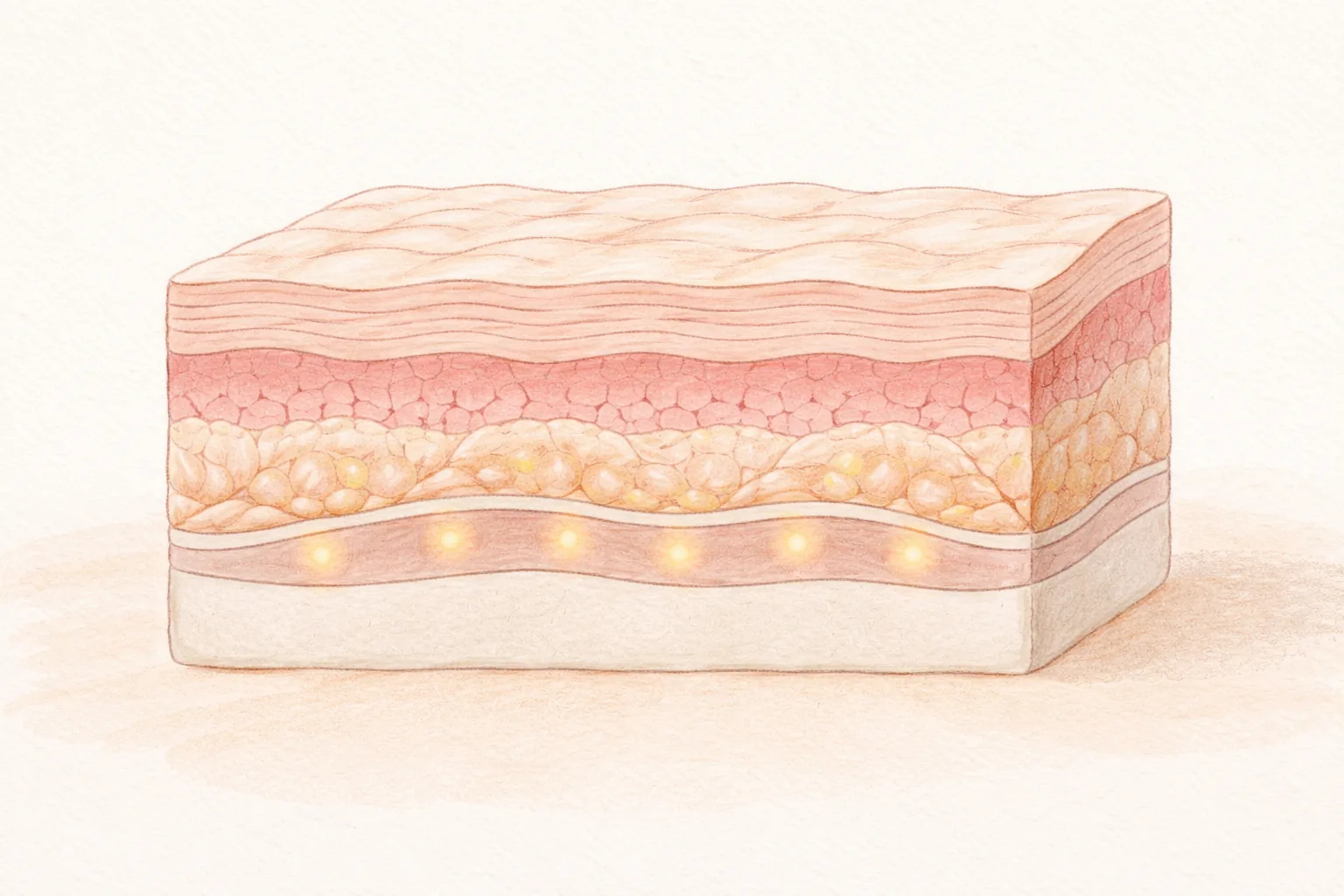
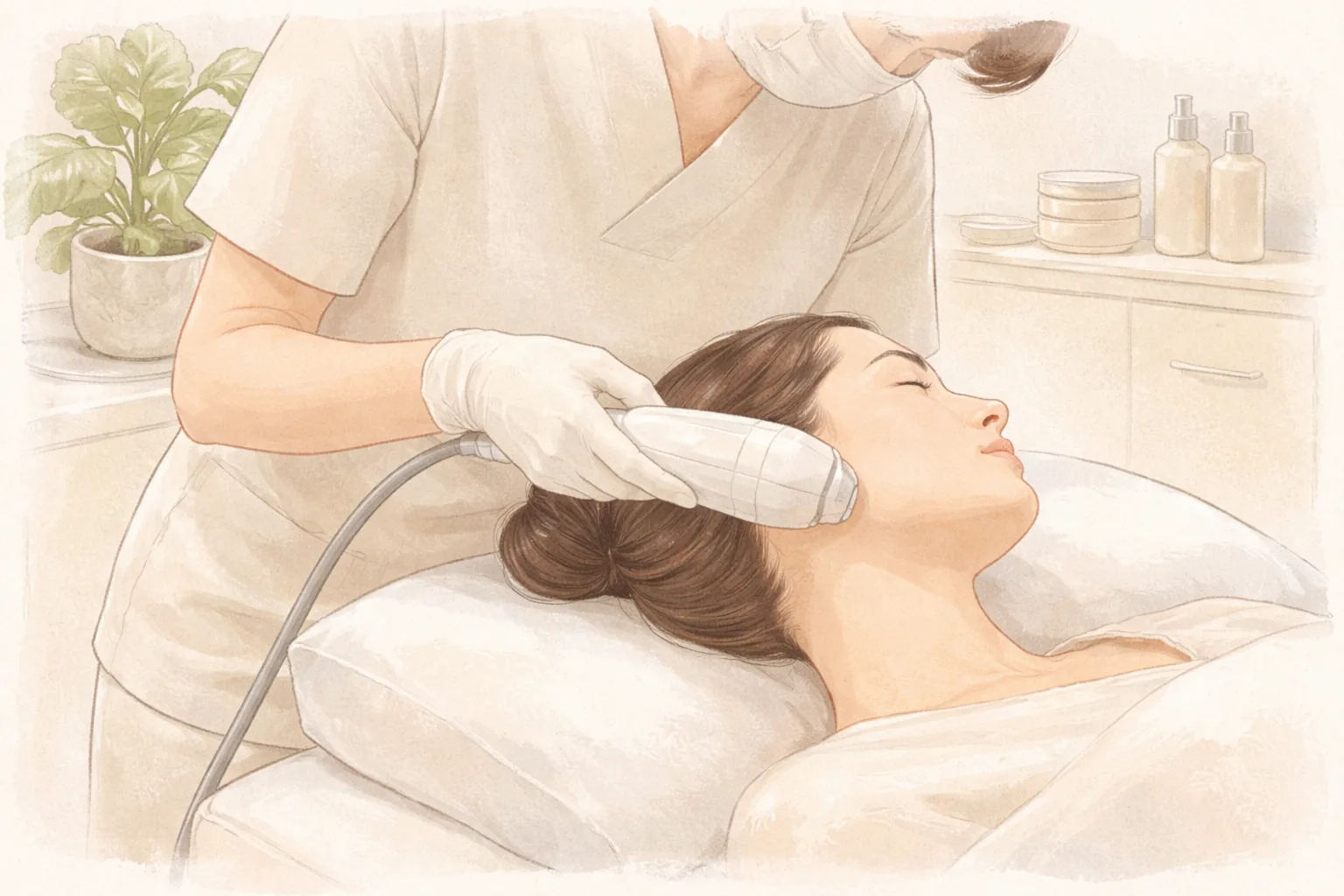
Ultherapy uses high-intensity focused ultrasound (HIFU, the principle of concentrating ultrasound energy at a single point the way a magnifying glass focuses light). The ultrasound is gathered at a set depth in the skin to create small thermal points, and that heat is thought to slightly contract collagen (the protein that gives skin its firm, supportive structure) and gradually start remodeling. Our ATTITUDE Clinic column covered this principle in detail; the core variable is how deep the heat reaches.
The structure at that depth is the SMAS layer. The SMAS is a thin membrane beneath the dermis—like the lining inside a garment—that supports the facial muscles and skin, and its loosening with age is considered one of the main causes of sagging. Ultherapy creates thermal points at a set depth between the dermis and the SMAS layer depending on the cartridge. Even with the same device, the depth and intensity you choose change the outcome, which is why the consultation starts by looking at which layer is sagging.
Then why do some people see a visible difference while others change more slowly? What the thermal points create is not immediate tightening but a process in which the skin rebuilds collagen on its own. Results therefore show up not the next day but over months.
What decides candidacy: age or skin condition?
A common misconception is that "Ultherapy is a treatment for people in their 40s and up." It is true that adults in their 30s and older are the most common age group, but Cleveland Clinic's overview also notes cases under 30 for prevention, and cases to extend the effects of plastic surgery. Age isn't a qualifying requirement—it's more of a reference point for gauging how far sagging has progressed.
Age does play an indirect role. A column on why results differ from the same procedure explains that skin type, skin thickness and structure, and the rate of new collagen production vary from person to person, and this variation changes when effects appear. Two people in their 40s—one with thin skin and remaining regenerative capacity, one without—cannot follow the same plan.
So in practice, candidacy comes down to three things: whether sagging is deep and localized along the jawline and double chin, whether excess skin on the face and neck is in the mild to moderate range, and how the skin responds to and recovers from heat stimulation. Sagging severe enough to need a facelift is beyond what Ultherapy can address. Cleveland Clinic's overview likewise states that Ultherapy is not a substitute for surgical lifting.
What determines pain and recovery?
Lifting treatments tend to show wide variation in pain from person to person and from area to area. The biggest variables are energy level and the number of shots delivered to one area. Even with the same Ultherapy, deep sagging that requires strong energy feels very different from a low-energy preventive session.
Treatment area matters too. The jawline, cheekbones, forehead, and eye area—close to bone and dense with nerves—tend to feel more sensitive, while thicker areas like the cheeks feel less painful at the same energy. The warmth or tingling during treatment appears at the moment the ultrasound energy is delivered and is usually temporary.
Recovery is generally short. Cleveland Clinic's overview notes that there is usually no downtime, mild redness may remain for about an hour after treatment, and some people develop swelling, bruising, or tenderness to touch. This tenderness can last up to a month, though it's usually mild. If a lot of treatment is done near bone—around the eyes or forehead—a pressing sensation may linger for a few days, so if you have an important event, it's better to schedule the session earlier.
Why the device changes even for the same sagging
Even for the same concern of "loss of firmness," which device to use first depends on the depth and extent of sagging. Here's how the lifting devices listed in the ATTITUDE Clinic treatment guide compare.
Table 1 Why the device changes even for the same sagging
Treatment
Energy and reach
Concerns it best suits
What gets reviewed in consultation
Ultherapy
HIFU, small thermal points at a set depth
Deep, localized sagging along the jawline and double chin
Depth of sagging, number of shots needed, pain tolerance
Eye Ultherapy
HIFU, applied locally around the eyes
Shallow, narrow sagging of the brow line and eye area
Eyelid skin thickness, tendency to bruise
Shurink Universe (HIFU)
HIFU-based, differs in heat depth and shot method
Those wanting to start broadly with less burden
First treatment or repeat plan
Thermage FLX
Radiofrequency (RF), broad heating from dermis to subcutaneous fat
Firmness loss and skin texture spread widely across cheeks and neck
Extent of sagging, tendency for swelling to persist
Onda
Microwaves, face and body application
Those wanting to manage the facial line and body together
Treatment areas and goals, interval between sessions
Swipe sideways to see the whole table.
In short Ultherapy suits deep, localized sagging, while Thermage FLX better suits broadly spread firmness loss. Age isn't a criterion for candidacy so much as a reference for reading how far sagging has progressed, and the actual decision is made based on sagging depth and skin response.
If this sounds like your situation
A wedding or shoot is a few months away
Ultherapy changes appear not right after treatment but usually over several months. Cleveland Clinic's overview notes that full results may be seen over 3–6 months. If your event is two or three months out, it's hard to expect your best look by then, and you may instead overlap with the period when redness and tenderness remain. It's more natural to plan with at least about half a year of leeway before the shoot date.
Starting preventively in your 30s
When skin is still thick and retains regenerative capacity, a low-energy, broad approach is possible. The challenge is that goals can easily become vague. If the purpose is not visible sagging now but slowing the rate of future sagging, you need to decide at the consultation how often to continue over the coming years, or you'll lose direction midway.
A face with little volume and concerns about hollowing
In a face with low cheek volume, strong energy delivered to deep layers can make hollowing more prominent. For this face type, options include narrowing the treatment to only the areas needed, such as the jawline and eye area, or considering an order in which volume is restored first and lifting is layered on top. This is why the same sagging calls for a different approach depending on cheek volume.
An overseas visitor on a short stay
Ultherapy usually has no downtime, so it isn't hard to fit into a schedule. Treatment time, however, ranges from 30 to 90 minutes depending on the area, and can stretch to two or three hours if multiple areas are treated together. If your return flight is tight, you'll be flying while tenderness and swelling remain, so it's better to reduce the treatment scope and leave a buffer between the session and your last day.
Tell us before your consultation Recent sun exposure and travel plans, medications you're taking and active ingredients you apply to your skin (retinoids, acids, etc.), your history of lifting, filler, or Botox and how you responded, and any fixed-date events like a wedding or shoot. Bringing just these five points will greatly widen what can be decided at the consultation.
How ATTITUDE Clinic runs the process
AI skin analysis record — Your skin condition is recorded and organized so you and the doctor review the same information together. The analysis tool is a reference for recording and organizing information and does not make a medical diagnosis. The doctor makes the judgment.
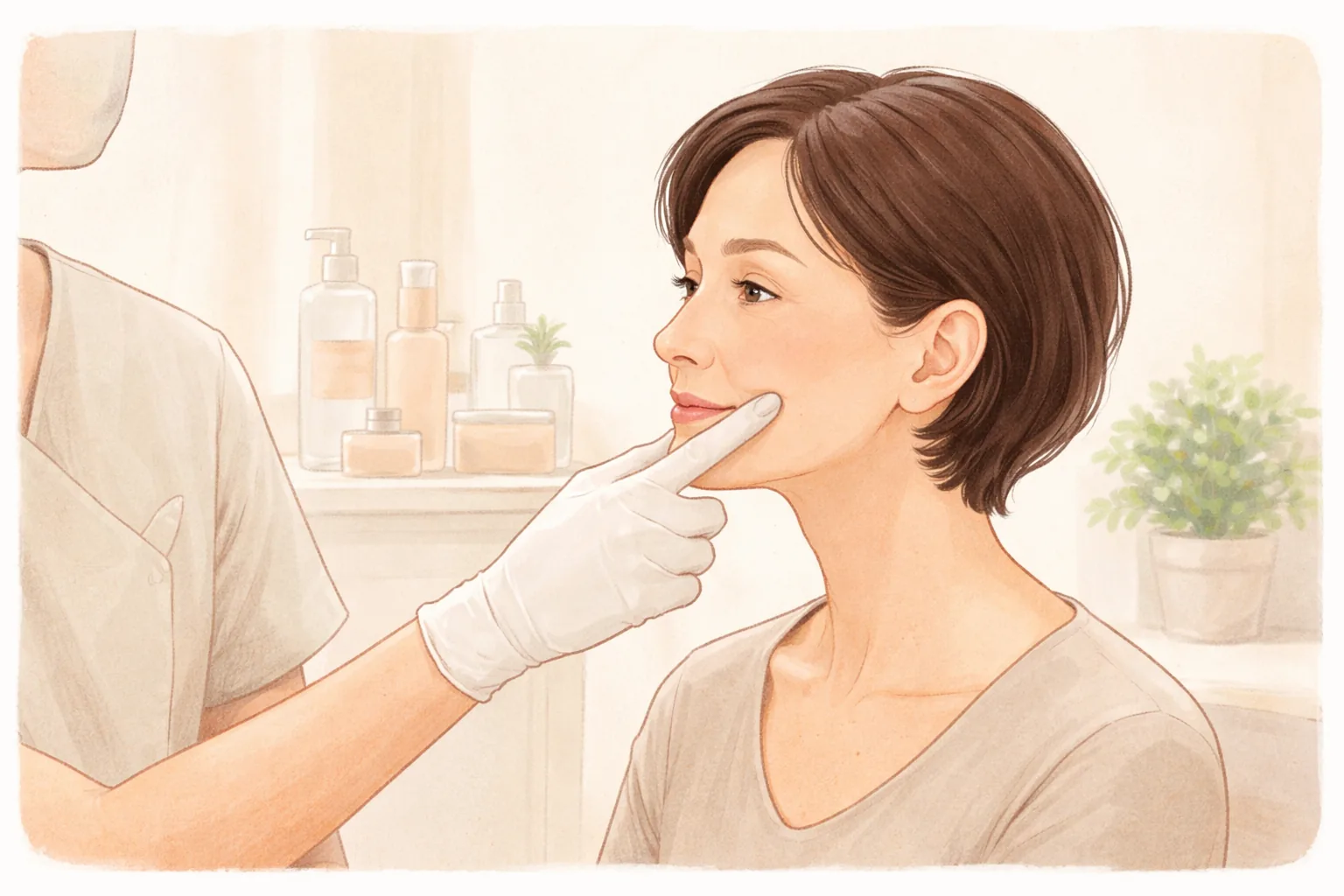
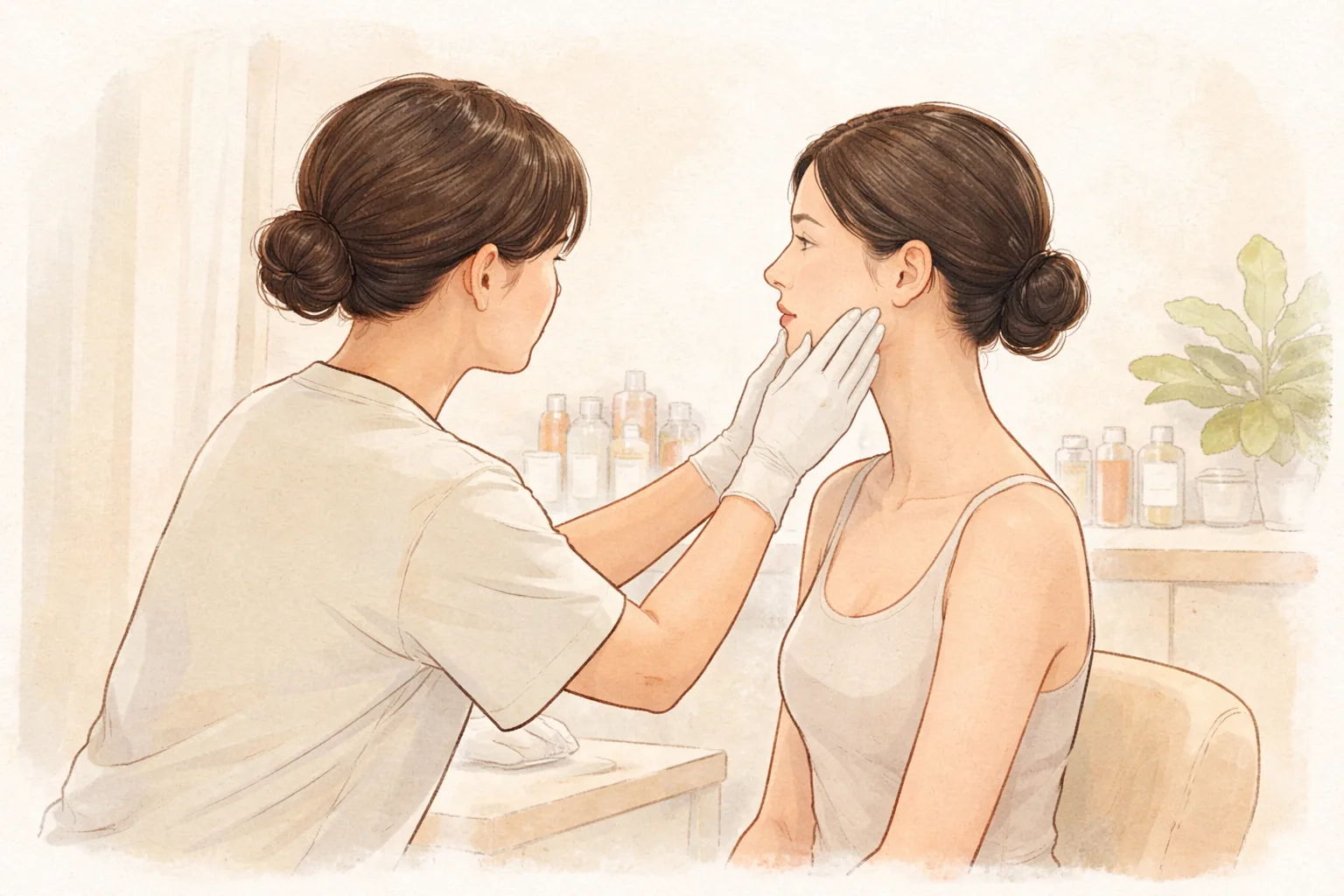
Doctor consultation — Your concerns, lifestyle habits, and past treatment experience are added to the analysis record to decide together what is necessary and what isn't, which combination and order to use, and at what intensity. The depth of sagging, the time you have for recovery, and how sensitive your skin is all factor in here.
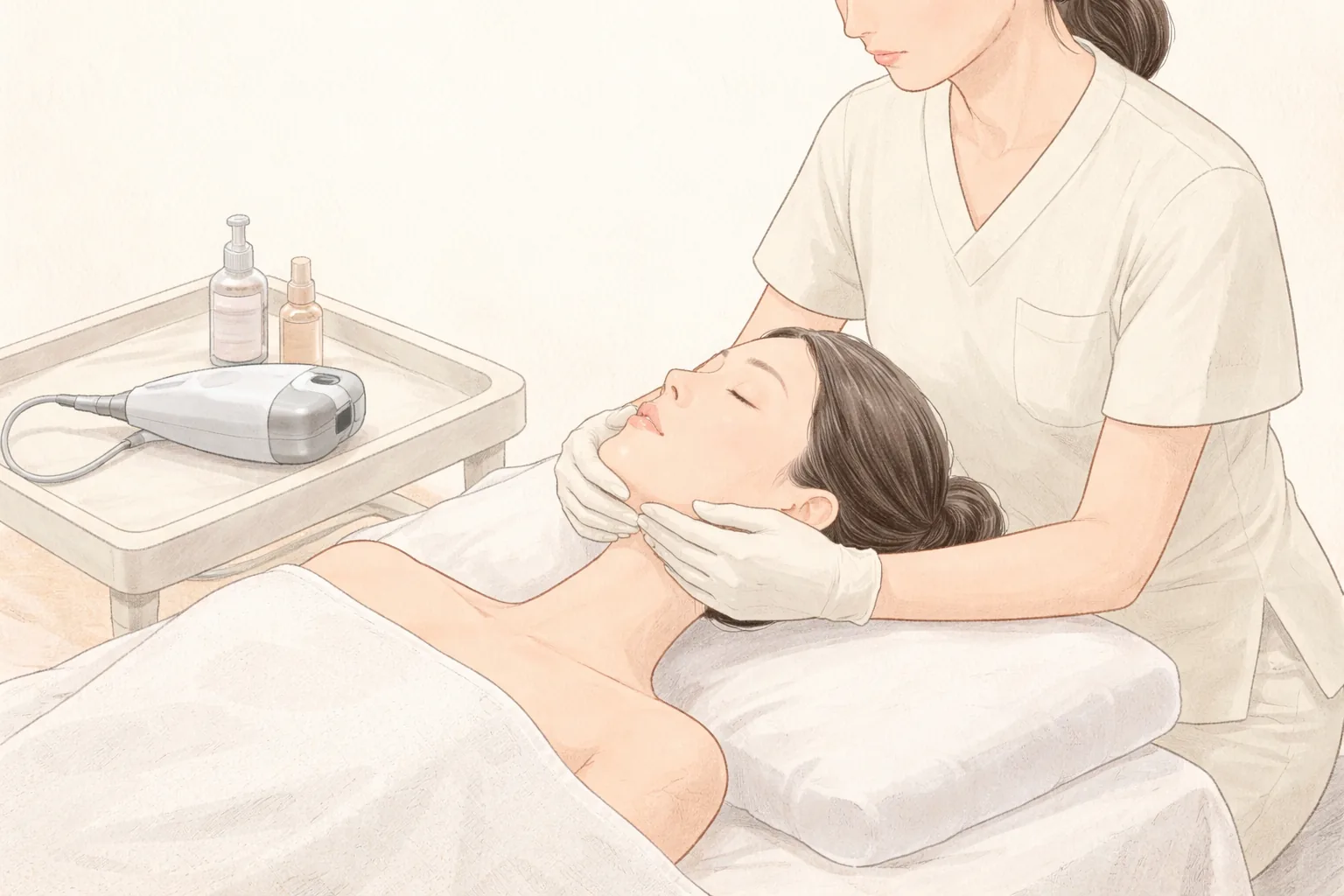
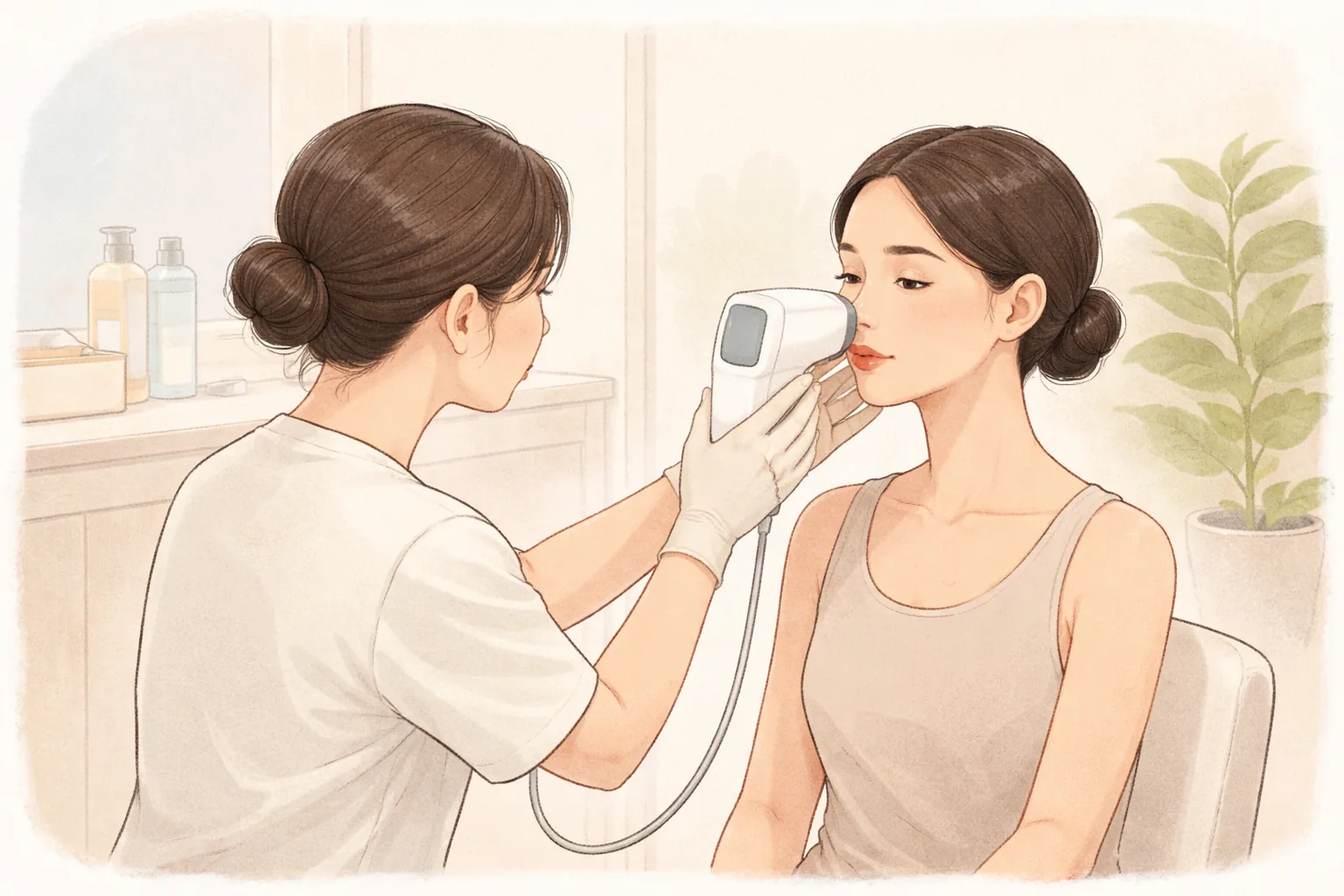
Treatment performed by the doctor — The doctor personally performs the procedure according to the plan set in consultation and adjusts intensity while observing skin response during treatment. This flow keeps planning and execution aligned.
Recovery and follow-up — Post-treatment response and the timing of your next visit are advised individually. Repeat timing is usually set around 1 year based on progress.
Our treatment guide lists lifting options including Ultherapy (Merz), Eye Ultherapy, Shurink Universe (Classys), Thermage FLX (Solta), and Onda (DEKA). Which device to use is decided in consultation, where we separate what's needed from what isn't.
Aftercare and side effects
Soothing — The day of treatment, heat stimulation is still present. Avoid saunas, intense exercise, and alcohol, and use cold compresses to manage swelling.
Moisturizing — Heat-treated skin tends to dry out, so moisturize more than usual. Pause strong exfoliation and active ingredients for a few days.
Sun protection — At this stage the skin's barrier is temporarily weakened, so careful sun protection is needed to recover without pigmentation.
Checking progress — Redness and tenderness usually settle within a few days. Changes, however, continue to appear gradually over months afterward, so don't judge midway on your own—check progress at the scheduled point.
Common side effects include redness, swelling, tenderness to touch, small bruises, and temporary numbness or reduced sensation. They usually settle within a few days, though tenderness can last up to a month. Rarely, burns, blisters, small scars, temporary facial muscle weakness, and unwanted fat-layer volume loss can occur, which is why setting energy level and treatment depth accurately matters. If blisters form, pain keeps worsening, or unexpected changes persist for days, it's safer to be seen rather than wait.
FAQ
I'm in my 30s—isn't Ultherapy too early for me?
Cleveland Clinic's overview lists adults in their 30s and older as the common candidate age and also mentions cases under 30 for prevention. So it's hard to answer with a "from what age" criterion alone. If sagging has started not at the surface but in the SMAS layer, you're a candidate even in your 30s; conversely, if there's little sagging and only skin texture is the concern, another device may be better. The answer splits based on sagging depth and skin thickness seen at consultation.
I have a thin face—won't my cheeks hollow out more?
Hollowing depends on the depth and intensity of the energy delivered and the thickness of the fat layer in that area. For a face with low cheek volume, options include narrowing the treated area or considering an order in which volume is restored first and lifting is layered on top. Conversely, a face with thicker tissue feels less at the same energy. This is why the plan changes with face shape even for the same device and same number of shots.
How painful is it?
It increases with higher energy levels and more shots per area. Areas close to bone and dense with nerves—jawline, forehead, eye area—are more sensitive, while thicker areas like the cheeks are less so. The warmth or tingling during treatment is usually temporary. If you're sensitive to pain, it's better to discuss anesthesia methods and energy-level adjustment at the consultation.
When do results appear, and how long do they last?
Cleveland Clinic's overview notes that full results may be seen over 3–6 months. Our ATTITUDE Clinic column explains that it's hard to feel a big change right after treatment, and if there is a change, it usually appears gradually over 2–3 months. How long results last depends on how much SMAS-layer elasticity has declined, age, sun exposure, and lifestyle habits, and repeat timing is set around roughly 1 year based on progress. Since aging continues, it's approached as following the pace of aging rather than finishing with one session.
What should I look at when choosing a clinic for Ultherapy?
Look at what the consultation checks rather than the device name. How the depth of sagging and facial structure are assessed, what basis is used to set energy level and shot count, whether authentic cartridges are used, and how anesthesia and pain management are explained—these are the items that actually affect results and safety. It's also worth seeing whether a clinic reviews your past treatment records when asked. If the consultation is short and the conclusion is fixed into a package, it's worth asking once more why each item is necessary.
At a glance
Table 2 At a glance
Item
Key points
Candidacy criteria
Mild to moderate excess skin on face and neck, usually 30s or older, under 30 for prevention
Depth of action
HIFU creates small thermal points at a set depth between the dermis and SMAS layer
Pain variables
Energy level, shot count, nerve density by area
When results appear
Full results over 3–6 months, gradual change from 2–3 months if any
Repeat timing
Set around roughly 1 year based on progress
Recovery
Usually no downtime; redness and tenderness from a few days up to a month
This article offers general health information. It is not a substitute for diagnosis or treatment based on your own condition, so please talk through your situation with a doctor.