Under Eye and Smile Line Filler: Which Layer Matters for Results
A guide to FDA-approved filler areas, what determines under eye filler before and after results, and pre- and post-treatment checks, drawing on FDA and Cleveland Clinic resources and ATTITUDE Clinic guidance.
Written by ATTITUDE Clinic Editorial Team
The smile line is the crease that runs from beside the nose down toward the corner of the mouth. You may not notice it in the mirror, but in photos it suddenly stands out, and that is usually when filler enters the search bar. Along with it come the same questions: how long will it last, will it hurt, and if I do not like it later, can I undo it? This article walks through how smile line filler works, what separates a good result from a disappointing one, and what to check before and after treatment.
The bottom line first
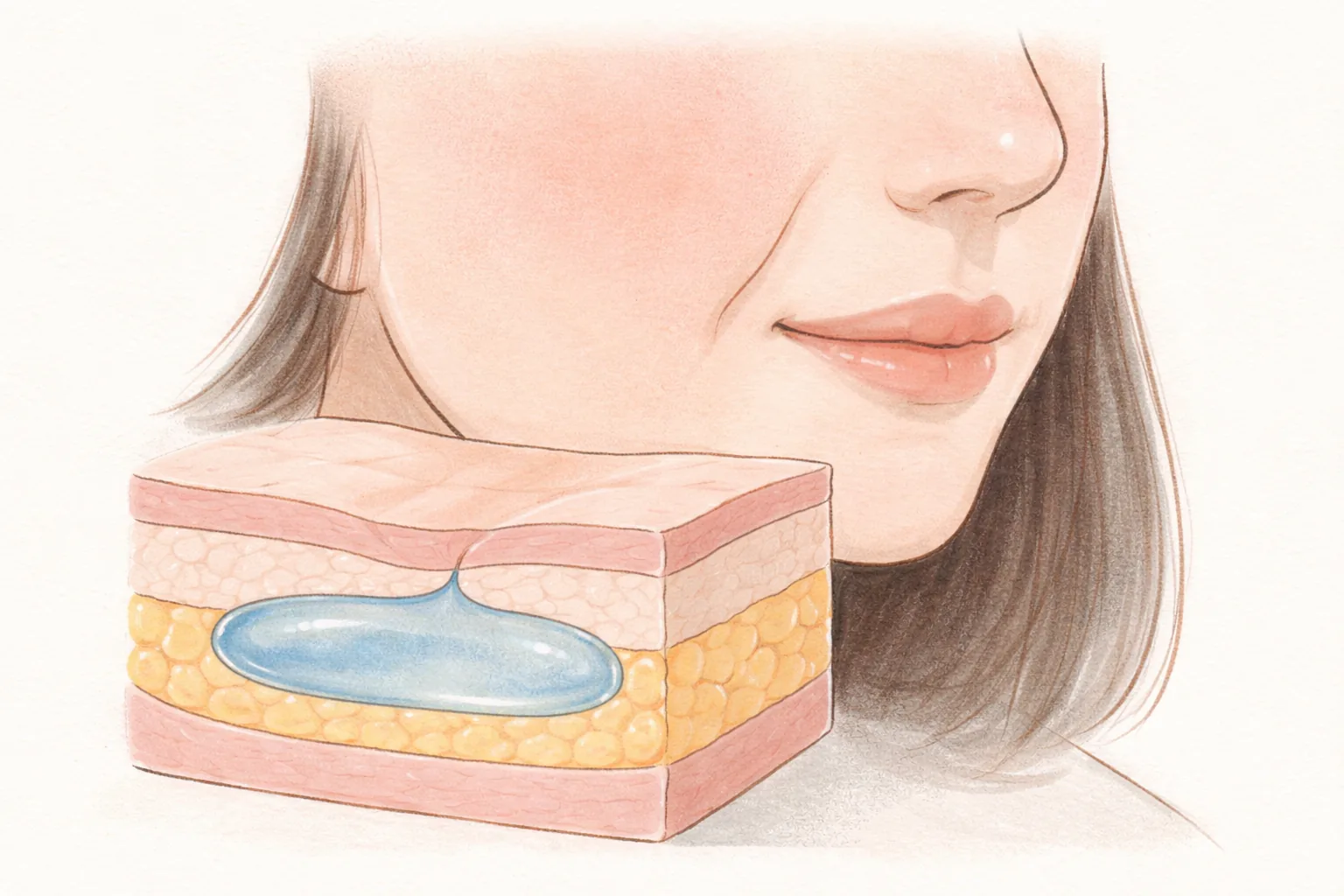
Smile line filler adds volume to the line from beside the nose to the corner of the mouth so it stands out less. According to the US Food and Drug Administration (FDA) dermal filler guidance, biodegradable fillers are approved for moderate to severe facial wrinkles and skin folds, including smile lines. Results depend on the type and amount of filler injected and the tissue structure beneath it, and how long the effect lasts varies with material and injection site. Hyaluronic acid fillers can later be reduced with an enzyme, but permanent fillers and other materials are hard to reverse. The first thing to decide in consultation is not the amount, but which material goes into which layer and how it is distributed.
What the smile line area is and what filler does
The smile line runs from beside the nose toward the corner of the mouth. If it appears only briefly when you make an expression, it is a natural crease. But if the line remains clear even at rest, it can make the face look sagging or tired. The fact that the FDA lists this area as a formal approved indication for filler means it is one of the areas with relatively clear approval grounds.
What filler does is fill. In the ATTITUDE Clinic column, hyaluronic acid filler is described as an injected ingredient that fills on its own, then breaks down and is absorbed over time. Skin boosters and collagen stimulators work by signaling the skin to produce something itself, so the planning approach is different. The same column also notes that filler aims to correct volume in a specific area.
So the worry that filler will make the face look puffy comes back to the material, the amount, and the layer it is placed in. Even the same 1cc can look different depending on the depth and how it is spread.
Areas the FDA has approved and areas it has not
The FDA has approved fillers for specific uses in adults 22 and older. Biodegradable fillers are approved for moderate to severe facial wrinkles such as smile lines and fine lines around the mouth, and for volume enhancement of the lips, cheeks, chin, and back of the hands. Non-absorbable (permanent) fillers have a much narrower approval range: only smile lines and acne scars.
Unapproved areas are also clear. Injecting filler into the glabella, nose, around the eyes, forehead, or neck is not approved or recommended by the FDA. Some of the areas people commonly worry about fall here. Needle-free devices that push filler in with pressure have never been approved, and silicone injections are not approved for any cosmetic procedure.
This distinction matters in practice because the same filler has different accumulated safety information for approved versus unapproved uses. The risks of products or methods used for unapproved purposes are less well known.
What determines the result
Four main axes determine the result: material, amount and tissue structure, reversibility, and skin condition.
Material is directly tied to longevity. According to FDA guidance, how long filler lasts is determined by the filler material and the injection site. Absorbable fillers disappear from the body over time, so maintaining the effect may require re-treatment after a certain period.
Amount and tissue structure should be considered together. The FDA explains that a successful result depends on the tissue structure beneath the skin and the amount and type of filler used. The same amount can make the line less visible or more prominent depending on the cheek's supporting structure and skin thickness.
Reversibility is part of the plan too. According to Cleveland Clinic's guidance on dissolving filler, an enzyme called hyaluronidase breaks down only hyaluronic acid filler. Fillers made of silicone or other materials do not dissolve with this enzyme. The FDA also states that permanent fillers or non-hyaluronic acid materials may be difficult or impossible to remove.
Product family and area are variables as well. ATTITUDE Clinic's treatment guide explains that fillers are divided into domestic and imported products, and that delicate areas such as under the eyes, temples, and forehead require a different plan even with the same product. It also covers hyalase, used to reduce hyaluronic acid. Thin skin, skin prone to redness, a history of prolonged bruising from previous treatments, and medications being taken are also reflected in the plan.
Table 1 What determines the result
Area
What filler does
FDA approval status
What to review in consultation
Smile lines (beside nose to mouth corner)
Adds volume to make the line less prominent
Approved for both biodegradable and permanent fillers
Line depth, layer to place, cheek tissue
Lips and around the mouth
Lip and perioral volume
Approved for biodegradable fillers
Swelling and bruising course, left-right balance
Cheeks and chin
Volume enhancement
Approved for biodegradable fillers
Overall facial proportions, prior treatment history
Forehead, around the eyes, nose, glabella, neck
Injection
Unapproved use, not recommended by the FDA
Alternative review, risk explanation
Swipe sideways to see the whole table.
In summary, smile lines are one of the FDA-approved filler areas and one of the few sites approved even for permanent fillers. The forehead, around the eyes, nose, glabella, and neck remain unapproved uses. For the smile line area, the order is to review the material, amount, layer placed, and cheek tissue condition together in consultation.
If this sounds like you
When a shoot or interview is a few weeks away
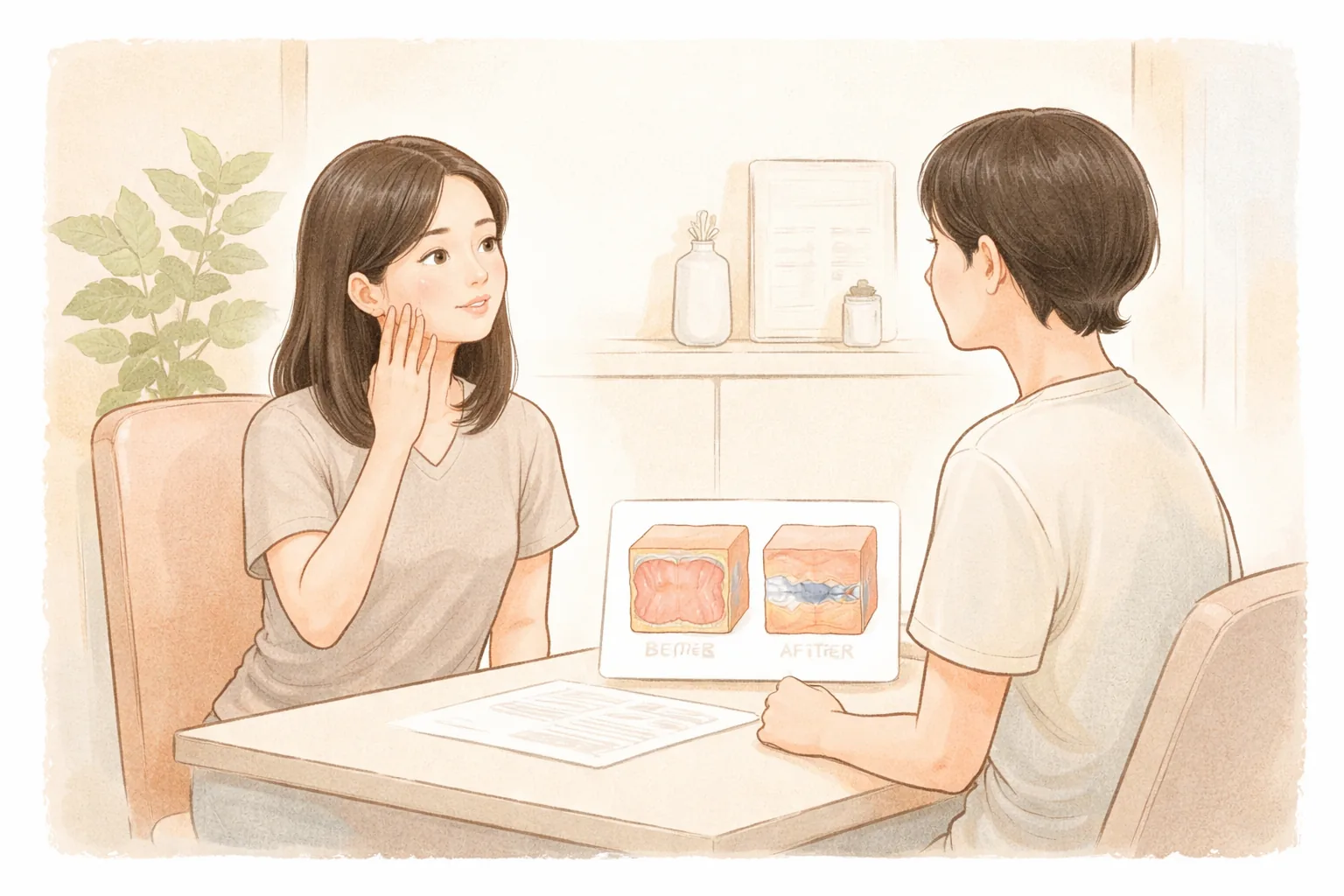
Common reactions such as swelling and bruising appear right after treatment and usually resolve within days to weeks. If you have an event where your face will be seen, tell the clinic that date first in consultation so the plan can be matched. If the schedule is tight, splitting the amount across sessions is also an option.
If you have had filler in another area before
The product name, when it was done, and how much bruising or swelling you had then become the basis for the next plan. If it was not hyaluronic acid, it may be a material that is hard to reverse, so it should be stated clearly.
If your skin is sensitive or prone to redness
Highly reactive skin may keep redness and swelling after treatment longer than usual. Whether you have had exfoliating care recently and whether you are using irritating skincare products also change the plan.
If you are a visitor on a short stay
To complete follow-up within your stay, it is better to place the treatment date earlier in the trip. For the same reason, splitting consultation and treatment across two days is less taxing than packing them into one.
Please tell us before consultation
Recent sun exposure, outdoor activity, and travel schedule
Medications you take, including aspirin or fish oil that can increase bleeding
Active ingredients in topical skincare, recent skin treatments
Prior filler history and reactions then (bruising, swelling, adverse reactions)
Bee venom allergy, checked before using hyaluronidase
Pregnancy or breastfeeding
Important upcoming events
How ATTITUDE Clinic proceeds
History and skin check — We first check autoimmune conditions, any past reaction to tissue-derived products, other allergies, medications, and pregnancy or breastfeeding. We also hear about prior treatments and reactions then.
Suitability and planning — Based on current skin condition, we decide which material to use, in which area, and to what degree. Delicate areas such as around the eyes require more precise control of volume and depth.
Pre-treatment explanation — The doctor explains what to expect and what reactions may occur before proceeding. This is the stage to confirm all your questions.
Follow-up — We check the course of swelling and bruising and the feel of the injection site. If there are symptoms different from usual, we advise contacting us without waiting for the next appointment.
For this topic, ATTITUDE Clinic uses domestic and imported hyaluronic acid fillers, and hyalase to reduce hyaluronic acid. Which product to use is decided after seeing the skin and area.
Aftercare and side effects
Soothing — Right after treatment, use ice packs to calm swelling and heat. Cleveland Clinic explains that acetaminophen-type pain relievers can be used for discomfort after treatment, and that anti-inflammatory pain relievers such as ibuprofen can increase bruising.
Cleansing and moisturizing — Wash gently without rubbing the injection site hard. Keep moisturizing consistently during recovery.
Avoid heat and pressure — It is better to avoid strenuous exercise, saunas, and alcohol for a few days. Cleveland Clinic explains that strenuous exercise can increase swelling and bruising.
Follow-up — Watch the course of bruising and swelling as they decrease. Cleveland Clinic advises avoiding dental treatment within 2 weeks before or after filler treatment to reduce infection risk.
Common reactions are bruising, swelling, redness, tenderness, and temporary unevenness at the injection site. FDA materials state that most side effects appear right after treatment and resolve within days to weeks, but rarely they can appear weeks, months, or years later. More rarely, inflammation, firm lumps under the skin (nodules or granulomas), infection, severe allergic reaction, filler migration, and leakage at the injection site can occur.
The most serious concern is filler entering a blood vessel. The probability is low, but if it happens it can lead to tissue necrosis, vision problems or blindness, and even stroke. If the skin at the injection site turns white, mottled, bluish-gray, or black, if pain different from usual worsens, or if you notice any change in vision, do not wait and seek care immediately. Cleveland Clinic also lists extreme pain or pale lips and surrounding skin as signs of vascular occlusion.
FAQ
How long does smile line filler last?
The FDA explains that duration varies with filler material and injection site. Cleveland Clinic notes that lip filler breaks down on its own within 6–12 months, but this figure reflects the characteristics of the lip area and is hard to apply directly to smile lines. Even the same ingredient feels different in a frequently moving area like the lips versus a less mobile area beside the cheek. It also varies by which product is used, so it is better to confirm the material and expected duration together in consultation.
Does it hurt a lot?
Cleveland Clinic explains that after filler treatment the lips may be sensitive, swollen, or red, and anesthetic cream is applied before treatment. The degree of pain varies with needle stimulation, product, area, and anesthesia method. For discomfort right after treatment, ice packs and acetaminophen-type pain relievers help, and anti-inflammatory pain relievers such as ibuprofen can increase bruising, so it is better to avoid them.
How long are swelling and bruising normal?
The US FDA explains that reactions such as swelling and bruising appear right after treatment and usually disappear within days to weeks. The degree varies with injection site, amount, and skin condition, and thin skin or a tendency to bruise easily can make it noticeable longer. However, if it does not decrease after weeks or only one side swells severely, follow-up is needed.
If I do not like it, can it be reversed?
Hyaluronic acid filler can be reduced with hyaluronidase. According to Cleveland Clinic, it usually takes 1–2 visits, and the number can increase if a lot of filler was injected or if there are lumps. The procedure takes about 10–15 minutes and results may take up to 2 weeks to show. This enzyme does not dissolve only the filler; it also breaks down the hyaluronic acid naturally present in that area, so the area may look thinner than before for a while. It cannot be used if you have a bee venom allergy.
What should I check when choosing a clinic?
The FDA recommends looking for a licensed medical professional with experience in dermatology or plastic surgery, and asking that professional about their filler training and experience. In consultation, it helps to check which product is used, whether the material is reversible, how adverse reactions are handled, and how thorough the medical history is. Deciding whether to proceed after hearing a full explanation before treatment is part of the same approach.
At a glance
Table 2 At a glance
Item
Key point
Smile lines
Line from beside the nose to the mouth corner, an approved filler indication
FDA approval scope
Adults 22 and older, smile lines, perioral lines, lips, cheeks, chin, back of hands
Unapproved areas
Glabella, nose, around the eyes, forehead, neck
What determines the result
Material, amount and tissue structure, layer placed, skin condition
Reversal
Only hyaluronic acid can be broken down with hyaluronidase
Common reactions
Bruising, swelling, redness, tenderness — days to weeks
Signs to contact immediately
Worsening pain, skin color change at injection site, vision changes
This article offers general health information. It is not a substitute for diagnosis or treatment based on your own condition, so please talk through your situation with a doctor.