
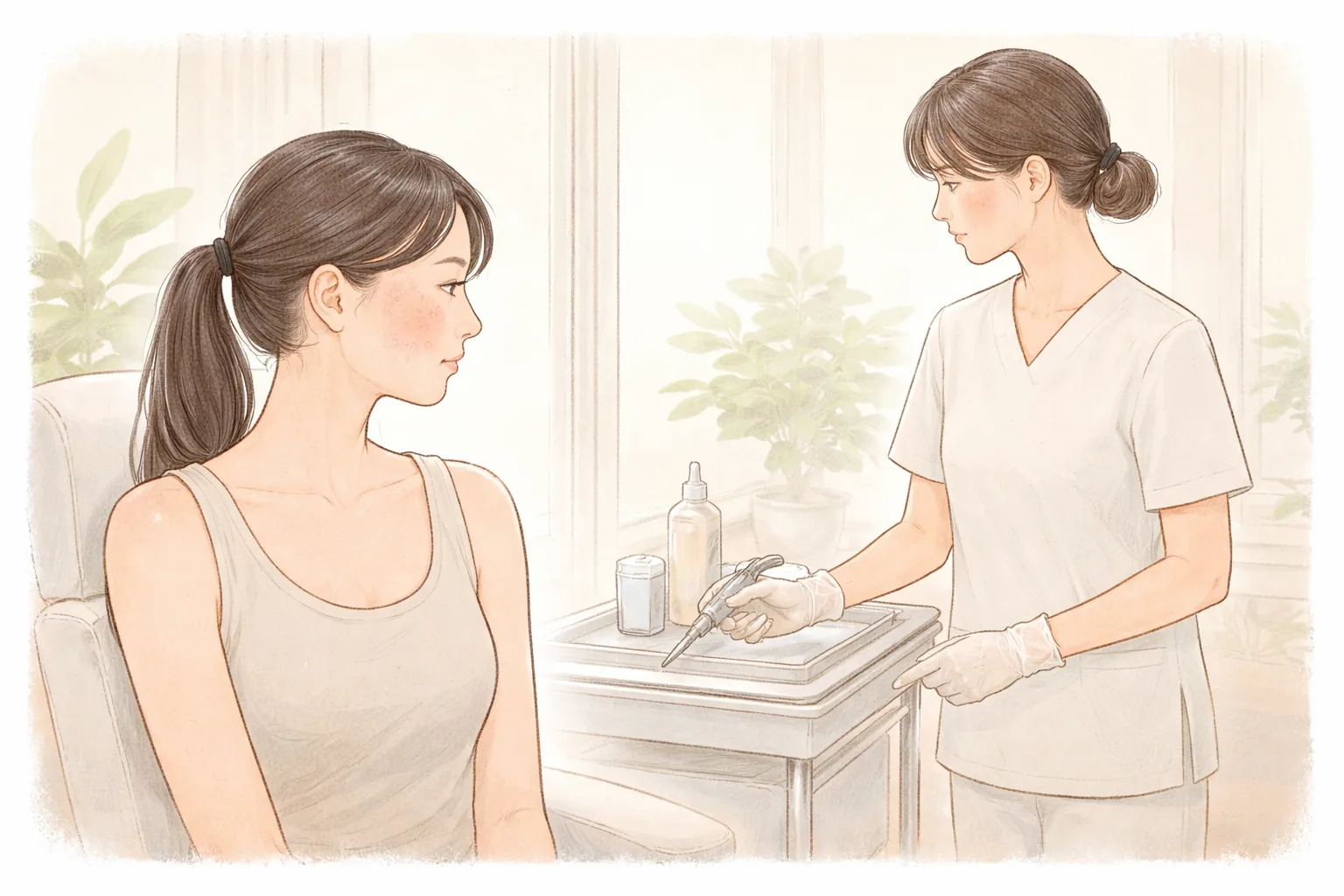
If redness lingers long after acne has settled, you may find yourself searching for vascular lasers such as Vbeam. How many sessions will I need, how far apart should they be, and can I get them while acne is still active — these questions tend to come up together. This article walks through what vascular lasers target in acne, what determines the number of sessions and the interval, and what to watch before and after treatment.
The bottom line first
For active acne, medication comes first. The American Academy of Dermatology's 2024 guideline strongly recommends benzoyl peroxide, retinoids, and antibiotic combinations, while stating that evidence for lasers and light devices is insufficient (AAD).
What vascular lasers target is not the acne itself but the red marks left where inflammation has passed — the blood vessels in the superficial layer of the skin. The ATTITUDE Clinic column presents 3–5 sessions at 4–6 week intervals as a common example for redness and vascular concerns (ATTITUDE Clinic column). These numbers vary with pigment depth, skin type, and UV exposure, so the doctor sets them after examining your skin at the first consultation.
What do Vbeam and vascular lasers target in acne?
A laser is light energy concentrated at a single wavelength (a property like the color of light). This light is absorbed only by specific substances that respond to that wavelength and is converted into heat or impact — a principle called selective photothermolysis (targeting only the intended structure while leaving surrounding tissue less affected) (ATTITUDE Clinic column). Different wavelengths respond to different targets, which is why a laser for pigment and a laser for blood vessels are different devices.
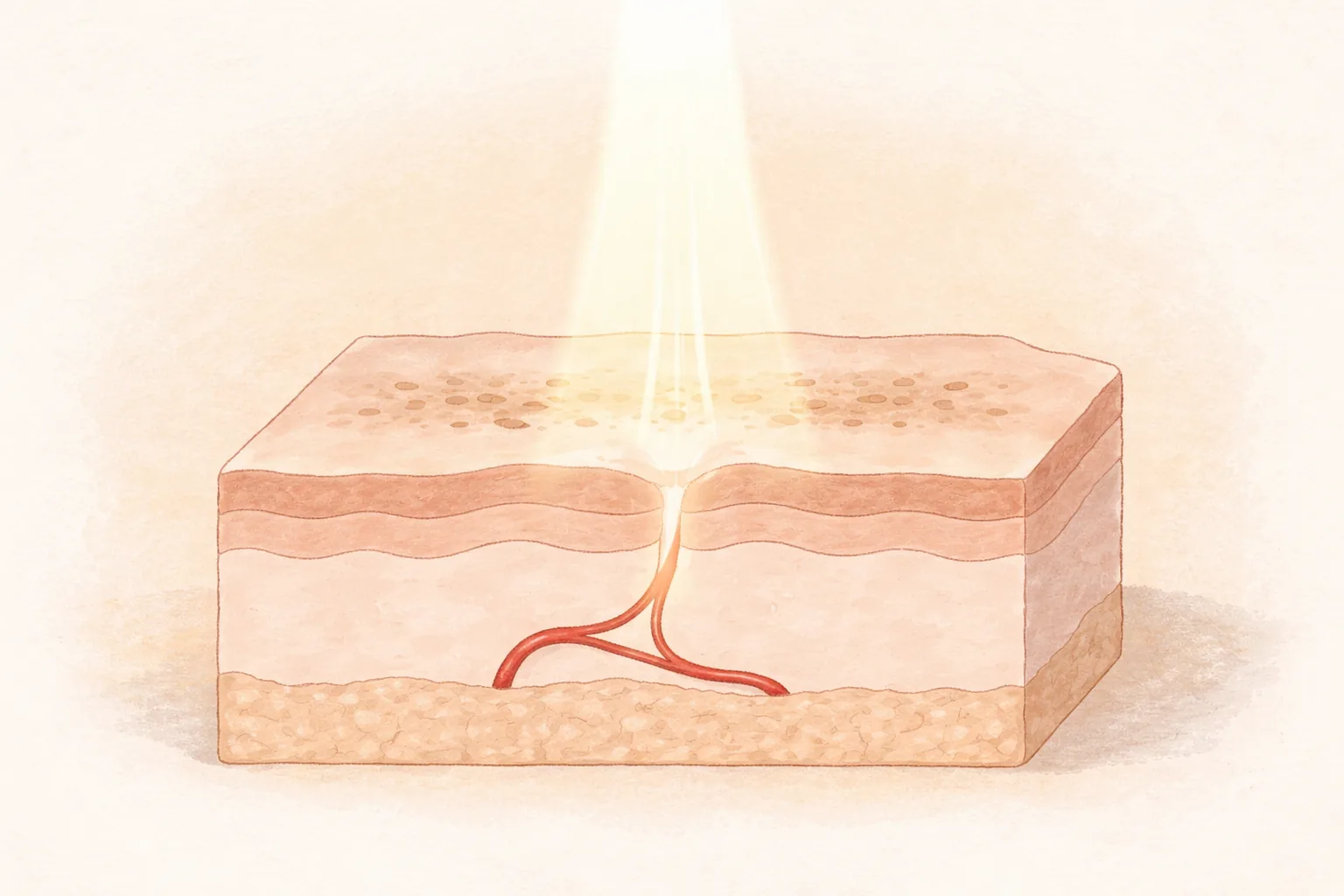
Vascular lasers use a wavelength that oxygen-carrying hemoglobin absorbs well. That makes the redness left after acne inflammation, and shallow vessels that show through like fine threads, the target. According to Seoul National University Hospital's medical information, when acne becomes inflamed, redness appears at first and turns brown over time (Seoul National University Hospital). This browning is a melanin pigment issue, not a vascular one, so even the same acne mark calls for a different laser depending on its stage.
There is a common misconception here: the expectation that "getting Vbeam means I won't get acne." Vascular lasers do not block the process that creates inflammation itself. Seoul National University Hospital's material also explains that several lasers are used in acne treatment, and that for scar treatment, Vbeam vascular laser therapy is performed in combination with other methods (Seoul National University Hospital) — it does not say that vascular lasers fundamentally eliminate active inflammatory lesions.
So why use vascular lasers on acne marks? Because the cause differs depending on whether the mark is red or brown. The ATTITUDE Clinic column divides acne marks into red marks, brown marks, and indented scars, and explains that each requires a different approach (ATTITUDE Clinic column). Red marks are a vascular issue, brown marks a pigment issue, and indented scars a structural issue. This is why checking the condition comes first, even for what shares the single name "scar."
Why does medication come first for active acne?
Acne develops in the order of excess sebum, blocked pores, bacterial overgrowth, and inflammation. Sebum is produced in large amounts in areas with developed sebaceous glands, dead skin cells and sebum block the pore opening, and Cutibacterium acnes, which feeds on sebum, multiplies and causes inflammation (ATTITUDE Clinic column).
Vascular lasers do not directly intervene in any of these stages. Lasers target the result that has already formed — the blood vessels in the area where inflammation has passed. That is why order matters. The AAD guideline notes that topical retinoids are used to open pores and reduce inflammation, and that benzoyl peroxide is used to reduce the number of bacteria that cause acne (AAD). For large inflammatory nodules, injectable corticosteroids are mentioned as an option for rapid relief of inflammation and pain.
Seoul National University Hospital's material describes injection treatment in more detail. Because pus-filled acne is more likely to leave scars, diluted triamcinolone is injected directly to help inflammation settle quickly, and although the injection site may become depressed, it often recovers after 6–12 months (Seoul National University Hospital).
In short, the natural order is to calm active lesions first, then consider vascular lasers at the remaining red mark stage. When active acne and old marks are mixed on the same face, which to address first is the first decision made in consultation. Acne begins to fade from the mid-20s, but adult acne that persists or newly appears after age 25 is increasing (Seoul National University Hospital), so planning a longer management period and dividing it into stages is less burdensome.
How many sessions, and what interval is a benchmark?
The ATTITUDE Clinic column organizes the lasers commonly used for each concern along with typical session counts and intervals. For redness and vascular concerns, 3–5 sessions of a vascular laser at 4–6 week intervals are presented as a common example (ATTITUDE Clinic column). For indented scars after acne, fractional laser at 4–6 sessions, 4–8 weeks is given as an example.
Rather than memorizing the numbers, it helps to see why the interval is what it is. Lasers are not a treatment where stronger and more frequent is better, and repeating before recovery is complete can burden the skin barrier (ATTITUDE Clinic column). Very frequent low-power toning has been reported in connection with mottled hypopigmentation, so toning usually leaves at least 1 week between sessions. The same column notes that with Vbeam, redness and swelling last a few days, and if bruising occurs, it can take 1–2 weeks to fade.
Material from other institutions is also helpful for getting a sense of session counts. Cleveland Clinic explains that laser resurfacing for acne scars may require 3–5 sessions and that swelling and redness after treatment can last up to 5 days (Cleveland Clinic). It adds that microneedling commonly takes 4–6 sessions. These numbers are general guidance for treating acne scars, and the exact number of sessions when using a vascular laser on red marks is adjusted based on skin response.
What stands out is that the AAD states it could not develop recommendations for chemical peels, lasers, light devices, or microneedling because evidence is insufficient (AAD). Medication treatments have accumulated evidence and produced strong recommendations, while procedures are still an area needing more research. That is why lasers are approached not as "how many sessions is the right answer" but by adjusting the interval while watching the response. Cleveland Clinic also explains that managing the acne itself is the priority before starting scar treatment, and that there are limits to how much the skin can recover (Cleveland Clinic).
| Target | Device or treatment used at ATTITUDE Clinic | Best suited for | Typical session count and interval |
|---|---|---|---|
| Shallow vessels (hemoglobin) | Vbeam (532nm vascular laser) | Red marks after acne, redness | 3–5 sessions, 4–6 weeks |
| Fine diffuse redness, skin texture | Genesis toning (1064nm laser) | Faintly spread redness, skin texture | Decided in consultation based on response |
| Melanin pigment | PicoPlus (picosecond) | Brown marks, spots | Spots 1–3 sessions at 4–8 weeks, melasma toning 8–12 sessions at least 1 week apart |
| Epidermal and dermal structure | Erbium fractional | Indented scars, pores | 3–5 sessions, 4–6 weeks |
Swipe sideways to see the whole table.
In short In acne, vascular lasers are a tool for the mark stage, and for active inflammation, medication comes first. A common example is 3–5 sessions at 4–6 week intervals, but this varies with the depth of the marks, skin response, and UV exposure, so adjusting the interval while monitoring progress is the key.
If this sounds like your situation

If you have a fixed date like a wedding or photo shoot
Redness and bruising can overlap with your schedule, so when to start matters. With Vbeam, bruising can take 1–2 weeks to fade (ATTITUDE Clinic column), so intensity and timing are set by counting backward from the date. Cramming a first-time treatment right before an event narrows your options.

If acne is still breaking out
If active lesions and marks are mixed, calming the inflammation first takes priority. While medication reduces inflammation, the timing of mark treatment can be coordinated, and injection treatment can be considered for large nodules (Seoul National University Hospital). Rather than finishing everything in one visit, splitting it across two or three visits is less burdensome.

If your skin is sensitive or prone to redness
If cosmetics sting or your skin has become unusually sensitive, it is best to mention this before treatment (ATTITUDE Clinic column). The same settings can behave differently depending on skin response, and the role of the laser may be limited depending on whether the redness comes from shallow vessel dilation or skin reactivity. In such cases, start at low power and increase while watching the response.
If you are an international visitor on a short stay
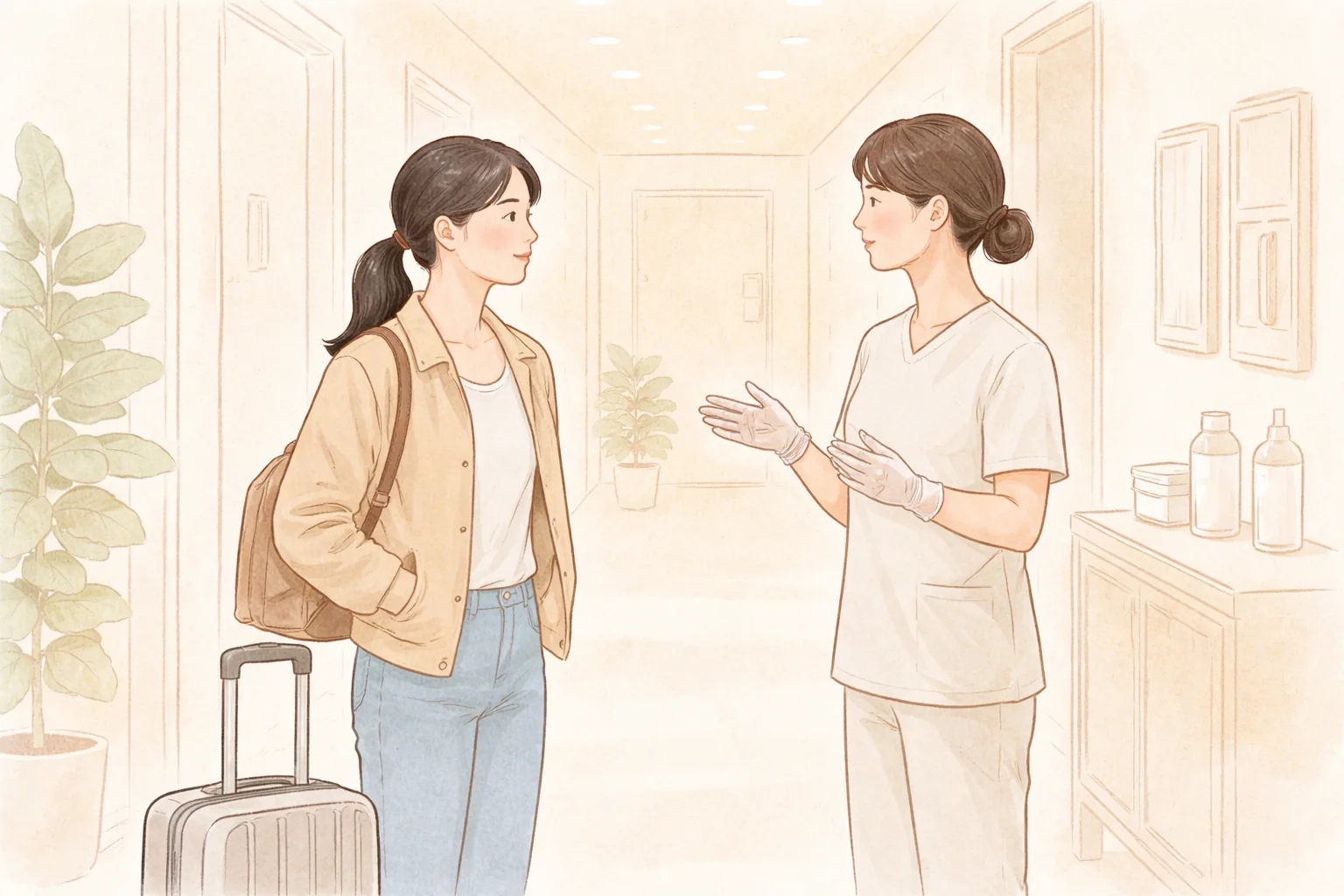
If your stay is fixed, redness or dryness right after treatment can affect your schedule. Let the clinic know your return date and when you could next visit, so intensity and type can be set within that range (ATTITUDE Clinic column). Settings that may cause bruising are better avoided when your schedule is tight.
Tell us before your consultation Please let us know your recent UV exposure, medications and cosmetics you are using (including retinoids and exfoliants), any past experience of sensitive skin after treatment, and important dates such as weddings, photo shoots, or travel. Telling us what stage your acne is at and whether you are using any topical medication also helps in setting the order of treatments and medication.
How ATTITUDE Clinic proceeds
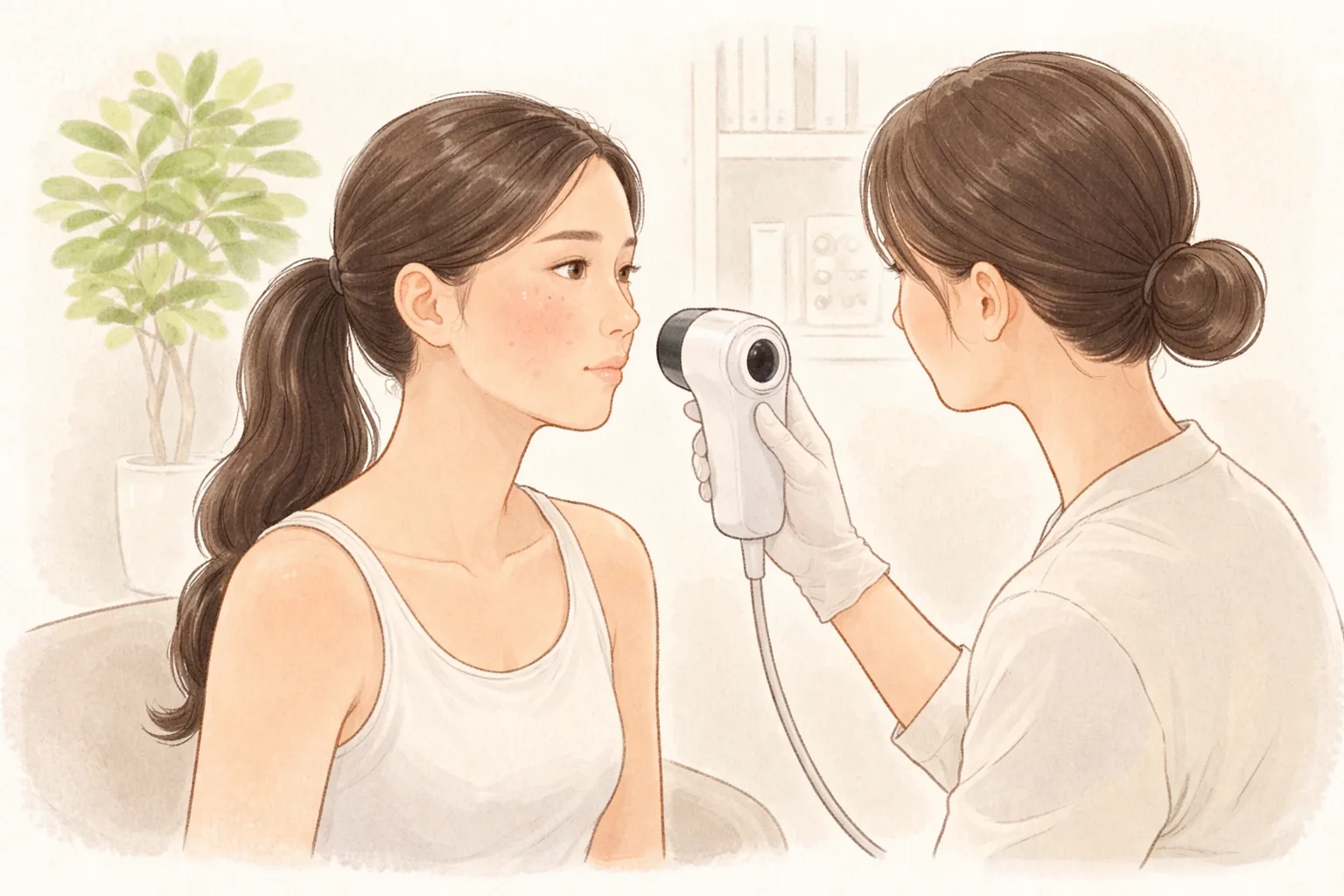
AI skin analysis record — Current skin conditions such as pigment, redness, texture, and pores are recorded with an analysis tool. This record organizes information to assist the consultation and is not a medical diagnosis. The doctor makes the judgment.
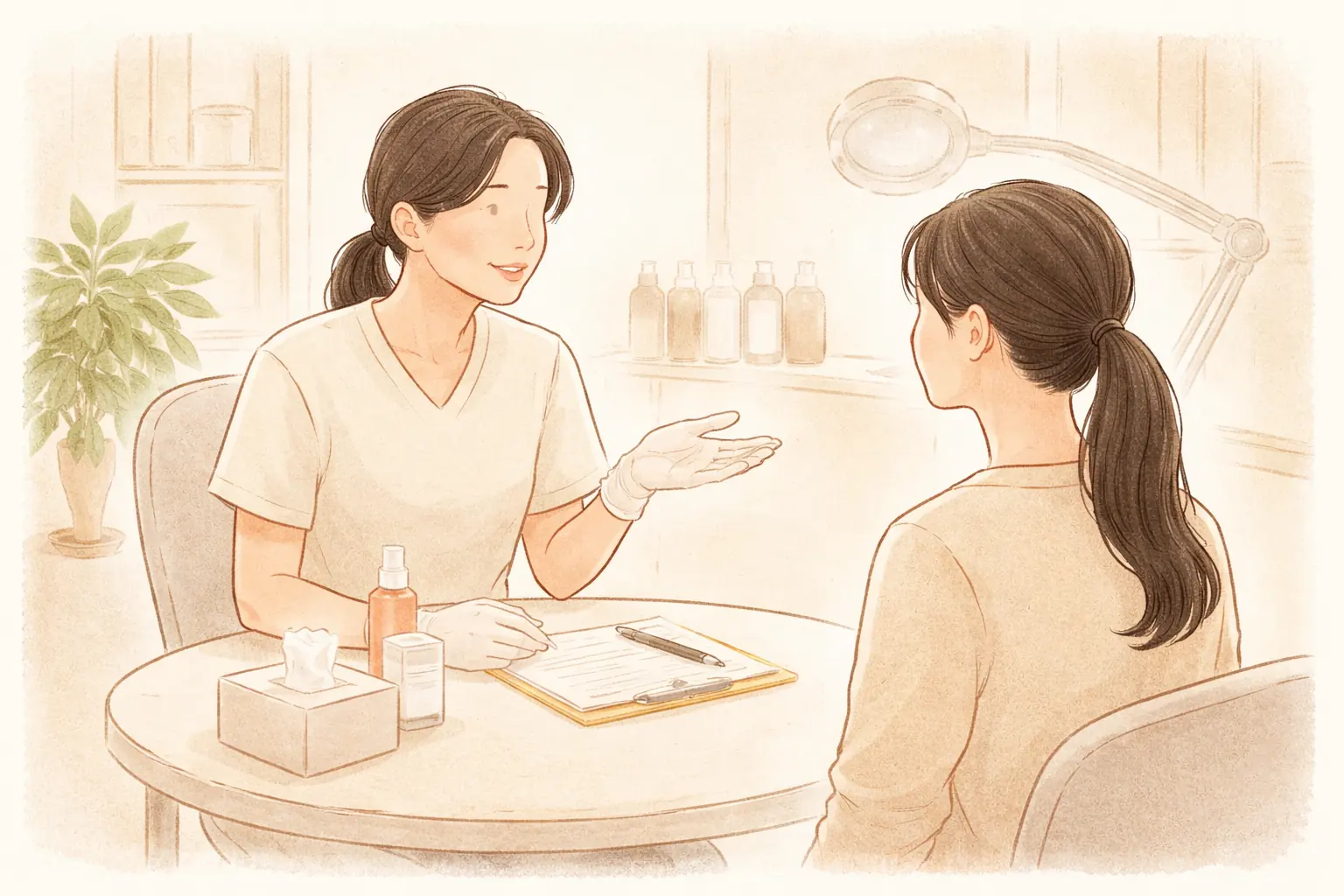
Doctor consultation to design the direction — Your schedule, pain sensitivity, skin history, and medications you are taking or using are added to the analysis record to decide the treatment type, intensity, and timing. Which to address first — active acne or marks — is also decided here.
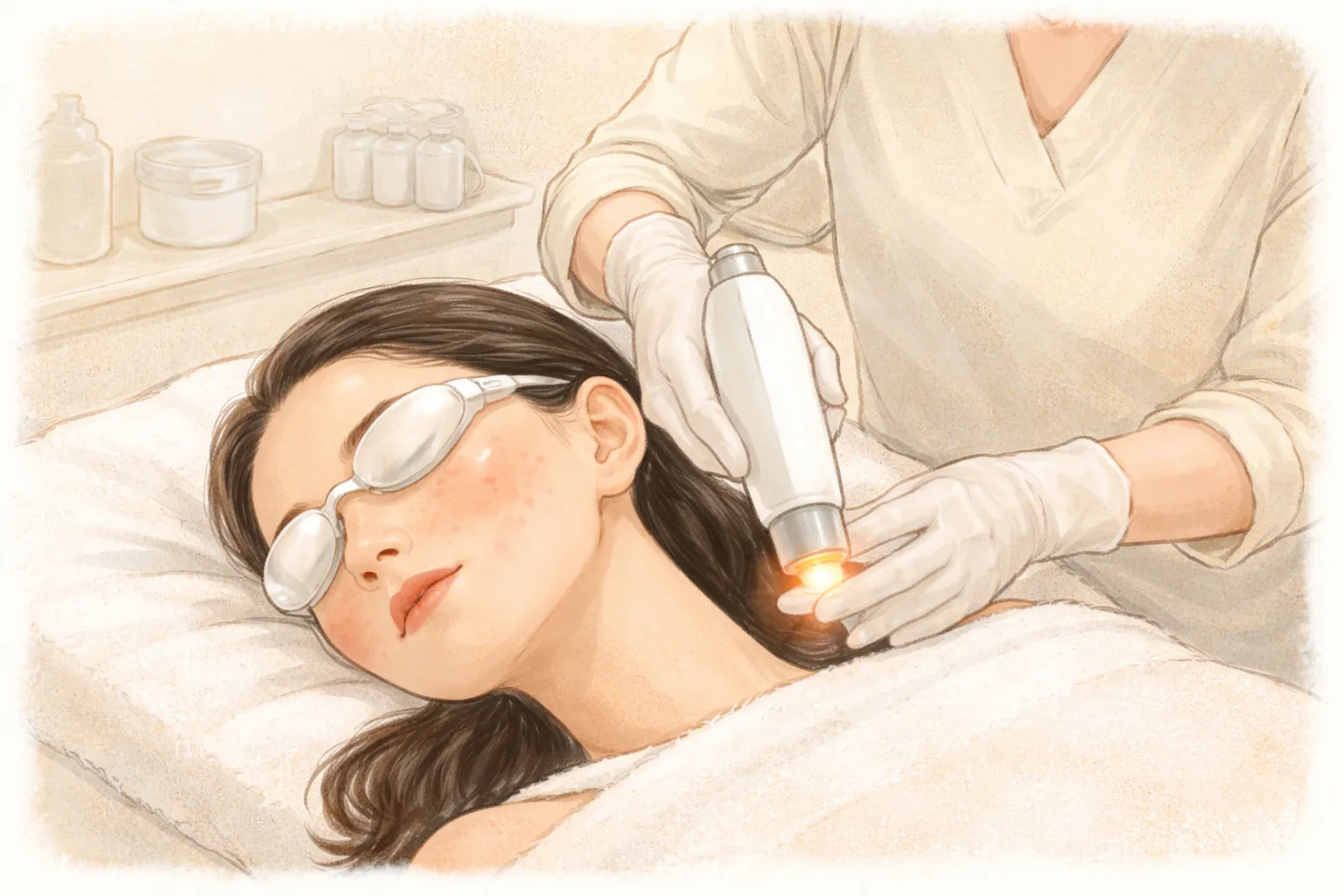
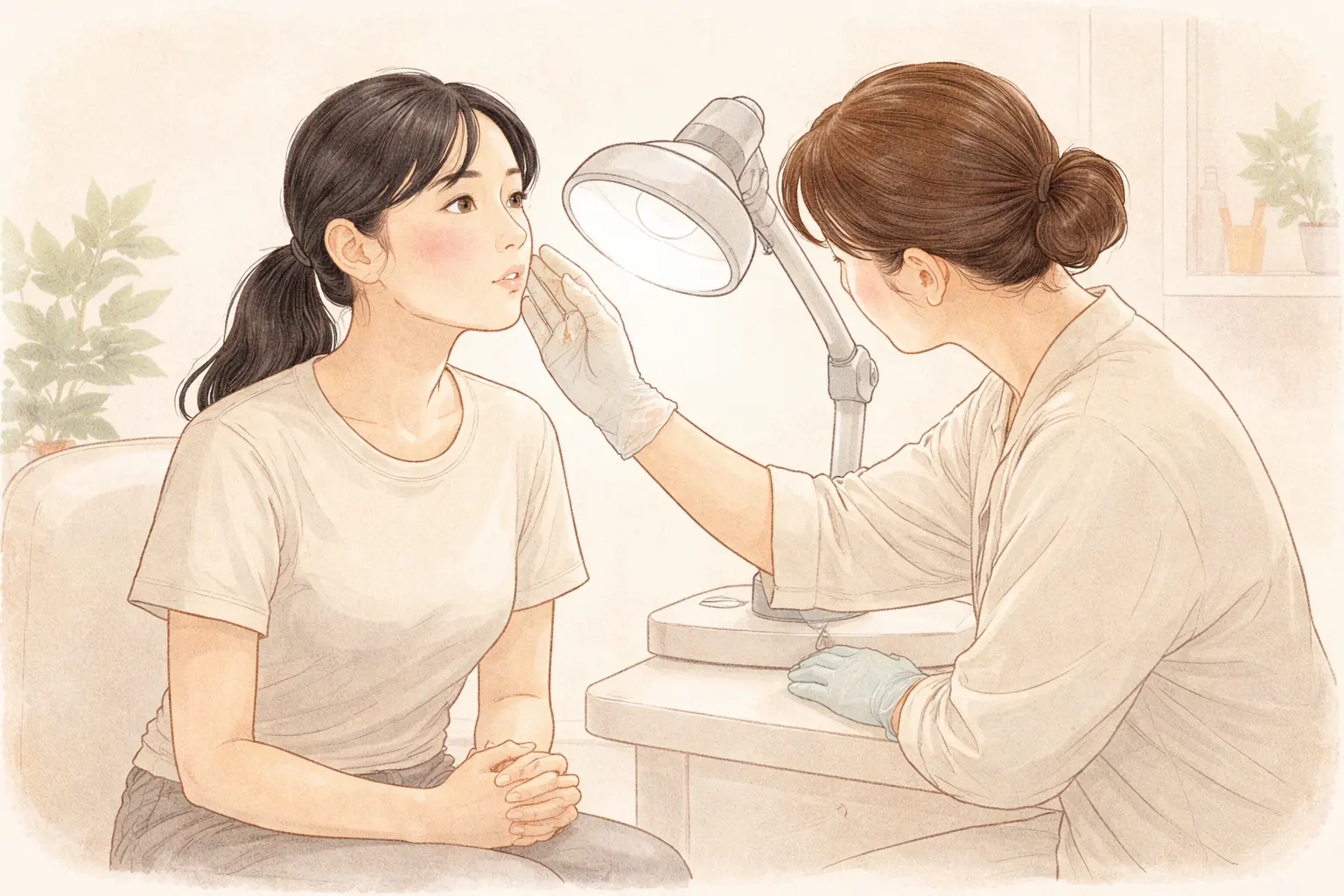
Treatment performed by the doctor — Topical anesthesia is used as needed to reduce discomfort, and the doctor performs the treatment directly. Intensity is adjusted based on skin response, and no more sessions than necessary are recommended.

Progress check and setting the next interval — Redness and changes in the marks are checked after treatment, and the next visit interval is set. Even for the same concern, the interval differs with recovery speed.
The devices ATTITUDE Clinic uses for this topic include Vbeam, a 532nm vascular laser, Genesis toning, PicoPlus for pigment, and erbium fractional for surface and scar texture (ATTITUDE Clinic column). Which device is used depends on the cause of the concern, and intensity and interval are adjusted to the skin condition.
Aftercare and side effects
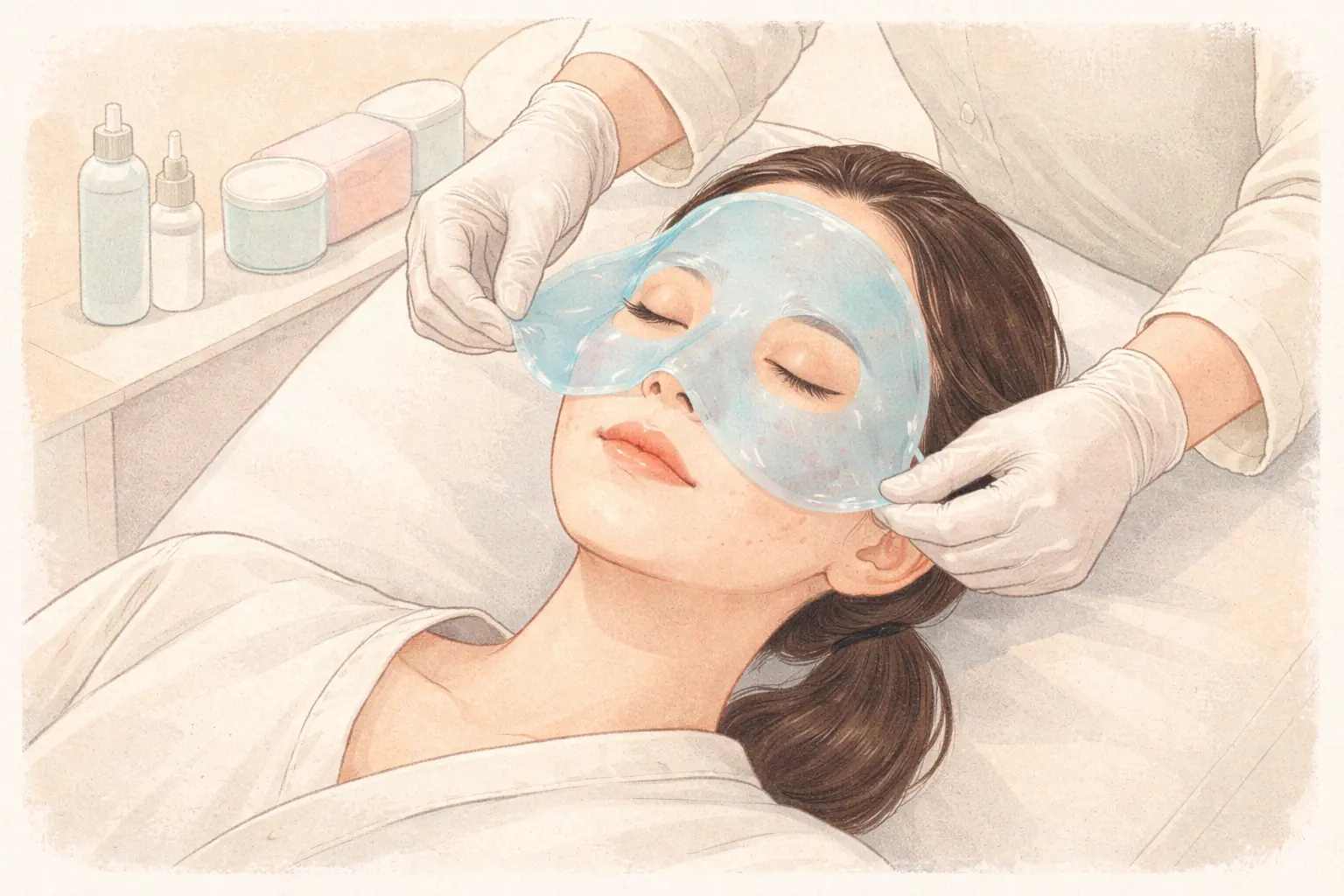
Soothing — Redness and heat right after treatment are managed with cooling and soothing. During this period, it is better to avoid saunas, jjimjilbang, and intense exercise.
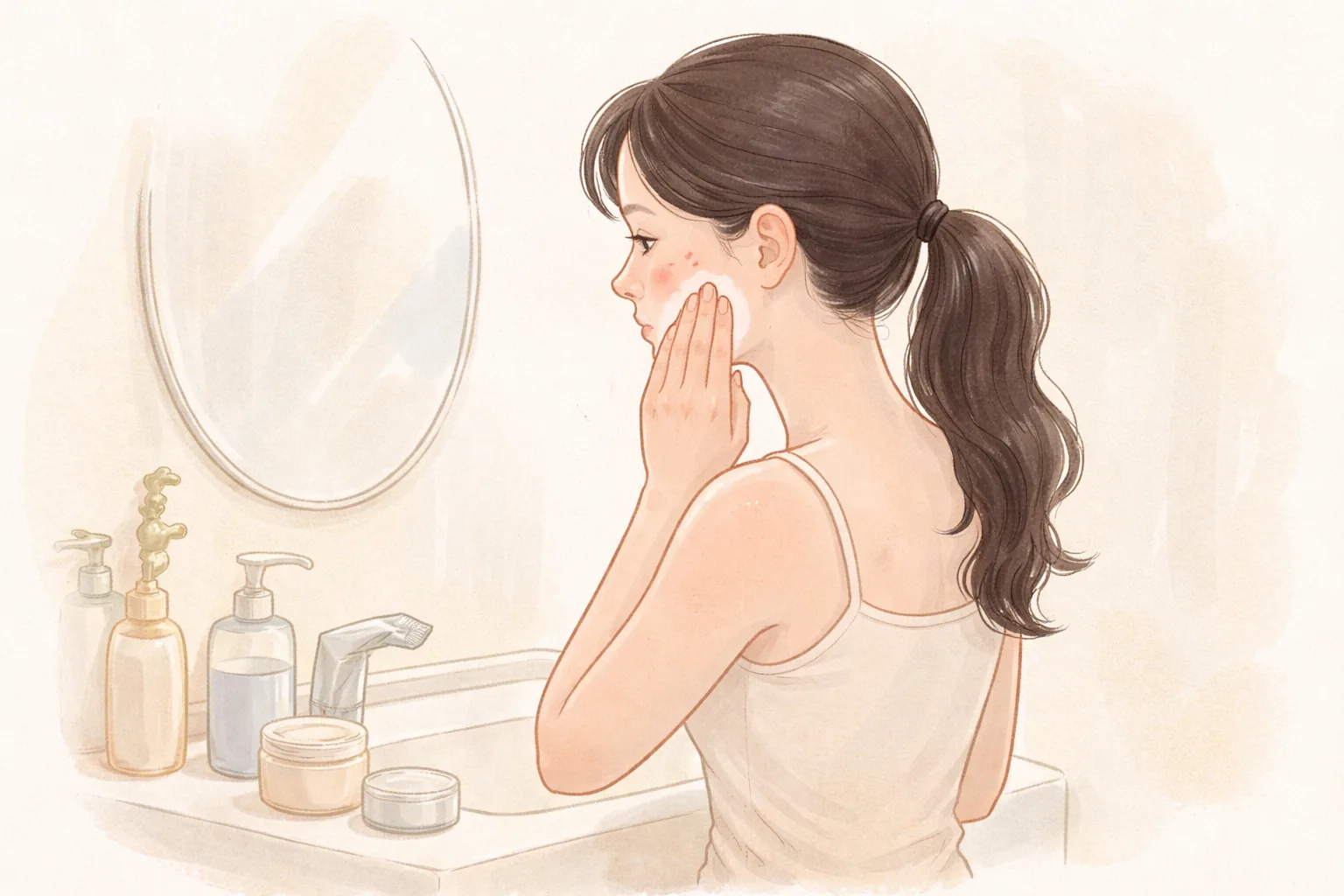
Moisturizing — Skin is temporarily sensitive, so maintain moisture. Avoid strong exfoliation and irritating scrubs for the period you are advised.

Sun protection — For at least 2 weeks after treatment, apply SPF 50+ sunscreen and reapply about every 2 hours outdoors (ATTITUDE Clinic column). If you do not protect against UV during this period, pigmentation can develop in the newly formed skin and undo the results.
Progress check — If crusting occurs, do not pick at it and let it fall off on its own. Set the next interval while watching changes in redness and marks.
Side effects range from common to rare. Redness, heat, swelling, and stinging are common, and Vbeam can cause bruising, which can take 1–2 weeks to fade (ATTITUDE Clinic column). Temporary pigmentation can occur, and rarely blisters, hypopigmentation, infection, scarring, or pigment returning over time can happen.
If redness or stinging lasts more than 3 days or suddenly worsens, it is better to visit the clinic to have it checked rather than endure it (ATTITUDE Clinic column). The same applies if pain worsens or blisters form. Right after treatment, avoiding touching or squeezing your face helps recovery — squeezing forcefully makes inflammation worse and is more likely to leave scars (Seoul National University Hospital).
Frequently asked questions
How many Vbeam sessions until I see results?
The common example given in the ATTITUDE Clinic column is 3–5 sessions of a vascular laser at 4–6 week intervals (ATTITUDE Clinic column). This is just a common example, however, and varies with the depth of the marks, skin type, and UV exposure. How the redness changes after the first session becomes the benchmark for setting the next interval, so rather than judging results after one session, adjust while watching progress over two or three sessions. If this overlaps with a course of medication for the acne itself, it is better to place mark treatment afterward.
What is the difference between Vbeam and vascular lasers?
Both target hemoglobin as vascular lasers, but their wavelengths and delivery methods differ, so the depth and thickness of vessels they suit differ. The ATTITUDE Clinic column explains that because different wavelengths respond to different targets, a laser for pigment and a laser for blood vessels are different devices (ATTITUDE Clinic column). So rather than comparing device names, confirming which layer of vessels your redness comes from comes first. Even on the same face, shallow fine threads and faintly spread redness call for different settings.
Can I get a vascular laser while acne is still active?
You can, but setting the order comes first. The AAD guideline strongly recommends topical retinoids, benzoyl peroxide, and antibiotic combinations, and states that evidence for lasers and light devices is insufficient (AAD). The usual flow is to calm active inflammation with medication first, then consider vascular lasers at the remaining red mark stage. If active lesions and marks are mixed, priorities are set in consultation. For large inflammatory nodules, injection treatment can be an option (Seoul National University Hospital).
If bruising or redness occurs after treatment, when can I return to daily life?
With Vbeam, redness and swelling last a few days, and bruising can take 1–2 weeks (ATTITUDE Clinic column). How quickly redness settles varies with intensity and skin condition, so if you have an important event, tell us the date in advance so timing can be adjusted. Settings likely to cause bruising are better avoided when an event is close. After treatment, maintain sun protection and moisturizing, and avoid saunas and exfoliation for the advised period.
What should I look for when choosing a clinic for acne treatment?
Look at a few things rather than the device list. Whether they confirm before treatment whether your concern comes from pigment, blood vessels, or skin structure; whether they design the order of active acne and marks together; whether they do not lock in the number of sessions or intensity in advance; and whether you can have things checked if you are uncomfortable after treatment (ATTITUDE Clinic column). Even with the same vascular laser, the experience and recovery differ with settings and intervals, so confirming these four points in consultation is more helpful than comparing device names.
At a glance
| Item | Key point |
|---|---|
| What vascular lasers target | Not the acne itself, but the shallow vessels of the red marks left after inflammation |
| Priority for active acne | Medication such as topical retinoids and benzoyl peroxide comes first |
| Typical session count and interval | 3–5 sessions of a vascular laser at 4–6 weeks (common example) |
| Downtime | Redness and swelling for a few days, bruising 1–2 weeks if it occurs |
| Aftercare essentials | Sun protection and moisturizing, avoid crusting and irritation |
| What determines the interval | Depth of the marks, skin response, UV exposure, scheduled events |