XERF vs Thermage: How to Check Tips and Treatment Scope
Before booking XERF or Thermage, here is how to read the tip and shot units on the clinic price list, which areas are covered, and how to check pain, recovery, and when results appear.
Written by ATTITUDE Clinic Editorial Team
When you look into XERF and Thermage, the first stumbling block is not "which one is better." It is the tip name and shot count on the quote — what they actually mean for your face, and whether the same number on two devices can be read as the same scope. This article starts with what RF lifting does in the skin, then walks through how to read the tip and shot units and area line items on a price list, and what to verify during consultation.
The short answer first
ATTITUDE Clinic's price list places Thermage FLX and XERF as separate line items and classifies both as monopolar RF lifting (Treatments and Pricing). So the first question becomes not "which one is better" but "how far do the listed tip, area, and shot units cover my concern."
A shot unit is the basis of that line item, not the amount recommended for your face. In consultation, it is more accurate to match the tip type, treated area, anesthesia method, and what is included in words. Which device is superior, or which suits you personally, cannot be judged from the price list alone; it is decided by looking at your skin condition, the change you want, and the time you can devote to recovery.
In RF lifting, what do the tip and shot count determine?
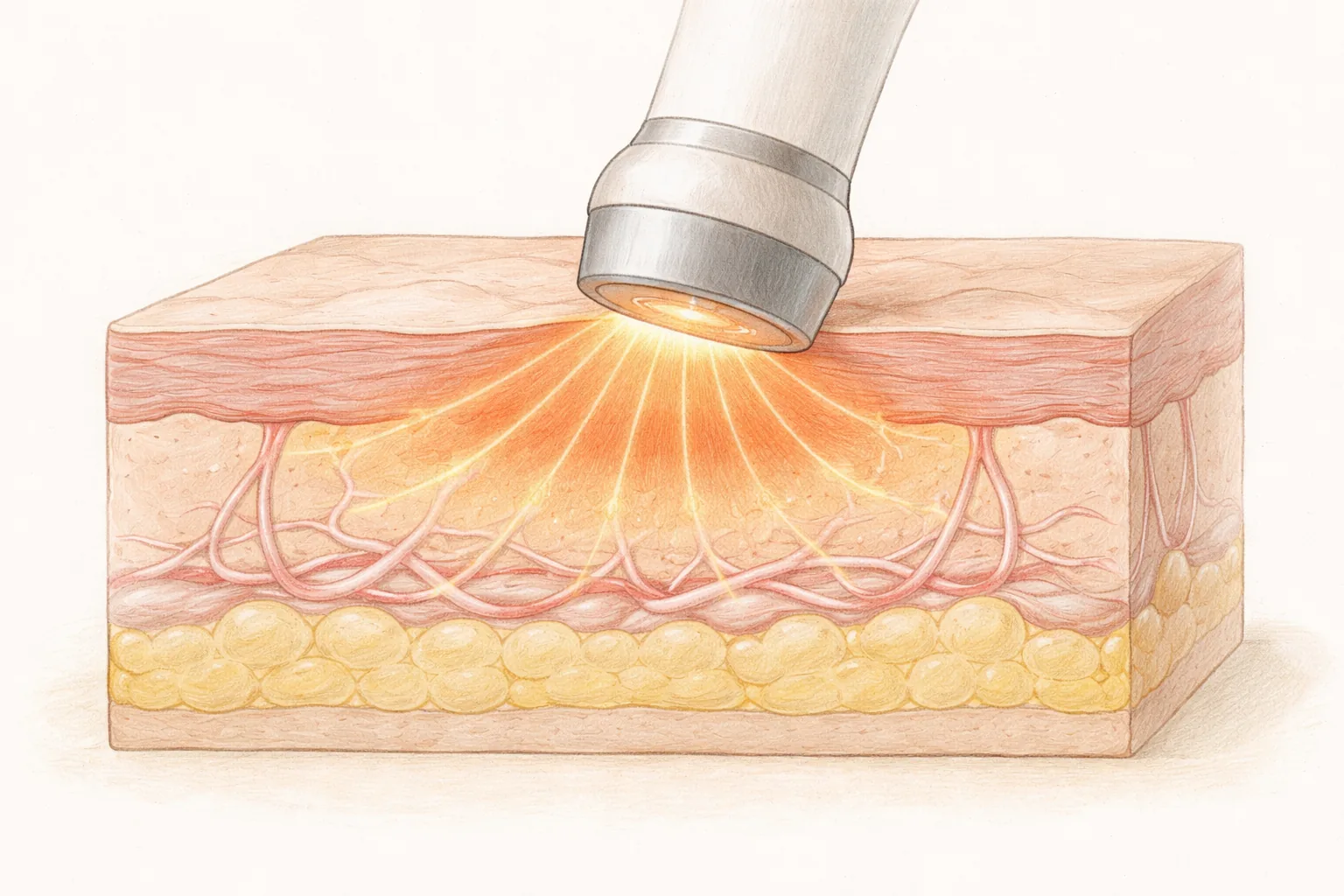
Radiofrequency (RF) is a method in which electrical energy passes through skin tissue and converts into heat. ATTITUDE Clinic's column explains the Thermage family as using this heat to warm a broad area from the dermis down to the subcutaneous fat layer at once, and that heat slightly contracts collagen — the protein that keeps skin firm and supported — and gradually begins remodeling. The same article contrasts this with Ultherapy and Shurink Universe, which focus ultrasound at a point (Ultherapy, Shurink, and Thermage: Same Lifting, Different Principles?).
Here the tip determines scope. The tip is the part at the end of the handpiece that contacts the skin and delivers energy, and a shot is one instance of placing the tip and delivering energy. Because the tip determines how much area is covered at once, even with the same shot count, if which tip was used and where is not recorded alongside, it is hard to compare two quotes side by side.
It is common to simplify: "a bigger number means broader and stronger." But the number on the price list is a sales unit, and the actual scope depends on the area line items and tip configuration. So in consultation, it is better to first clarify whether it is the whole face, only the lower face, or whether the eye area is separate.
How should you read the area and shot line items on a price list?
On ATTITUDE Clinic's price list, line items are divided by treatment, product, area, volume, and number of sessions, and all amounts are shown with VAT excluded (Treatments and Pricing). There are separate face items and eye-area items, and even for the same device, shot units are split across several lines.
The reading order is this. First find the device name, then see which area line items sit under it. Next, check what the shot unit for that item is, and whether there is a separate eye-area item. Finally, ask whether the amount excludes VAT and whether consultation fees, anesthesia fees, and aftercare are included. The item name is the name as it is, and the number attached after it is the basis of that item, so do not read the two together as if they were a new name.
Table 1 How should you read the area and shot line items on a price list?
Item to check
XERF
Thermage FLX
Price list classification
monopolar RF lifting
monopolar RF lifting
Face item units
300, 600, 900 shots
600, 900 shots
Eye-area items
225, 450 shots
225, 450 shots
Amount shown
VAT excluded
VAT excluded
What to confirm in consultation
Tip type, treated area, anesthesia method, what is included
Tip type, treated area, anesthesia method, what is included
Swipe sideways to see the whole table.
In short the price list separates the two devices into different line items with different shot units, so it is hard to compare scope by the numbers alone. In consultation, it is easier to confirm the tip and treated area in words first, then match the amount and what is included.
What makes pain and recovery differ?
With lifting, pain varies widely from treatment to treatment and person to person. ATTITUDE Clinic's column cites energy level and nerve density by area as the reasons. The higher the energy level and the more shots delivered to one area, the stronger the heat stimulus, and areas close to bone with dense nerves, such as the jawline, cheekbones, forehead, and eye area, tend to feel more sensitive. Thicker areas like the cheeks tend to hurt less even at the same energy.
The quality of sensation also differs. The same column describes ultrasound-based treatments as a deep, hot sensation, and RF as a warm sensation that lingers as it heats a broad area closer to the surface. The anesthesia method is something you are guided on during consultation, so if you are sensitive to pain, it is better to discuss anesthesia options and energy-level adjustment at the consultation.
Recovery is generally short. For 1–2 days right after treatment, redness and mild heat may remain due to heat stimulation, and most settle naturally. The same column reports downtime as 1–2 days and states that most people can return to daily activities, including makeup, from the next day. However, during this period the skin's barrier is temporarily weakened, so you should pay more attention to sun protection than usual.
What determines results and personal suitability?
According to the American Academy of Dermatology's patient information, results of non-invasive firming treatments appear gradually, feel natural, and tend to involve less recovery burden. For RF treatments in general, it says they are usually performed in 1 session, some people feel some tightness right after, and because collagen takes time to form, the best results are seen at about 6 months, with some benefiting from more than 1 session (AAD: Different Approaches to Skin Firming Treatments). This explanation applies to non-invasive firming treatments in general, so do not transfer it directly to the timing and number of sessions for XERF or Thermage individually.
ATTITUDE Clinic's column also views the timeline similarly. With Thermage, a firm feeling may occur early after treatment, and some of that is swelling, after which additional changes usually appear gradually over 2–6 months. The repeat interval is roughly around 1 year, decided by the doctor based on progress.
Suitability splits by skin condition. Even with the same analysis result, the combination, order, and intensity must be set differently for each person, and skin type, thickness, and the regeneration rate at which collagen is newly made change the starting line for results (Why Do Results Differ Even with the Same Treatment?). The American Academy of Dermatology explains that people with stable weight and less sagging skin tend to get good results, and that when there is a lot of sagging skin, firming treatments may not help. If you are pregnant, have a skin infection at the treatment site, or are taking certain medications, the treatment may not be suitable, so this is checked first in consultation.
Plans that use devices at different depths together also depend on skin condition. Whether to do them on the same day or with an interval is decided as part of the overall schedule in consultation.
If this sounds like your situation
When a ceremony or shoot is coming up soon
With non-invasive treatments, redness and mild heat may remain for 1–2 days, and results appear gradually. If your schedule is close, it is safer to mention the treatment date along with the days you can devote to recovery, and to set the energy level and anesthesia method in consultation.
When you want ongoing management
The repeat interval is roughly around 1 year, decided based on progress. If you record the next visit timing based on the plan set at the first treatment, it becomes easier to judge whether to repeat the same device at the same intensity or adjust it.
When your skin is thin and sensitive or reddens easily
Skin thickness and recovery speed differ from person to person, so even a treatment at the same strength feels different. If redness tends to linger, tell the clinic before treatment, and match the intensity, anesthesia method, and treatment scope in consultation.
International visitors on a short stay
It is better to build the redness and mild heat right after treatment, along with your sun protection plan, into your schedule. If your stay is short, first decide in consultation how many days of recovery are needed and when progress can be checked.
Please tell us before consultation If you let us know in advance about recent sun exposure and outdoor plans, medications and skincare products you are using (such as retinol or acids), pregnancy or breastfeeding, inflammation at the treatment site, reactions to past treatments, and dates you absolutely want to avoid, it helps in setting the treatment scope and intensity.
How ATTITUDE Clinic proceeds
AI skin analysis record — Skin condition is organized with photos and records so you and the doctor look at the same information together. The analysis tool only records and organizes information and does not make a medical diagnosis; judgment is made by the director.
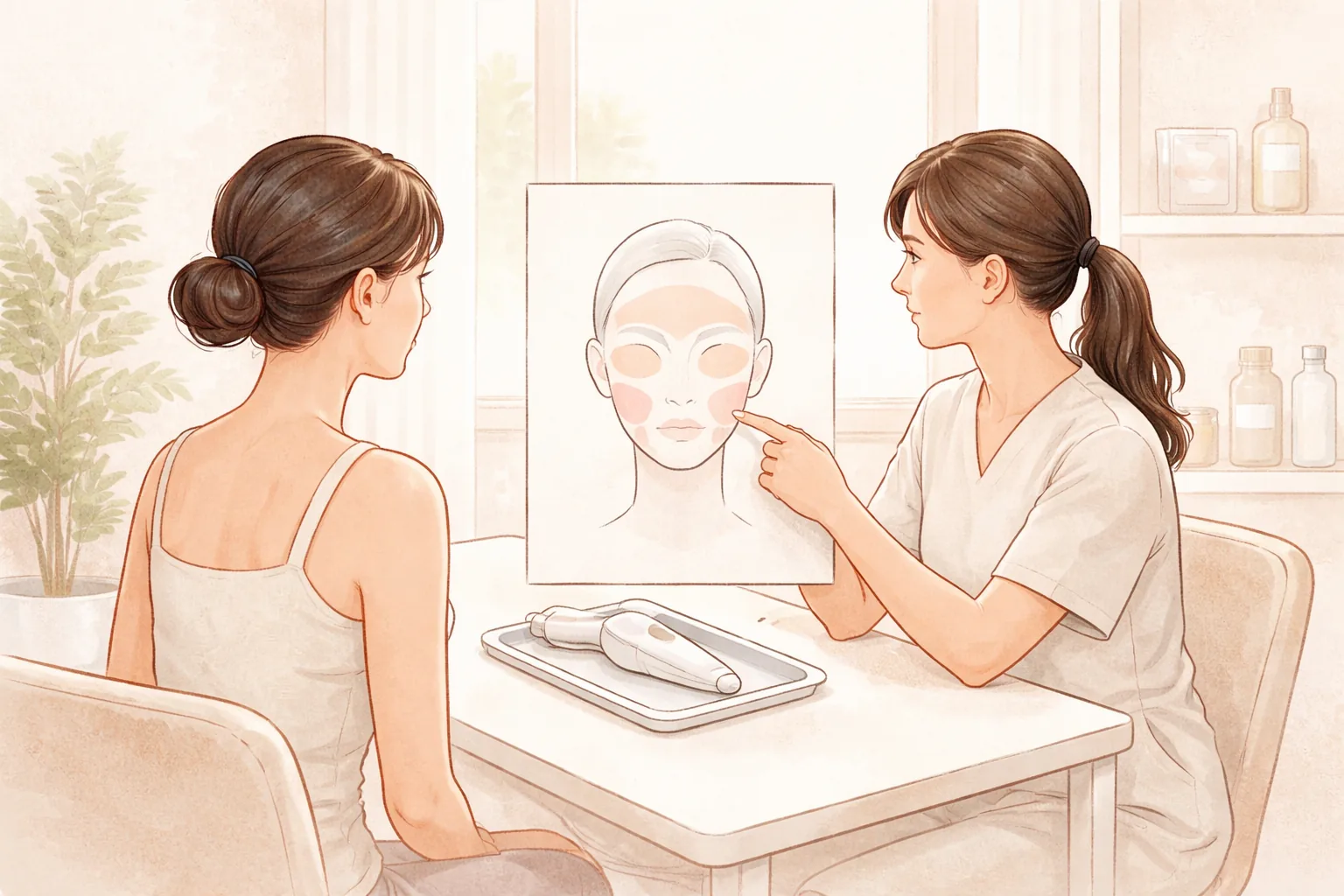
Director consultation — Your concerns, lifestyle habits, and previous treatment experience are added to the analysis record, and together you decide what is needed and what is not, and in what order and intensity. The tip, area, and shot units on the price list are matched to the actual scope at this point.
Treatment performed directly by the director — The plan set in consultation is carried out directly by the director. During treatment, intensity is adjusted based on the skin's response so that the plan and the actual procedure do not diverge.
Progress check and next plan — The flow of redness and swelling settling is checked, and the next visit timing and intensity are set together.
ATTITUDE Clinic discloses prices by unit, shows VAT separately, and maintains a flow in which the director personally handles everything from consultation to treatment (Why Do Results Differ Even with the Same Treatment?). Devices named on the price list related to this topic include Thermage FLX and XERF, and Ultherapy, Shurink Universe, and Onda sit together under the same lifting category. Whether to add treatments with different purposes, such as Potenza under the pores and scars category, to the sequence is also decided in consultation.
Aftercare and side effects
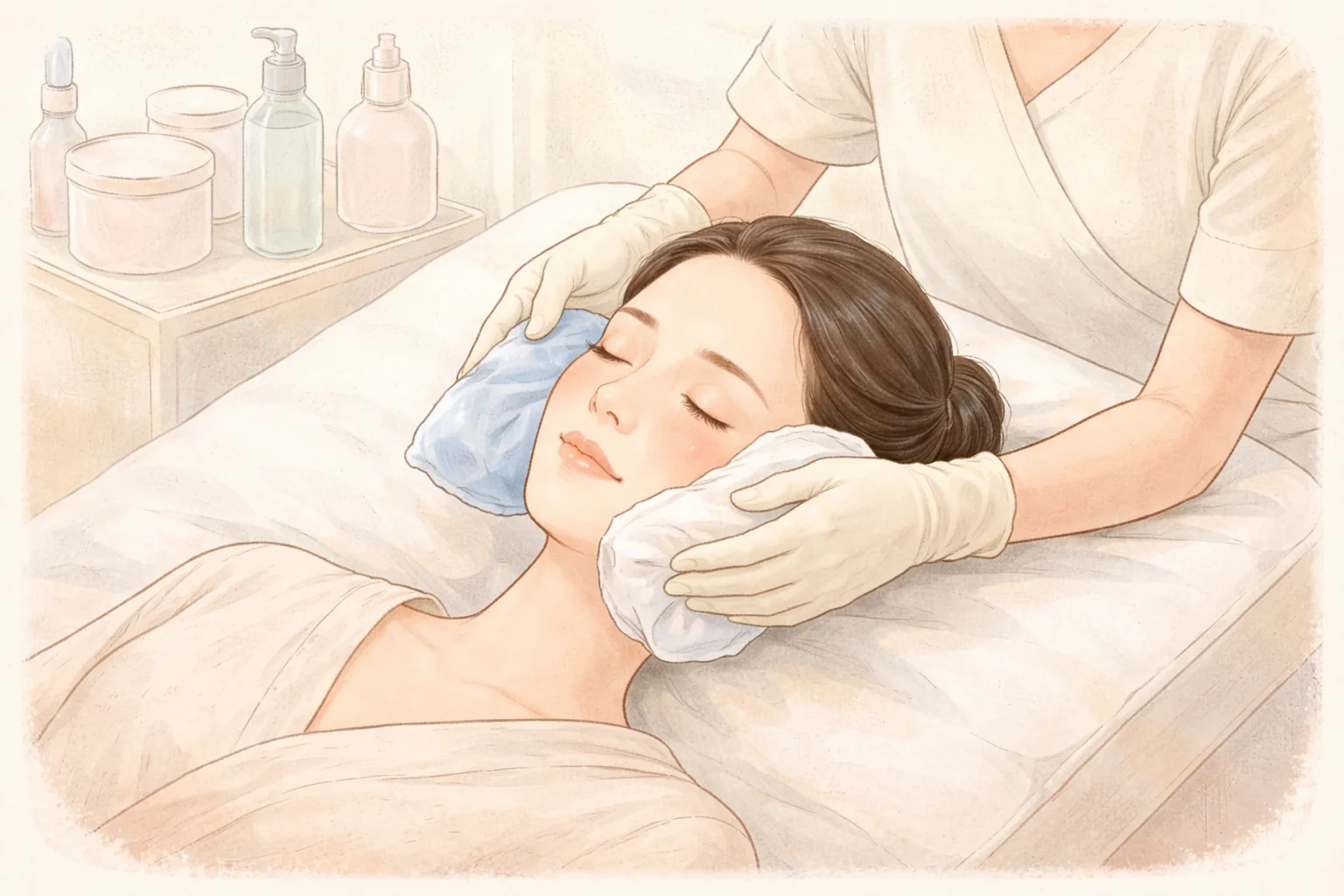
Soothing — Right after treatment, cold compresses can help settle swelling and heat. Specific methods are confirmed with the medical team.
Moisturizing — Skin that has received heat stimulation tends to become dry, so take care of moisturizing more than usual.
Sun protection — For several days, apply sunscreen more thoroughly than usual. Because the barrier is temporarily weakened, this period is especially important for recovering without pigmentation.
Progress check — Watch the flow of redness and swelling settling, and contact the clinic right away if there are changes different from what was expected.
It is better to avoid saunas, strenuous exercise, and alcohol on the same day, and most people can return to daily activities, including makeup, from the next day. Common reactions are temporary redness and swelling, mild heat, small bruises, tenderness when pressing along the jawline, and temporary numbness or reduced sensation. They usually settle within a few days but may last longer. Rarely, burns or blisters, small scars, temporary facial muscle weakness, and unwanted fat-layer volume loss can occur.
If blisters form, pain gradually worsens, or heat and swelling remain unchanged after several days, do not wait — you need to have it checked.
Frequently asked questions
What is the difference between XERF and Thermage?
The two devices are separate line items on the clinic price list, and both are classified as monopolar RF lifting. Because they are separate items, the face units, eye-area item configuration, and shot units also differ. The Thermage family is explained as using RF to warm broadly from the dermis to the subcutaneous fat, and XERF also lists shot units and eye-area items separately within the same RF category. There is no basis in this article for saying which is better, and in consultation the tip type, treated area, anesthesia method, and what is included are matched in words. Even with the same 600 shots, if the tip and area differ, the scope covered differs.
How do XERF 300 shots and 600 shots differ?
On the price list, 300 shots and 600 shots are separate sales units. A larger number means more delivery instances, but the area actually covered depends on which tip is used and which area is treated. So whether 300 shots is enough for your face cannot be decided by the number alone; it is better to identify the areas and extent of sagging in consultation and then decide. It is also worth remembering that the units on the price list are not the treatment amount recommended for an individual.
How much does it hurt?
Pain varies with energy level and nerve density by area. The jawline, cheekbones, forehead, and eye area are close to bone with dense nerves, so they are relatively sensitive, while thicker areas like the cheeks tend to hurt less even at the same energy. Ultrasound-based treatments are often described as a deep, hot sensation, and RF as a warm sensation that lingers. Even for the same treatment, the felt experience differs greatly between using strong energy for significant sagging and using low energy for prevention. The anesthesia method is something you are guided on in consultation, so if you are sensitive, it is good to mention it in advance.
When do results start to appear?
For non-invasive RF firming treatments in general, the American Academy of Dermatology advises that results appear gradually, most people feel some tightness after 1 session, and because of the time it takes for collagen to form, the best results are seen at about 6 months. It also explains that some benefit from more than 1 session (AAD: Different Approaches to Skin Firming Treatments). In ATTITUDE Clinic's column, the early firm feeling with Thermage may partly be swelling, and additional changes usually appear over 2–6 months. The repeat interval is roughly around 1 year, decided based on progress, and the timing and degree of appearance differ with skin thickness and regeneration speed.
What should I check when choosing a clinic?
The American Academy of Dermatology advises that in consultation you check the indications, risks, benefits, and alternatives, and ask how much experience the practitioner has with this treatment and how much they have worked with your skin tone, type, and age group. Realistic expectations, whether anesthesia is used, treatment time and number of sessions needed, recovery period and when you can return to daily life, preparation and aftercare, and cost also belong on the question list (AAD: Questions to Ask Before a Cosmetic Procedure). Adding one more, it helps to see whether they actually point out the tip and area during consultation and review your past treatment history. If a clinic talks first about what is lacking in your skin before recommending a particular device, planning becomes easier.
At a glance
Table 2 At a glance
Item
Key point
How to choose
More than the device name, how far the tip, treated area, and shot unit cover your concern
Price list structure
XERF and Thermage as separate items, face and eye area split, amounts VAT excluded
Pain
Varies with energy level and nerve density by area, anesthesia method in consultation
Recovery
Redness and mild heat for 1–2 days, downtime 1–2 days, sun protection needed
When results appear
Non-invasive treatments are gradual; RF is advised to show best results at about 6 months
Repeat
Additional changes with the Thermage family over 2–6 months, repeat decided around 1 year
This article offers general health information. It is not a substitute for diagnosis or treatment based on your own condition, so please talk through your situation with a doctor.