Botox vs Fat-Dissolving Injections: Two Different Targets
Botox and fat-dissolving injections work on different layers: muscle vs fat. We explain onset, duration, and how to sequence them if you have both.
Written by ATTITUDE Clinic Editorial Team
When patients come to the consultation room concerned about a wide-looking square jaw, they often ask, "Should I get Botox or fat-dissolving injections?" The names are different, so it's natural to assume they do different things—but many people aren't sure which layer of the skin each treatment actually affects. The answer depends on whether the area looks bulky because of muscle or fat.
Bottom line first
Botulinum toxin is a drug that enters muscle and blocks nerve signals, while fat-dissolving injections target the fat layer beneath the skin. So if a square jaw looks prominent because of muscle, Botox is considered; if it looks round because of a thick fat layer, fat-dissolving injections are considered. The two treatments differ in units, onset time, and how they wear off. Whether to combine them on the same day involves different layers, so sequence and spacing are planned separately. It's less about which injection is better and more about which layer is making that area look bulky.
Why different injections for the same area?
The name "Botox" comes from a brand. The ingredient is botulinum toxin, a neurotoxin produced by the bacterium Clostridium botulinum and purified in the lab (Cleveland Clinic). Muscles contract when the neurotransmitter acetylcholine is released at nerve endings; botulinum toxin blocks the pathway for this release (DermNet). Muscles cut off from signals don't contract well even when you try to use them.
The injection goes into the muscle. According to the prescribing information for FDA-approved botulinum toxin products, the route is intramuscular injection, and the indications are areas linked to specific muscle movement, such as glabellar lines and crow's feet (DailyMed). What this drug does is make the muscle at that site work less.
Fat-dissolving injections start from a different point. Beneath the skin, separate from muscle, is a fat layer, and the reason cheeks or under the chin look plump may be the thickness of this layer. As the name suggests, these injections are designed to target fat, so they don't overlap with muscle-relaxing drugs in where they act.
So why does the same square jaw get Botox for some people and fat injections for others? Because the contour in the mirror is the combined result of muscle, fat, and skin. The direction is decided by whether the area bulges firmly when you clench your teeth, or whether the flesh feels soft and thick when you pinch it with your face relaxed. This can't be judged by sight alone; it's assessed during examination by palpation and facial expressions.
One thing to keep in mind: units of different botulinum toxin products cannot be compared directly. The prescribing information also states that each product's unit definition differs, so units cannot be converted to another product's units (DailyMed). DermNet also gives only an approximate conversion ratio of 1:2.5 to 1:5 for Botox and Dysport and notes there is no internationally unified unit (DermNet). That's why you shouldn't assume two products are the same amount just because the number "50 units" matches.
When Botox shows and how long it lasts
Onset matches the speed at which muscles lose strength. According to DermNet, muscle weakness usually begins within 2–4 days, and peak effect appears around 10 days (DermNet). That's why it feels natural to think "nothing's changed yet" right after injection.
Duration isn't permanent. Nerve endings regrow and reconnect with muscles at around 3 months (DermNet). Cleveland Clinic lists an average duration of 3–4 months and suggests retreatment around that time (Cleveland Clinic). The same source notes that with repeated treatments, muscles may gradually shrink and intervals may lengthen (DermNet).
Intervals vary from person to person. How much you use facial muscles, muscle thickness and size, and how often you've had the same area treated before all play a role. So rather than fixing "every few months," the next date is set based on when strength returns when you make expressions. The fact that intervals may lengthen with repetition is something to keep in mind when planning your schedule.
What to check first with fat-dissolving injections
The name alone doesn't determine the nature of a fat-dissolving injection. Each product has different ingredients and concentrations, and different approved areas for facial use. That's also what we check first in consultation. Only after confirming which product, which ingredients, and which areas are approved can we discuss dosage and intervals.
At ATTITUDE Clinic's price list, fat-dissolving injections are divided into steroid-free products and steroid-containing facial-only products (microlipolysis) (Treatments & Pricing). Even among fat injections, different ingredient compositions mean different body responses and precautions. So we don't assume a treatment is the same as a previous injection just because the name matches.
There are times when you want to see changes quickly and are tempted to increase concentration or shorten intervals. However, which ingredients and how much, and how soon to repeat, affect results and recovery, so product and dosage are decided after examination. Ask during consultation whether the product contains steroids.
Can you get both at once?
Sometimes one side of the face has both muscle and fat concerns. Whether to do both at once or separately isn't decided by effect alone. Because they touch different layers, recovery overlaps and it becomes harder to tell which treatment caused which reaction. Doing both at once can also overlap swelling and bruising, making scheduling tricky.
An ATTITUDE Clinic column explains that even for the same combination, doing it all at once versus in stages can change recovery and perceived results. Which to do first and how long to space them depends on skin condition, time available for recovery, and prior treatment history. If you have an important event, letting us know the date first helps us plan the sequence. Whether they can be combined is determined by recovery schedule, not by the effects of the two treatments.
Table 1 Can you get both at once?
Category
Target layer
Consider for
What to check in consultation
Botulinum toxin
Muscle
Jaw that bulges firmly when clenching, expression lines
Product type and units, interval since previous treatment
Fat-dissolving injection
Fat layer beneath skin
Cheeks or under-chin that feel plump even when relaxed
Ingredients and concentration, approved areas, steroid content
Microlipolysis
Fat layer beneath skin
When you want to refine facial contour by area
Whether it's a facial-only product, dosage and interval
Swipe sideways to see the whole table.
In summary Botox treats muscle, fat-dissolving injections treat the fat layer. The choice depends on whether muscle or fat is making the square jaw prominent, and when combining, sequence and spacing are set separately.
If this sounds like you
Concerned about a wide-looking square jaw
First check whether the jaw corner bulges firmly when you clench your teeth. If firm muscle is the main cause, muscle-relaxing injections are considered; if the area under the cheek feels plump even when relaxed, the focus shifts to the fat layer. If both are present, one treatment alone may produce only small changes, so we discuss sequencing.
Important event in a few weeks
Botox starts working in 2–4 days and peaks around 10 days (DermNet). If you have a photo shoot or wedding soon, schedule by counting backward from that date. If you're worried about bruising or swelling, allow a little more buffer.
Sensitive or easily reddened skin
For skin that retains injection marks and redness for a long time, we reduce the treatment area and stimulation intensity. Instead of injecting the full amount at once, we may divide it and observe reactions. If your skin reddens easily, please bring this up first in consultation.
Short-stay international visitors
If you're in Seoul for a few days, limited time to follow up after treatment is a factor. Botox onset is a few days after injection, so you may not see the full change during your stay. If you tell us your departure date, we'll separate what to check before you leave and what to monitor after you return.
Before your consultation, please let us know Recent sun exposure and travel schedule, medications and supplements you're taking (especially blood thinners or anti-inflammatory painkillers), functional skincare products you apply, previous injection products and doses with dates and reactions, and dates you absolutely want to avoid. Also tell us if you are pregnant or breastfeeding.
How ATTITUDE Clinic proceeds
Precision diagnosis and skin analysis We record and organize your skin condition with devices and review together. Analysis tools record and organize information and do not make medical diagnoses. The doctor makes the judgment.
Doctor consultation We add your concerns, lifestyle habits, and prior treatment experience to the records to decide what is needed and what isn't, and in what order and intensity. Whether Botox or fat injections come first is also decided here.
Treatment by the doctor The doctor performs the treatment according to the plan set in consultation, adjusting intensity and amount based on skin reactions during the procedure. This is to keep plan and execution aligned.
Recovery and aftercare We check reactions after treatment and guide you on next intervals and precautions. We adhere to genuine products and exact amounts, and prices are published by unit on the clinic's price list (Treatments & Pricing).
Four steps your doctor sees to in person
From the diagnostic device to the treatment bed, the doctor you first consult takes care of everything.
01
Precision diagnosis
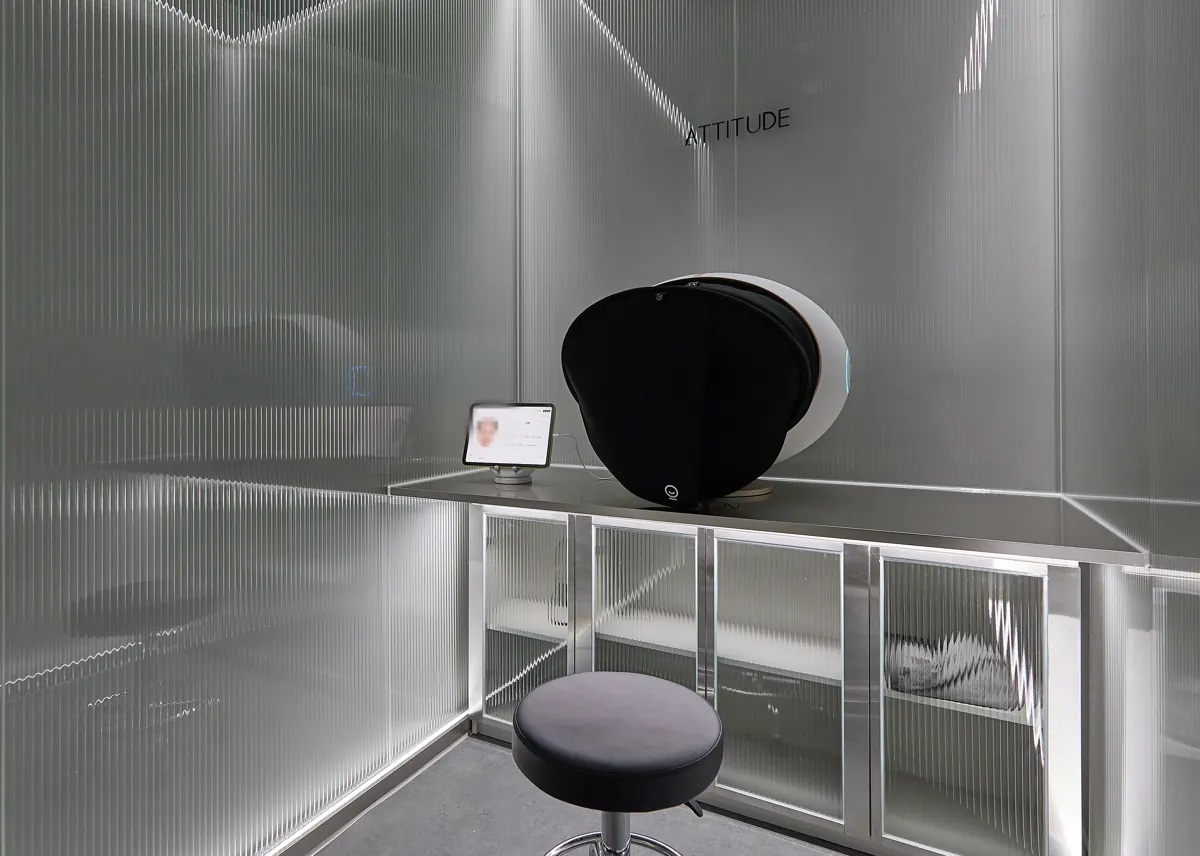
In a private diagnosis room the whole face is photographed, recording even skin conditions that are hard to see with the eye.
02
Skin analysis
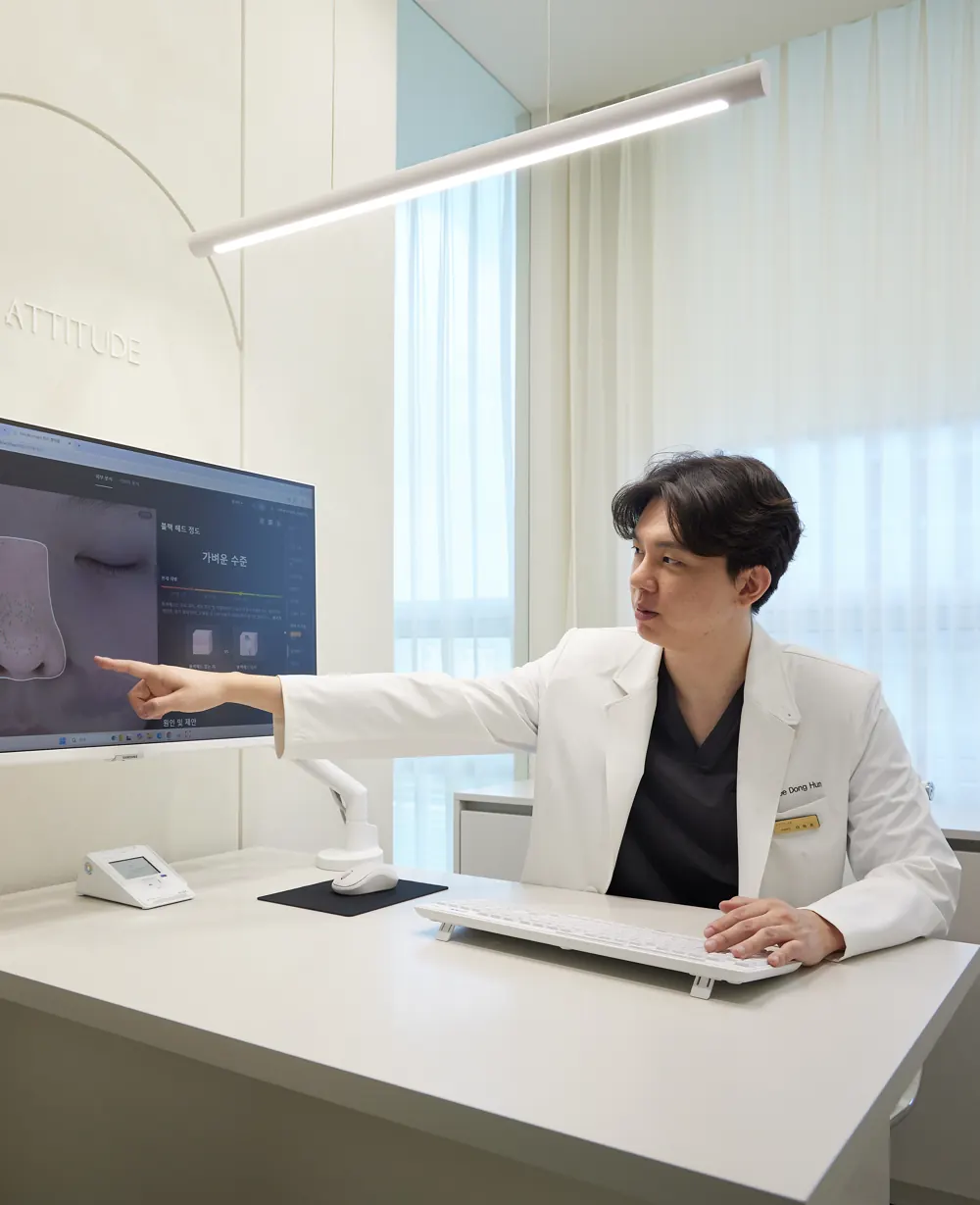
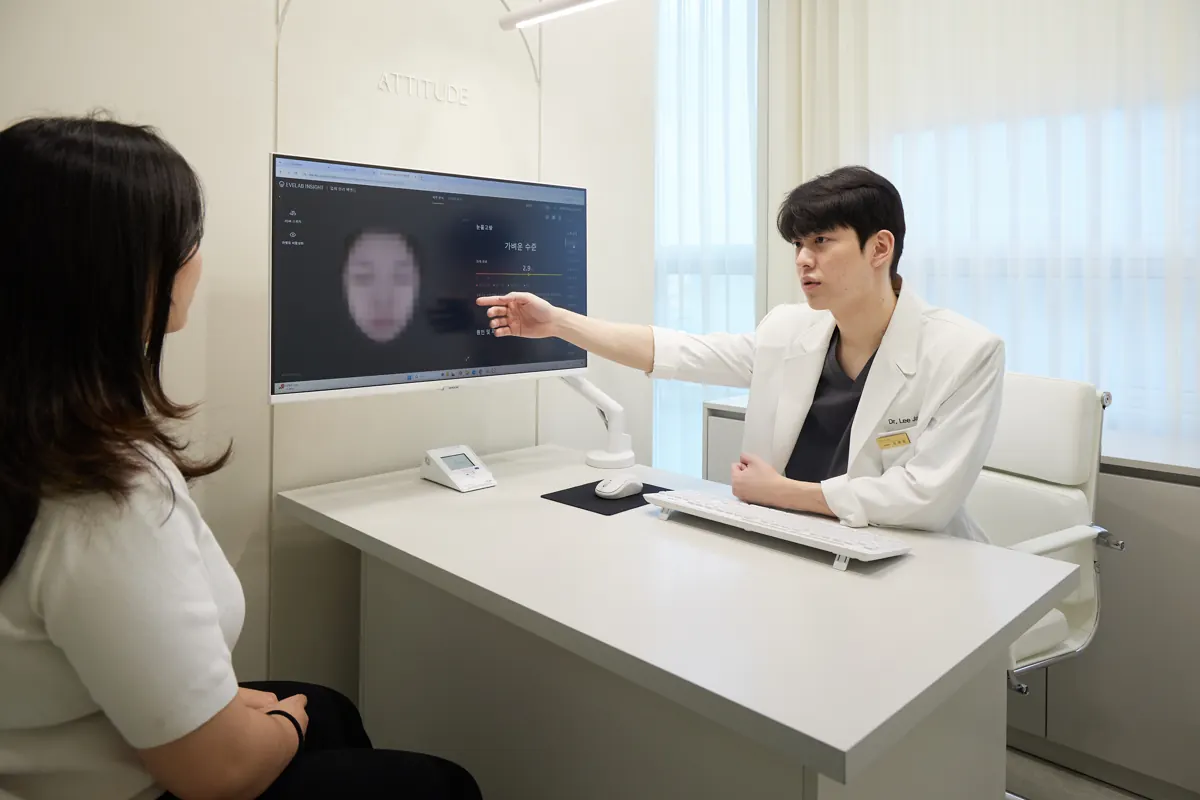
The doctor goes through your pore, pigmentation, wrinkle and firmness results with you on screen and explains what comes first.
03
One-to-one design
With your skin, the balance of your face, the change you want and your schedule in view, you decide the treatment and its extent together.
04
Treatment by your doctor
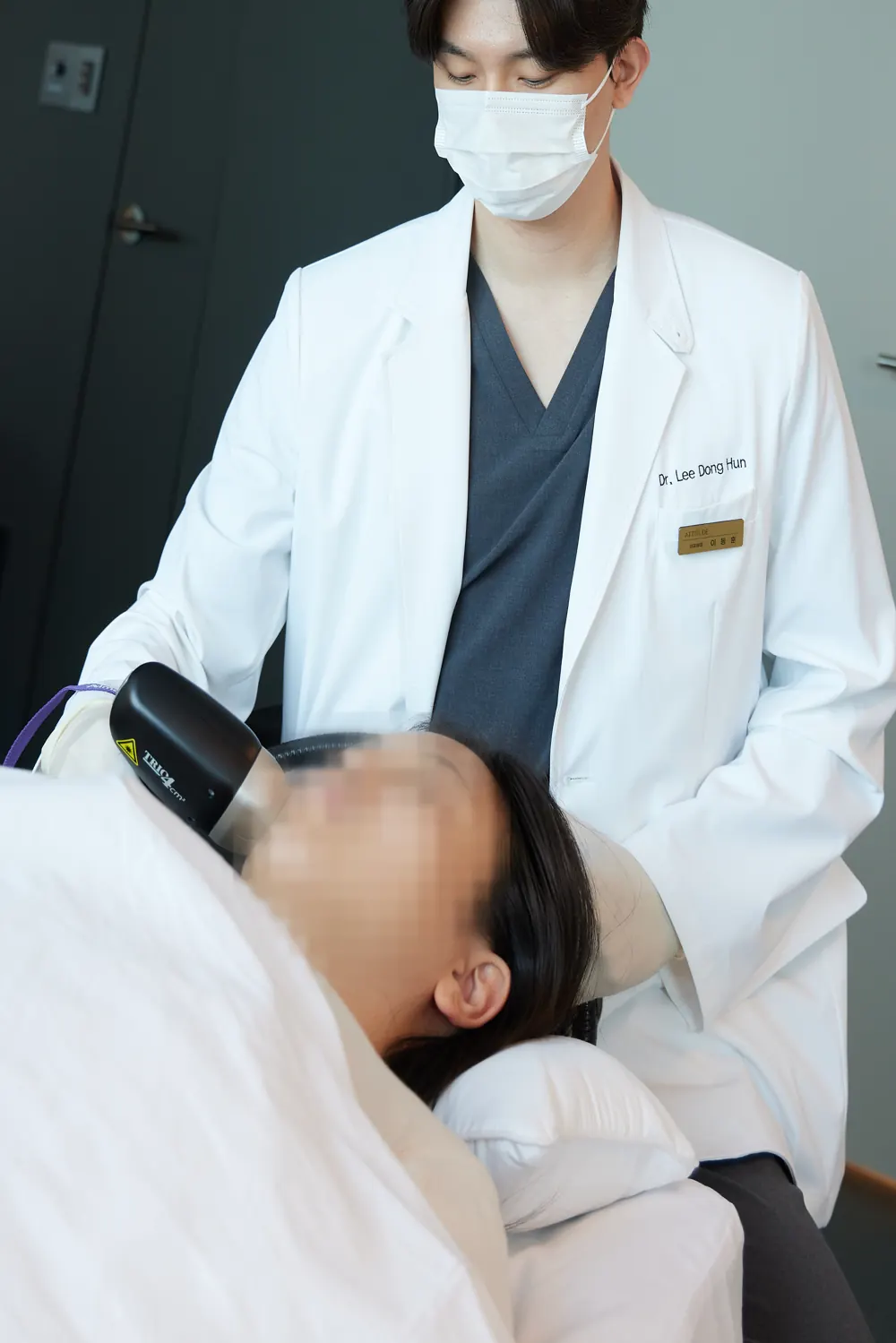
The doctor who consulted you performs the treatment from start to finish in a private treatment room. No one takes over halfway.
“I take injection pain seriously.”
Co-Director Dr. Lee Dong Hun
Many people hesitate over injection treatments because they hurt. So we went back over everything, from the anesthetic to the products used.
Careful numbing, unhurried timingWe allow plenty of time for a special numbing cream to take full effect, and add anesthetic injections for the treatments and areas that need them.
Fine needles, finished quicklyInjection treatments use fine needles, and the doctor finishes them personally in a short time, adjusting along the way by watching how you are doing.
Even the product formulation countsThe same treatment can feel more or less demanding depending on the product, so we take that into account too.
The anesthetic method and whether it is used are decided after an examination, according to the treatment, the area and your condition. How much it hurts varies from person to person.
Products used for this topic are selected within the range listed on the price list. Botulinum toxin products include Neuronox, Coretox, Jeomin, Allergan Botox, and Dysport; fat-dissolving injections are divided into steroid-free products and facial-only microlipolysis. Units and ingredients differ by product, so we don't compare them by the same unit count.
Aftercare and side effects
Reduce irritation Do not rub or press the treated area. Cleveland Clinic advises not to rub or apply pressure for 12 hours and to avoid strenuous exercise for 24 hours (Cleveland Clinic).
Soothing and moisturizing If there is redness or swelling, cool and soothe, and continue moisturizing. Avoid heat-increasing stimuli such as saunas and hot baths.
Sun protection Skin is sensitive right after treatment. Apply sunscreen when going out and use shade.
Follow-up Monitor how bruising and swelling decrease, and set the next appointment according to when effects appear.
Common reactions include pain, swelling, redness, and bruising at the injection site. They usually settle within a day or two (Cleveland Clinic). If injected near the eyes, stinging or redness may occur; lumps, pigment changes, or blisters are rare.
There are rare but important warning signs. Botulinum toxin can affect areas distant from the injection site, and difficulty swallowing or breathing requires immediate medical attention (DailyMed). Drooping eyelids, feeling weak in the arms or legs, or slurred speech also count. Contact us immediately if swallowing or breathing is uncomfortable.
Some reactions improve with time, others don't. Bruising and swelling fade, but increasing pain, swelling that doesn't subside and feels hard, or marked skin color changes should be checked without waiting for the next appointment.
FAQ
Can I get Botox and fat-dissolving injections on the same day?
Because they affect different layers, whether they can be combined depends on your condition. Doing both at once can overlap recovery and make it hard to tell which treatment caused which reaction. Sequence and spacing are decided based on skin condition and time available for recovery. If you have a fixed schedule, please tell us the dates first. The column also notes that even for the same combination, doing it in stages can change the perceived result.
Which is right for a square jaw?
It depends on whether muscle or fat is making the area look bulky. If it bulges firmly when you clench, we look at muscle; if it feels plump even when relaxed, we look at the fat layer first. If both overlap, one treatment alone may produce small changes, so we discuss sequencing. During examination, we palpate and observe expressions to determine which contributes more.
When do effects appear and how long do they last?
Botox starts in 2–4 days, peaks around 10 days, and lasts an average of 3–4 months (Cleveland Clinic). Intervals may lengthen with repetition (DermNet). Fat-dissolving injections vary in onset by product and dosage, so we follow the schedule set in consultation. Even with the same product, the speed of swelling resolution varies by person.
What if I develop Botox resistance?
It's hard to judge on your own whether response decreases despite the same dose. Recording previous products, doses, intervals, and reactions helps in consultation. Units differ by product, so comparing unit counts with another product isn't accurate (DailyMed). If you feel your response has changed, don't delay your next appointment—check in consultation.
What should I look for when choosing a clinic?
Look at which products are used, whether the area is approved, and who consults and performs the treatment. When the same person consults and treats, there's less room for plan and execution to diverge. Whether prices are published by unit also helps comparison (Treatments & Pricing). Even treatments with the same name are different if products and doses differ, so comparison starts with asking what and how much is being injected.
This article offers general health information. It is not a substitute for diagnosis or treatment based on your own condition, so please talk through your situation with a doctor.