Dissolving Lip Filler: What Hyaluronidase Can and Cannot Do
What dissolving lip filler with hyaluronidase actually does, which fillers can and cannot be dissolved, what to check before treatment, recovery, side effects, and how cost is determined — organized by ATTITUDE Clinic.
Written by ATTITUDE Clinic Editorial Team
After lip filler, if you don't like the shape, the border has blurred over time, or you feel a firm lump when you touch it, the first word that comes to mind is "dissolving." But the dissolving injection is not a universal fix that erases any filler, and in a delicate area like the lips, what can and cannot be reversed is clearly divided. This article walks through what hyaluronidase actually does, what we check first in lips, and what determines recovery and cost.
The bottom line first
Dissolving filler is a treatment where hyaluronidase (an enzyme that breaks hyaluronic acid into smaller pieces) is injected into the area where hyaluronic acid filler sits. Hyaluronidase only breaks down hyaluronic acid and does not act on other materials, so fillers made of non-hyaluronic acid materials, such as silicone, cannot be removed this way (Cleveland Clinic guide). In lips, it usually takes 1–2 sessions and the treatment itself takes about 10–15 minutes, some change is visible right away, but confirming the final look can take up to 2 weeks. However, the hyaluronic acid naturally present in your lips is broken down too, so lips may look thinner than before for a while, and how many sessions are needed and the cost are decided after checking which product is present and how much.
What does hyaluronidase do in the lips?
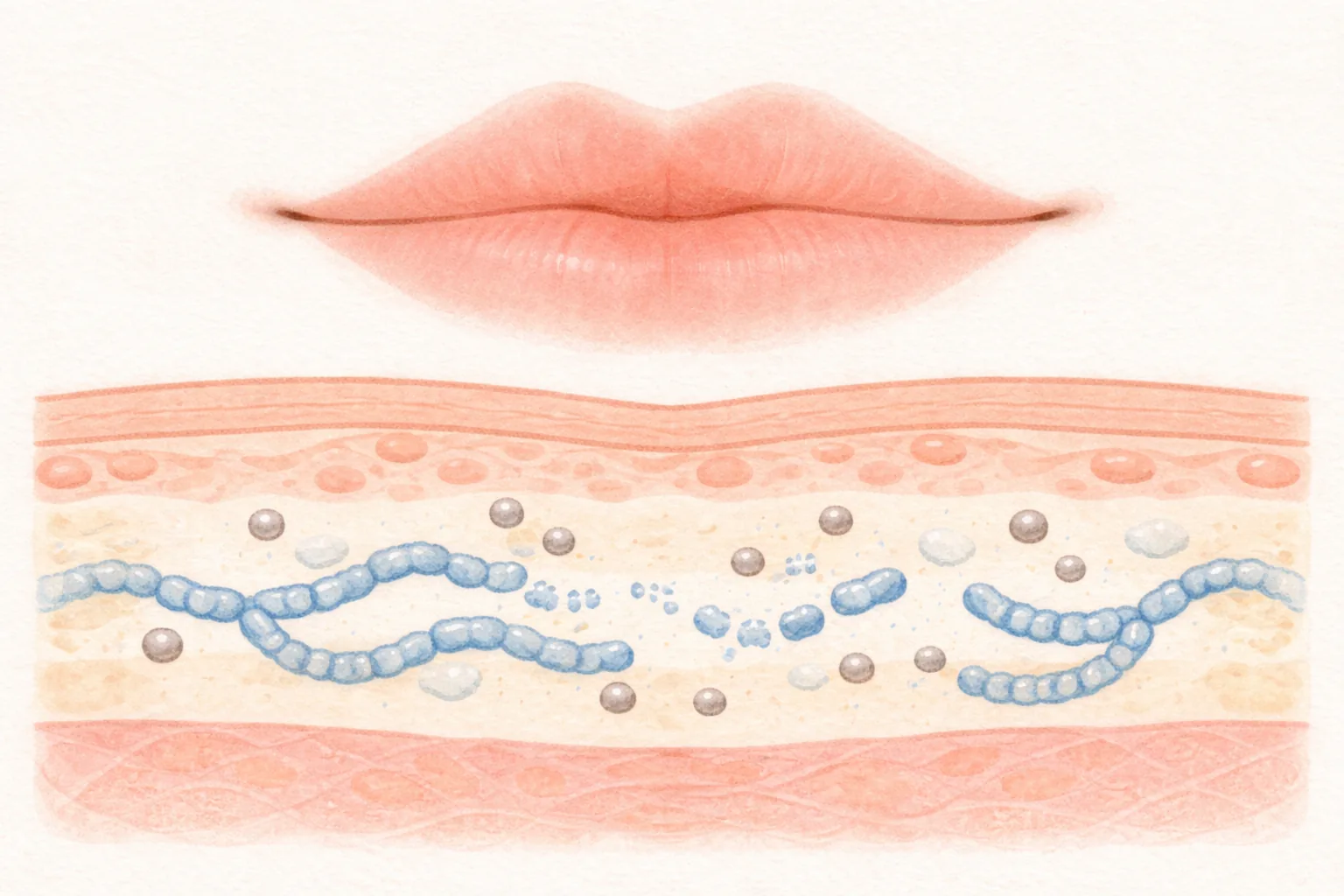
Our bodies already have an enzyme that breaks down hyaluronic acid. That's why hyaluronic acid filler naturally diminishes over time, and that period is known to be about 8–18 months depending on the product (American Society of Plastic Surgeons resource). Hyaluronidase is a medication made with a high concentration of this enzyme. When injected into the area where filler sits, it breaks the hyaluronic acid chains into smaller pieces, and the broken fragments are processed by the body itself (Cleveland Clinic guide). As explained in an ATTITUDE Clinic column, hyaluronic acid filler works by the injected ingredient itself filling the area and then being broken down and absorbed over time (collagen injection column), and hyaluronidase significantly speeds up that natural breakdown.
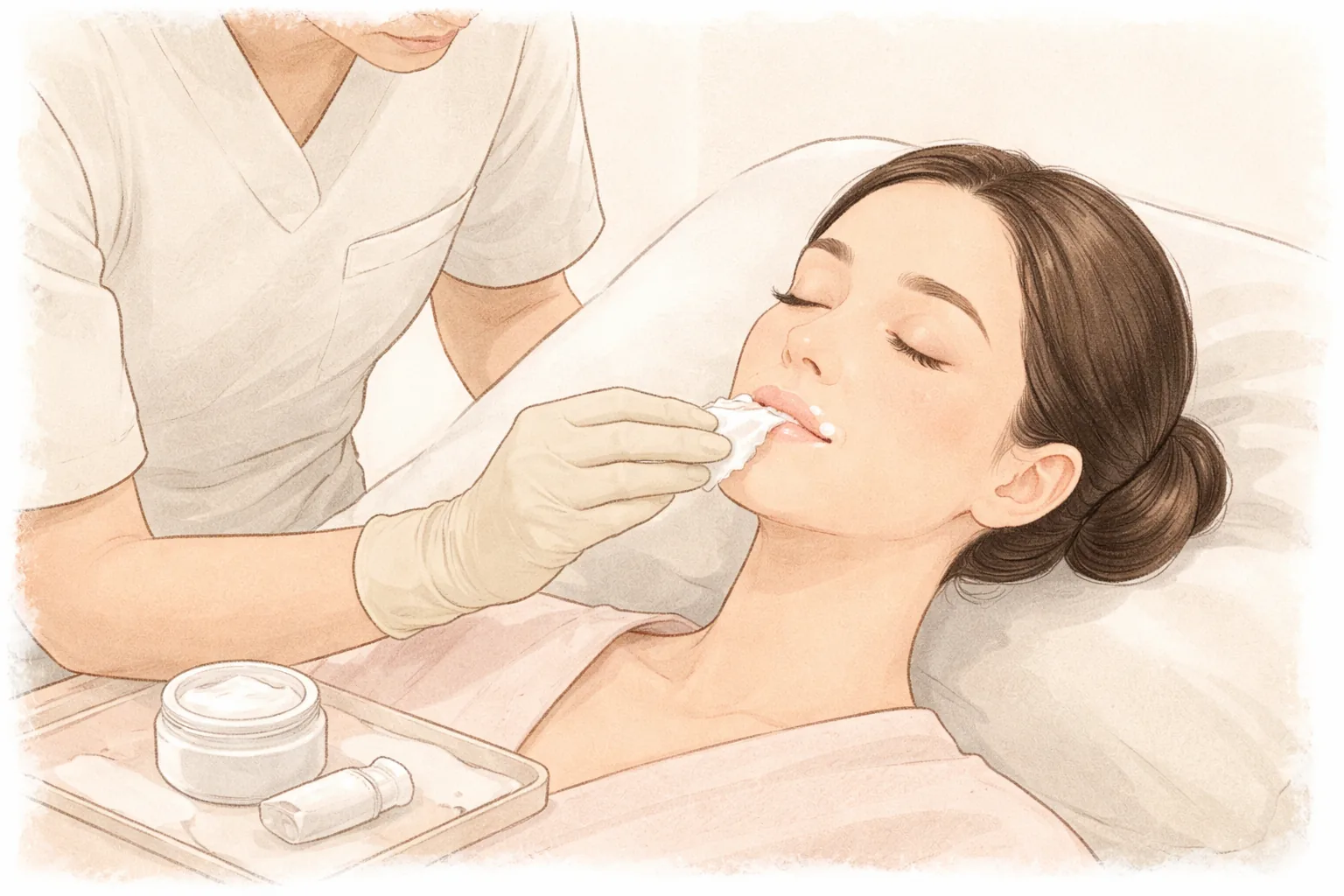
When injecting into the lips, numbing cream is applied and a thin needle is used. It is still an injection, so pain or discomfort may follow, and bruising and swelling are common. One thing worth knowing is that hyaluronidase is a liquid, not a gel. So it does not itself carry a risk of blocking blood vessels, and on the contrary, it is also the medication used when a blocked vessel is suspected (American Society of Plastic Surgeons resource).
Can all fillers be dissolved?
No. Hyaluronidase's target is hyaluronic acid filler alone. It's true that hyaluronic acid filler is the most common type, but different materials give different results. Permanent materials like silicone are not broken down by hyaluronidase (Cleveland Clinic guide). So the first question in consultation is not "how do we dissolve it" but "what is currently in that area."
"Dissolving injections" with similar-sounding names also need to be distinguished. Fat-dissolving injections are not a medication that dissolves filler but a different category targeting fat cells, and the only FDA-approved fat-dissolving injection is one intended to reduce fat under the chin. In cases where unapproved fat-dissolving injections were purchased online and self-injected, problems such as permanent scarring, severe infection, and skin deformity have been reported, and the practitioner's qualifications should be checked as well (FDA guide).
Table 1 Can all fillers be dissolved?
Category
What hyaluronidase does
What to check in consultation
Hyaluronic acid filler (including lips)
Breaks hyaluronic acid chains to speed up breakdown
When, which product, and at which layer it was injected
Permanent fillers such as silicone
Not a target of action
What material it is, whether another method is needed
Non-hyaluronic acid products such as collagen stimulators
Does not react because it only breaks down hyaluronic acid
The ingredients and purpose of the injected product
Fat-dissolving injections
Not a filler-dissolving medication but a different category
Approval status and practitioner qualifications
Swipe sideways to see the whole table.
In summary Hyaluronidase's target is hyaluronic acid filler alone. So the first step of treatment is not the injection but confirming what is currently in your lips. Partial dissolving to leave only as much as you want is also possible, but because the medication spreads through tissue, precise control is difficult.
What do we check first in the lips?
The first thing to secure is the product history. Once it's confirmed when, which product, and how much was injected, the approach becomes much clearer. Even without records, we judge based on the course so far and the feel when touched.
Next is the allergy questionnaire. Before injecting hyaluronidase, the practitioner asks whether you have a bee venom allergy. If you have ever had a severe allergic reaction from a bee sting, you cannot receive a hyaluronidase injection, because of the risk of a severe reaction called anaphylaxis (Cleveland Clinic guide). This questionnaire is not a formality but a step that determines whether treatment is possible.
Medications and supplements you are taking should also be shared in advance. Medications that increase bleeding, such as aspirin or fish oil, may come with guidance to stop before treatment, and smoking slows recovery, so quitting a few weeks ahead is recommended. Avoiding aspirin-containing products from 7 days before the injection helps reduce bruising and bleeding (American Society of Plastic Surgeons resource).
Many people also ask to dissolve only one side of the lips or a specific area. It is possible, but as the medication spreads through the injected tissue it can dissolve other filler in that area too, making it difficult to leave precisely as much as you want. Plastic surgery resources also explain that because of this, dissolving is close to "all or nothing." It is better to decide how far to treat knowing this limitation.
How many sessions, and how long is recovery?
It usually finishes in 1–2 visits. If there is a large amount of filler or firm lumps (nodules), it may not finish in one session and can be split over several. Some change appears right away, but confirming the final result and complete removal can take from a few days up to 2 weeks (Cleveland Clinic guide). So if you have a fixed date like a wedding or a shoot, it's better to plan by counting backward from that date.
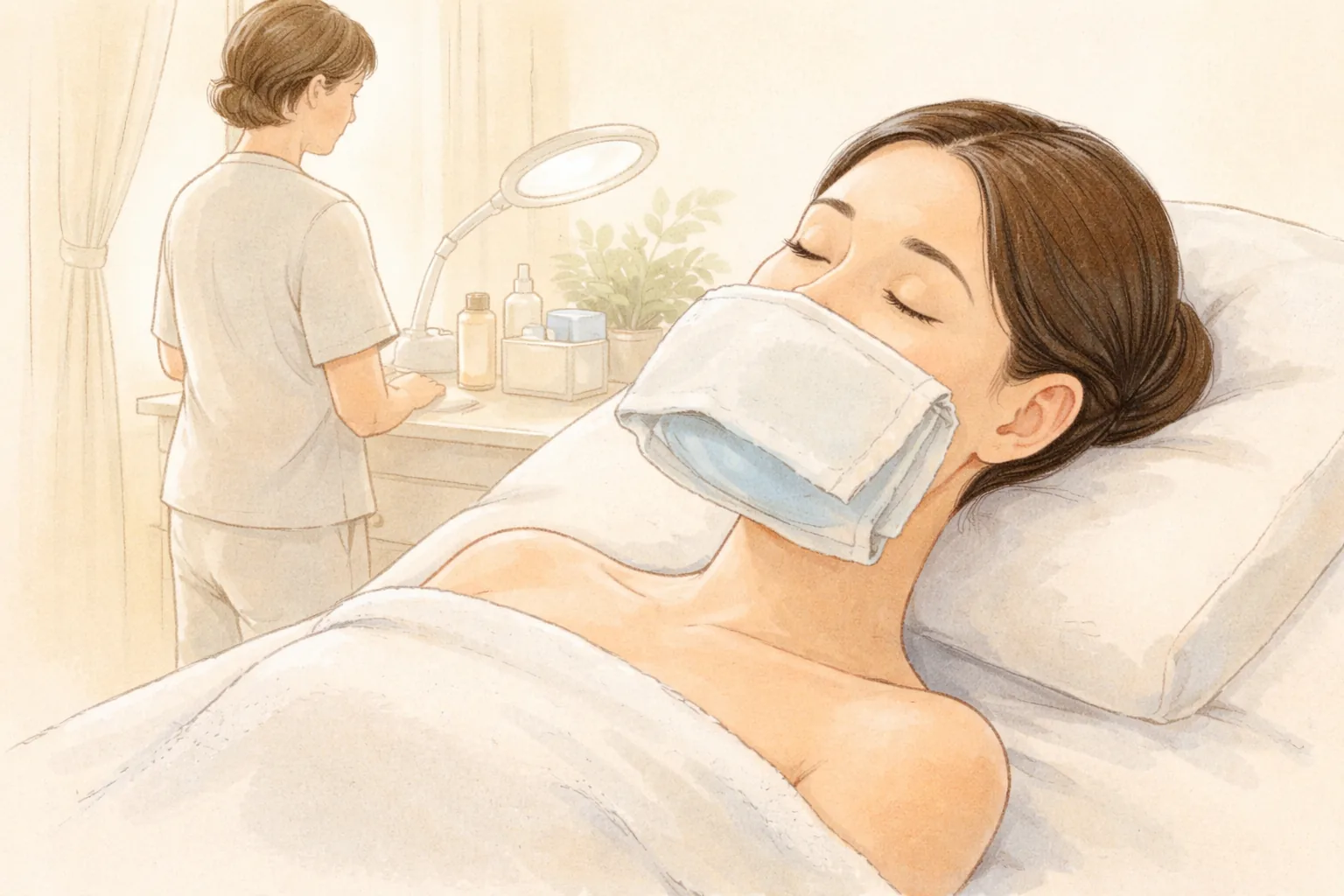
After treatment, swelling, bruising, and tenderness when pressed are common and usually subside within a few days. If swelling is severe, antihistamines or steroids may be used together. To make recovery a bit more comfortable, massaging the injection area daily for 5 days and icing for the first 1–2 days is advised (American Society of Plastic Surgeons resource).
While the result settles, lips may look temporarily flat as swelling goes down. If you judge this period's appearance as the final result and rush the decision to refill, it may end up overfilled after the swelling subsides.
What determines the cost of dissolving filler?
The cost of dissolving is decided less by the price of one injection and more by confirming which area and how much is present and how many sessions it is split into. The lips are a small area, but the layers are thin and the borders delicate, so the amount handled at once and the approach differ. In the ATTITUDE Clinic treatment guide, hyaluronidase is also listed as a per-session item, and filler treatments are guided with an added charge for the lip area (treatments and pricing guide). The exact amount and number of sessions are decided after confirming the area and scope in consultation.
When to get filler again after dissolving is also a common question. Because it depends on the amount of remaining filler, the state of tissue recovery, and whether there is inflammation, it is better decided in consultation after observing the course rather than right after treatment.
If this applies to you
When a wedding or shoot is a few weeks away
You need to consider both the period when swelling and bruising remain and the 2 weeks for the result to settle. If the schedule is tight, rather than handling a lot at once, it's realistic to first sort out the necessary scope and postpone the rest until after the schedule.
When the lip border has blurred after multiple touch-ups
The greater the accumulated amount, the less it is settled in one session. If you want to rebuild the border, the process of confirming which layer and how much has accumulated comes first, and then splitting the sessions makes the result easier to predict.
When your skin reddens easily and is sensitive
If redness or swelling at the injection site tends to happen easily even normally, you should share that history first. Allergic reactions or redness at the injection site are also reactions that can appear with hyaluronidase treatment (American Society of Plastic Surgeons resource).
When you are an overseas visitor staying briefly
It usually finishes in 1–2 sessions and the treatment time is not long, so it can fit a short stay. However, the final look can take up to 2 weeks, so it is safer to schedule a follow-up check before departure.
Please tell us before consultation If you share your recent treatment history and timing, which product was injected (the product name if possible), whether you have ever had severe swelling from a bee sting, medications and supplements you are taking (aspirin, fish oil, etc.), any experience of prolonged bruising or swelling from past treatments, and fixed dates like a wedding or shoot, we can build the plan around them.
How ATTITUDE Clinic proceeds
AI skin analysis record: Skin condition and treatment history are recorded with photos and measurements so changes can be compared. This record is a tool that gathers and shows information and does not itself make a diagnosis. Consultation and course assessment are done directly by the doctor.
Doctor consultation: We check when and which product was injected, whether there is a bee venom allergy or medications being taken, and how far to dissolve. Because the lips have thin layers, we decide together the amount handled at once and the approach, and discuss the scope of partial dissolving if needed.
Treatment performed directly by the doctor: After reducing discomfort with numbing cream, hyaluronidase is injected. ATTITUDE Clinic treats based on genuine products and accurate dosing, and applies the items guided according to area and scope as they are (treatments and pricing guide).
Recovery and follow-up check: We watch the flow of swelling and bruising subsiding, confirm the final look around 2 weeks, and then decide whether to redefine the remaining scope.
Aftercare and side effects
Soothing: From the day of treatment, cool the injection area for 1–2 days to reduce swelling. Avoid strong rubbing or pressing stimulation.
Massage: Gently massage the injection area daily for about 5 days. This helps evenly settle the area the medication has spread to.
Avoid heat stimulation and UV: During recovery, it is better to avoid stimulation that raises skin temperature, such as saunas, jjimjilbangs, and intense exercise (laser treatment column). If you spend a lot of time outdoors, apply sunscreen carefully.
Follow-up check: Some change appears right away, but the final look is confirmed around 2 weeks. Don't rush the decision to refill before that.
Common reactions are swelling, bruising, soreness when pressed, and pain and discomfort during injection. These reactions usually subside on their own within a few days. Rarely, allergic reactions, redness at the injection site, or skin swelling may appear, and to prevent severe allergic reactions, bee venom allergy is checked before treatment. If reactions continue or worsen after treatment, it is better to inform the clinic without waiting (Cleveland Clinic guide).
Frequently asked questions
How does hyaluronidase dissolve filler?
It is an enzyme that breaks hyaluronic acid chains into smaller pieces. Our bodies have the same enzyme, so hyaluronic acid filler naturally diminishes over 8–18 months, and injecting hyaluronidase makes that process much faster. The broken fragments are cleaned up by the body itself and do not remain (American Society of Plastic Surgeons resource). In practice, not only the injected filler but also the hyaluronic acid naturally present in your lips is broken down together, so between a few days and 2 weeks after injection, lips may look temporarily flat as swelling goes down. If you judge this period's appearance as the final result and rush the decision to refill, it may end up overfilled after the swelling subsides, so it is safer to build the next plan after confirming the course around 2 weeks.
Can all fillers be dissolved?
Only hyaluronic acid filler applies. Hyaluronidase only breaks down hyaluronic acid, so it does not act on fillers made of other materials such as silicone (Cleveland Clinic guide). If the product is not confirmed in consultation, confirmation comes before treatment. Therefore, in consultation, we check "what is currently in that area" before "how do we dissolve it." Since something like a fat-dissolving injection with a similar name may not be a filler-dissolving medication but a different category, it is better to judge whether treatment is possible after checking the ingredients and purpose of the injected product.
Will my lips become thinner than before after dissolving lip filler?
They can. Hyaluronidase does not selectively dissolve only the injected filler but also breaks down the hyaluronic acid naturally present in your lips. So lips may look thinner than before for a while, and you need to know this change in advance so you don't misunderstand the result (Cleveland Clinic guide). So before dissolving, you should know in advance that the hyaluronic acid naturally present in your lips is broken down too. Confirming complete removal can take from a few days up to 2 weeks, so it is better not to judge the appearance during this period as the final result.
When can I get filler again after dissolving?
It depends on the amount of remaining filler, the state of tissue recovery, and whether there is inflammation. Deciding based only on appearance while swelling remains can lead to overfilling, so the order is to decide in consultation at the point when the final look is confirmed. Because the lips have thin layers and delicate borders, the process of judging based on the flow of swelling subsiding is especially important. If you have a fixed date like a wedding or shoot, it's better to plan by counting backward from that date.
Where should I get filler dissolved?
The standard is a place that first explains that the medication does not work on non-hyaluronic acid materials, that a bee venom allergy questionnaire is needed, and that the medication spreads making partial control difficult. It is also good to check whether there is a procedure to confirm which product was injected and when, and how swelling, bruising, and allergic reactions are monitored after treatment.
At a glance
Table 2 At a glance
Item
Key point
What it does
Injects hyaluronidase into hyaluronic acid filler to speed up breakdown
Target
Hyaluronic acid filler only. Other materials such as silicone do not apply
Time and sessions
10–15 minutes per session, usually 1–2 sessions. Multiple sessions if there is a large amount or nodules
Confirming results
Some immediately, final look around 2 weeks
Before treatment
Product history, bee venom allergy, medications and smoking
Recovery
Swelling, bruising, tenderness for a few days; 5 days of massage and 1–2 days of icing help
This article offers general health information. It is not a substitute for diagnosis or treatment based on your own condition, so please talk through your situation with a doctor.