How Long Do Skin Boosters Last? Re2O Onset & Duration
Re2O onset and duration explained: what the immediate plumpness really is, when change appears, what sets the timeline, and how skin booster sessions and aftercare work.
Written by ATTITUDE Clinic Editorial Team
Some people say they "don't feel much different" after Re2O, while others mainly want to know whether it is working at all and how long the current state will hold. Onset and duration are often the first things people calculate when choosing a treatment. This article walks through what Re2O does in the skin, when change appears and what sets that timeline, and how to think about how long results last.
The short answer
The plump feel right after treatment is mostly swelling. It settles over a few days, and any real change appears gradually over the following weeks. It is not a one-and-done treatment: it is usually planned as several sessions, with maintenance sessions considered afterward, and how long results last varies widely between people, with long-term data still limited. What sets onset and duration is skin thickness, treatment area, injection volume and aftercare habits.
What does Re2O do inside the skin?
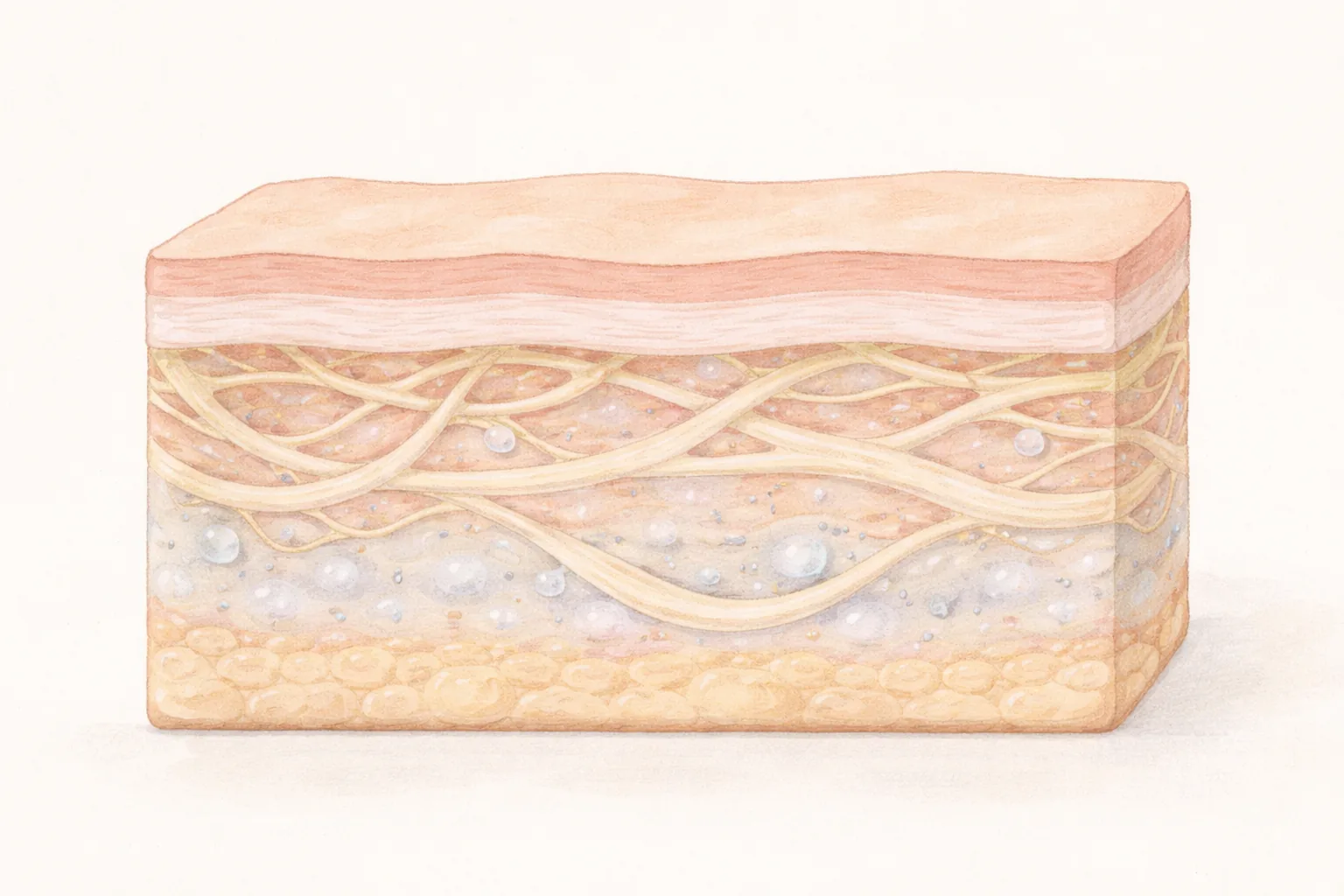
The dermis holds a structure that fills the space between cells. It is called the extracellular matrix (ECM), which you can picture as the scaffolding that props the skin up, and its main materials are collagen, elastin and hyaluronic acid. With age these materials decline, and the skin thins and begins to sag.
The key ingredient in Re2O is hADM (human-derived acellular dermal matrix: donated human skin tissue with the cell components that could trigger an immune response removed, leaving only the structural proteins). As explained in ATTITUDE Clinic's column, the approach injects human-derived ECM directly into the dermis so it acts as a support structure. This is where it differs from collagen-inducing skin boosters.
So why doesn't it change right away? What fills the area immediately after injection is liquid carried in along with the structure, and it takes time for new collagen to settle into place. According to the manufacturer, cells from your own body can grow into this support structure and help form new collagen. How much remains and how long it lasts is still an area of ongoing research.
Looking at injectable products as a whole makes the distinction clearer. The American Academy of Dermatology's filler resource notes that products that fill by their own substance, such as hyaluronic acid gel or calcium hydroxylapatite, show results immediately, while poly-L-lactic acid, where results are built through collagen, takes 2–3 weeks. Re2O replaces the structure directly while also aiming at new collagen formation, so it helps to think of it as overlapping both categories.
When does it start working, and what sets the timeline?
In the timeline laid out in ATTITUDE Clinic's column, from right after treatment through the same day the injected area may feel plump, with mild swelling and faint redness possible. Over the first few days that swelling settles and the plump feeling decreases, and this change is mostly the recovery course of the treatment itself. Over the following weeks, changes in firmness and skin texture may appear gradually, and how noticeable they are varies widely between people.
The conditions that speed up or delay onset fall into a few groups. If the skin is thin and has lost firmness, it may take longer to notice change, and broad areas such as the cheeks, forehead and neck versus delicate areas such as under the eyes or the temples call for different volumes and depths. Even in the same area, the amount injected at one time and the planned number of sessions change the course, and everyday habits like sun protection and hydration affect how long changes hold.
"A few weeks" can sound frustrating. Onset is hard to pin to a single number because even with the same product and the same amount, skin thickness and regeneration speed differ from person to person. Rather than a fixed chart, it is more realistic to find out at consultation where your skin sits.
Recovery course and timing after treatment vary between people, and ATTITUDE Clinic's column also notes there is no settled data on when and how much an added adjunct product contributes. If you are planning combination treatments, it is better to view separately where each change comes from.
How many sessions, and at what intervals?
Re2O is usually planned as several sessions, with maintenance sessions considered afterward. The number depends on skin condition, area and volume injected, so the doctor decides after examining your skin. Whether to stop after one session or split it across several depends on your goal.
What sets the interval is the time for the injected structure to settle and swelling to subside, and whether the skin is in condition to accept the next session. Too short an interval leaves no room for the skin to recover, too long and the changes built up may fade. Because recovery speed differs between people, a rule of "a few weeks" does not apply as a fixed standard either.
For comparison, other injectables follow a different rhythm: PN or HA skin boosters are usually given over several sessions at 2–4 week intervals, and results gradually decline once the stimulation ends (ATTITUDE Clinic's column). Re2O fills in structure, so the plan and maintenance timing are set differently. Maintenance sessions are timed after your planned sessions are finished, based on how your skin looks.
How much pain and recovery should you expect?
What you feel during treatment varies with the injection area and volume, and how sensitive you are to pain. Afterward, redness and stinging may linger for a few hours up to the same day, and temporary fullness and mild swelling may last 1–3 days. If bruising appears, it can take more than 1 week to fade, and the injected area may feel uneven for a while.
There is one point here where Re2O differs from other injectables. The American Academy of Dermatology resource advises gently massaging the treatment area about 5 minutes several times a day for 1–2 weeks with poly-L-lactic acid fillers. Re2O, by contrast, is not firmly pressed or massaged. Physical stimulation before the structure has settled into the dermis can lead to uneven distribution. Even among injectable treatments, the way the area is handled afterward differs like this.
Table 1 How much pain and recovery should you expect?
Category
What it does in the skin
Concerns it suits
When results appear
Re2O (hADM)
Directly replenishes human-derived ECM in the dermis and helps new collagen form
Skin that feels thinner and less firm
Immediate plumpness is partly swelling; change comes gradually over weeks
PN·HA skin boosters
Stimulate cell regeneration signals to induce collagen production; hyaluronic acid draws in moisture
Hydration and skin texture care, frequent maintenance
Several sessions at 2–4 week intervals
Hyaluronic acid filler
Injected gel fills by itself and is broken down and absorbed over time
Volume correction in specific areas
Immediately
Poly-L-lactic acid fillers
Results are built through collagen
Volume and firmness
2–3 weeks, with massage instructions after treatment
Swipe sideways to see the whole table.
In short with Re2O you need to look at the plumpness on the day of treatment and the change weeks later as two separate things. The first is mostly swelling, and the second is the change the treatment is aiming for. How long results last varies too widely between people to promise a single number, and it is more realistic to set your planned number of sessions and the timing of maintenance sessions together at consultation.
If this sounds like you
If a ceremony or photo shoot is only weeks away
Calculate the time for swelling and bruising to clear first. Swelling lasts 1–3 days, and bruising can take more than 1 week, so if your schedule is tight it is better to adjust the timing. Because change appears gradually with this treatment, it is hard to expect a big difference from a single session right before a shoot.
If you want steady, ongoing care
Splitting treatment across several sessions and then moving into maintenance sessions is the basic flow. The number and interval depend on your skin condition, so setting the whole plan at the first consultation makes scheduling easier.
If your skin is thin or prone to redness
For thin areas, volume and depth are adjusted more carefully. If redness lasted a long time after a previous treatment, you need to mention that first so a recovery plan can be built around it.
If you are a visitor on a short stay
Whether you can check progress within your stay is the key question. It is better to look at your condition a few days after treatment rather than immediately, so leave a buffer between your treatment date and your flight home.
Tell us before your consultation your recent sun exposure and travel schedule, any medications you take (including blood thinners), the skincare products you normally use (retinol, acids and so on), any history of redness or bruising lasting long after a previous treatment, autoimmune conditions or reactions to tissue-derived products, whether you are pregnant or breastfeeding, and any dates you absolutely need to avoid.
How ATTITUDE Clinic handles it
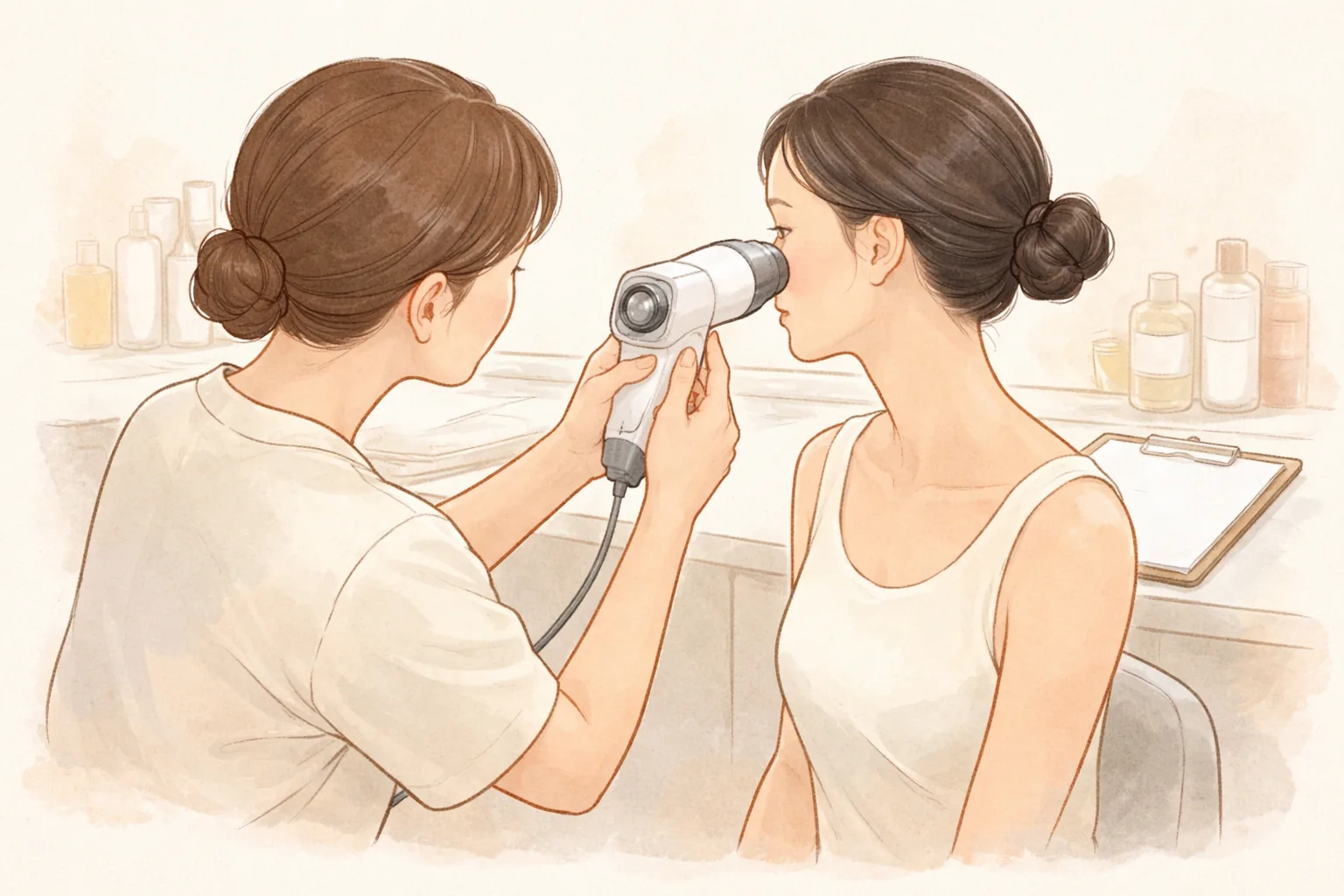
Skin records and intake — We review skin thickness and firmness, previous treatment history, medications and allergies together. Analysis tools record and organize your condition; they do not replace a diagnosis.
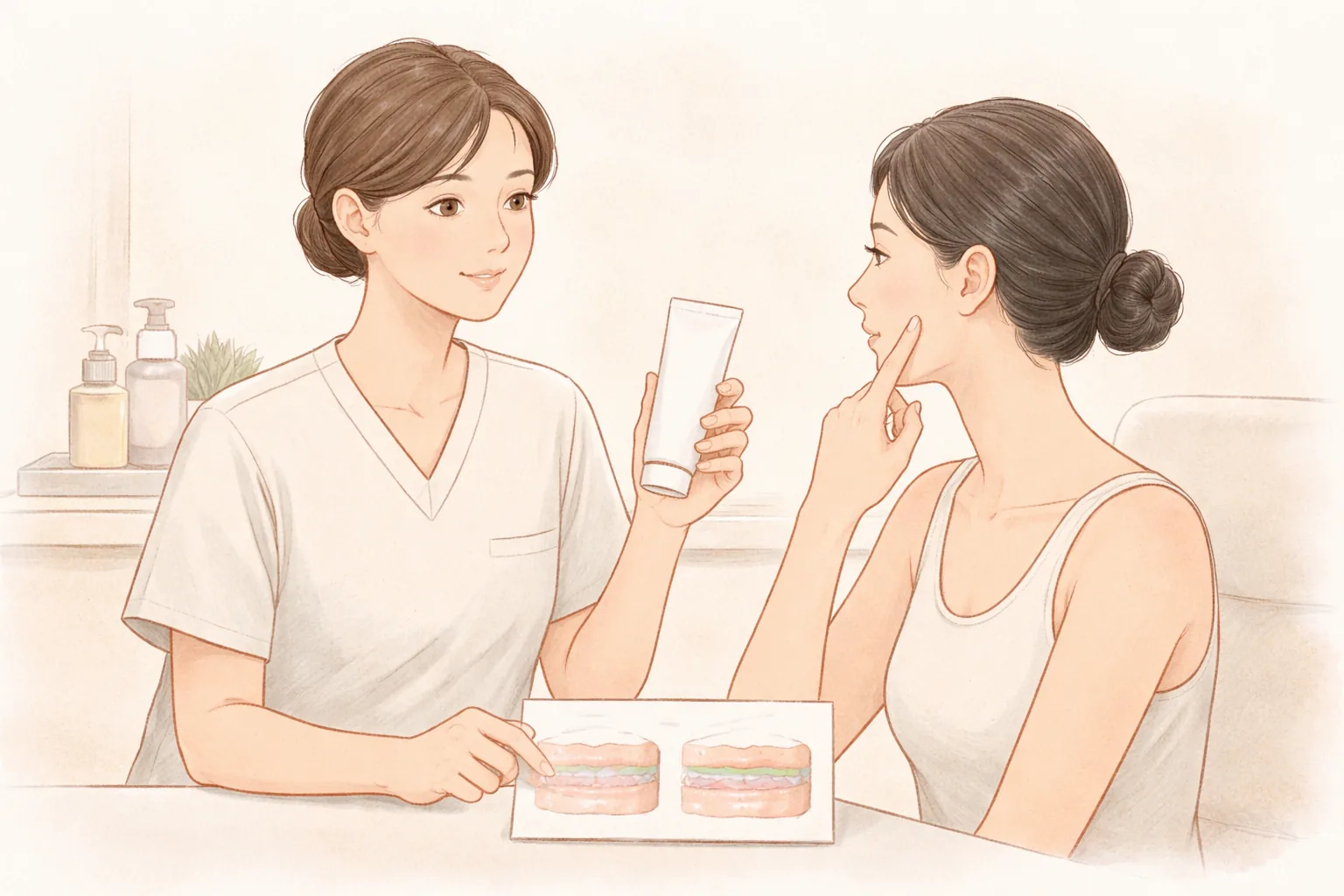
Doctor consultation — We decide together which areas to treat and how much to inject, how many sessions to split it across, and when to check progress.
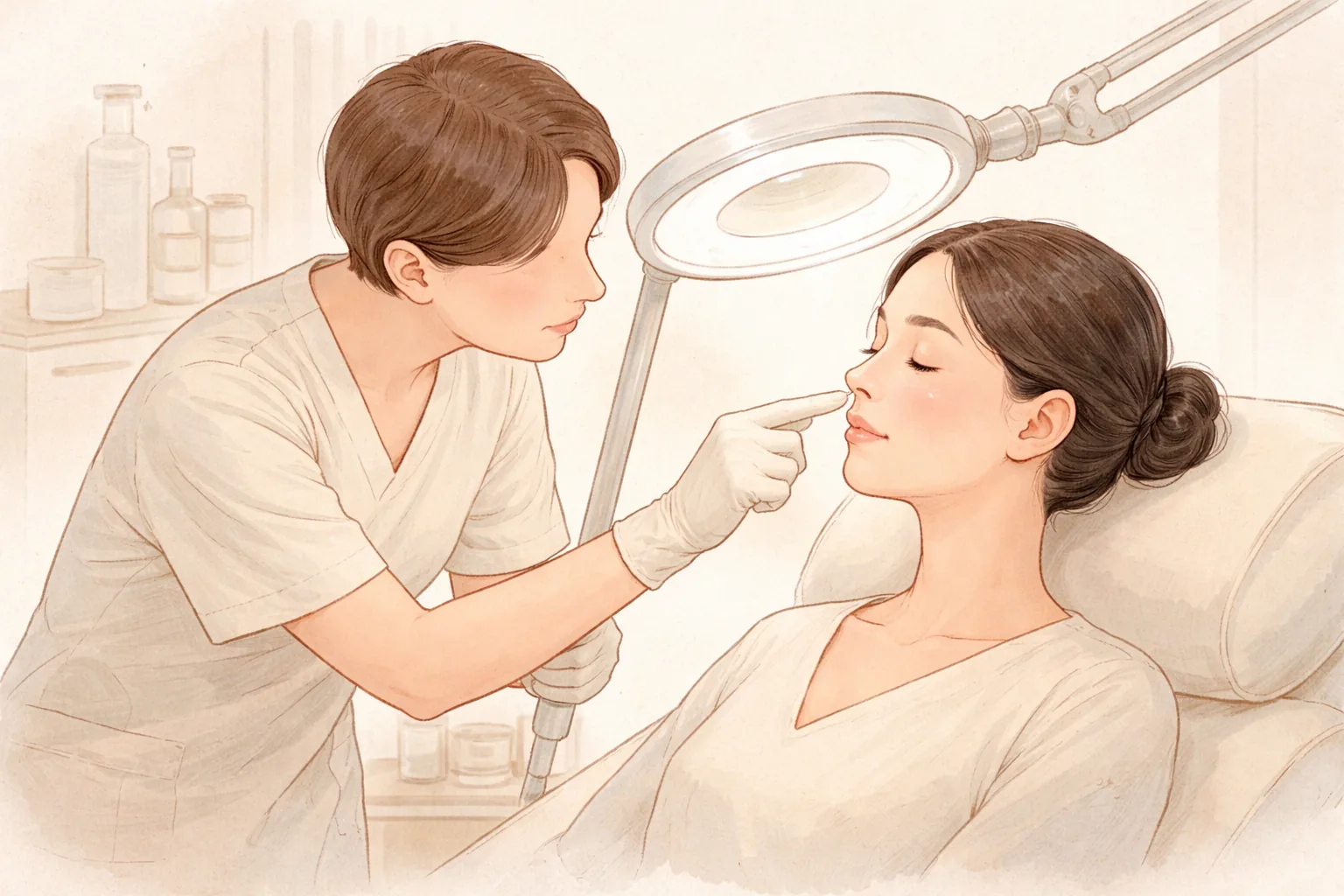
Treatment performed by the doctor — Injection sites, depth and volume are adjusted to your skin condition.
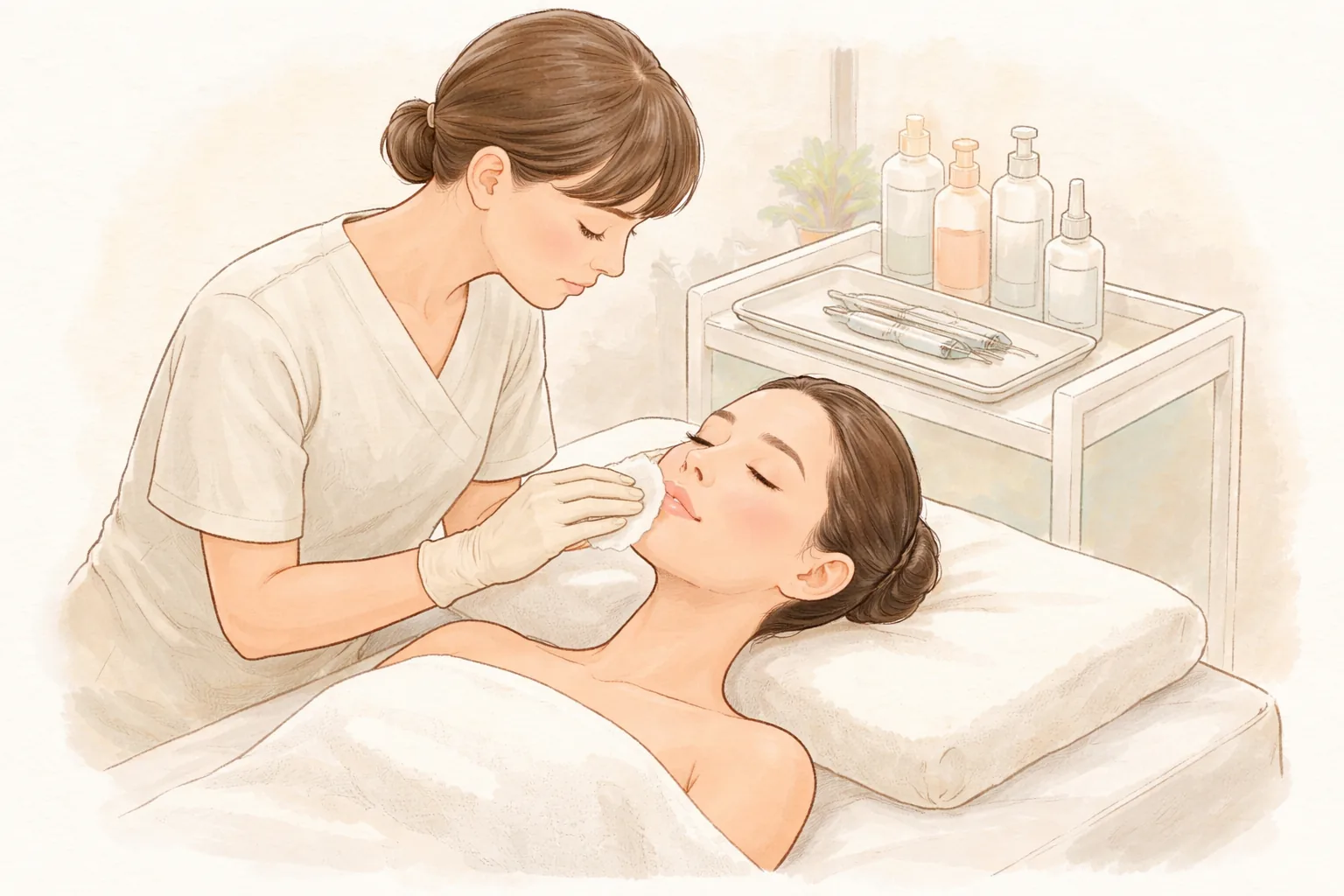
Recovery and aftercare guidance — We advise on when to wash your face, sun protection and activities to avoid, and set the next progress check.
ATTITUDE Clinic's treatment guide lists Re2O (Elravie Re2O) by the 1-vial unit, and among skin care options it also lists soothing and care treatments such as LDM, Omega Light and Aqua Peel.
Aftercare and side effects
Soothing — On the day of treatment, do not firmly press or massage the injected area. Avoid intense exercise, saunas and alcohol.
Washing and makeup — Wash your face gently starting 4–6 hours later, and start makeup the next day.
Moisturizing and sun protection — Apply sunscreen carefully throughout the recovery period. Hydration also affects how long changes hold.
Progress check — Review how swelling and bruising are clearing, and adjust the next plan at the agreed time.
Common reactions are redness and stinging, swelling, tenderness when pressed, and bruising. Less commonly, infection, allergic reaction, foreign body reaction or small lumps (nodules) can occur. Rarely, the injected product can block or damage a blood vessel, so if the skin at the injection site turns white or mottled, bluish or black, or your vision changes, seek medical care immediately rather than waiting. Pain that is unusual or worsening, and persistent swelling or heat, are also signals to seek care.
An uneven feel that lingers for a while is a common part of the product settling. But if it stays the same or becomes more pronounced over time, it is better to contact the clinic rather than waiting for the next scheduled check. Results and recovery differ between people, and the doctor explains this before treatment.
Frequently asked questions
When do skin boosters like Re2O start working?
The plump feel right after treatment is mostly swelling, and it settles over a few days. Any real change appears gradually over the following weeks, and how much firmness and texture improve varies widely between people. Rather than expecting a big change within days, it is more realistic to look at about a month. If you still feel no difference after the swelling subsides, tell us at your next consultation and we can adjust the plan.
How long do skin boosters last?
Because Re2O fills in structure, results may last longer than with inducing skin boosters, but duration varies widely between people and long-term data is still limited. Rather than promising a single figure like several years, the realistic flow is to finish your planned sessions, then set the timing of maintenance sessions based on how your skin looks. Habits like sun protection and hydration also matter.
How many sessions do I need, and how are intervals set?
It is usually planned as several sessions, with maintenance sessions considered afterward. The number depends on skin condition, area and injection volume, so the whole plan is set at the first consultation. Intervals are based on the time for the injected area to settle and swelling to subside, plus your skin condition, and any slow recovery after previous treatments is factored in. Setting out the total number of sessions and approximate intervals in a table at the first consultation makes scheduling easier. After each session the next interval is adjusted based on how recovery goes, so skin response takes priority over sticking rigidly to a set date. After your planned sessions are done, maintenance timing is set again based on how your skin looks.
When do swelling and bruising go down?
Redness and stinging for a few hours up to the same day, and swelling for 1–3 days, are common. Bruising can take more than 1 week to fade, so it helps to tell us in advance if you have plans. You can wash your face gently starting 4–6 hours later, and start makeup the next day. While swelling settles, do not firmly press or massage the injected area, and avoid intense exercise, saunas and alcohol. If bruising lasts long, or you have unusual pain or persistent swelling or heat, it is better to contact the clinic rather than waiting for the next scheduled check.
How should I choose a clinic?
Look at which product is used, who performs the treatment, and what intake questions are asked beforehand. Re2O is made from donated human tissue, so it matters whether the clinic has a process for checking autoimmune conditions or any history of reaction to tissue-derived products. It is also worth asking in advance how to get in touch if a problem comes up during recovery, and when you would be seen again.
Directly replenishes ECM structure in the dermis instead of inducing collagen production
Onset
Immediate plumpness is partly swelling; change comes gradually over weeks, varies widely
Plan
Usually split across several sessions, with maintenance sessions considered afterward
Duration
Varies widely between people; long-term data still limited
Recovery and cautions
Redness and stinging for hours up to the same day, swelling 1–3 days, bruising possible beyond 1 week, no massage of the injected area and sun protection
This article offers general health information. It is not a substitute for diagnosis or treatment based on your own condition, so please talk through your situation with a doctor.