IPL for Pigmentation: Who It Suits, and When to Hold Off
What IPL light is, which pigments it suits, and what to check first when melasma is mixed in or skin tone is darker.
Written by ATTITUDE Clinic Editorial Team
One cheek has crisp sun spots; the other has melasma spread over a wide area. Search online and the first thing you see is talk of IPL handling both pigment and redness together — but it is hard to tell whether that applies to your skin. What kind of light IPL is, which pigments it works best on, and when it should be postponed are what decide the result.
The bottom line first
IPL is not a single-wavelength laser; it fires strong light across a broad wavelength band in a very short burst. Seoul Asan Medical Center's material describes IPL as a treatment using two wavelength energies of visible light, used for both pigmented and vascular lesions, and guides toward evening out skin tone. That is why it is considered first for skin where sun spots and freckles scattered near the surface overlap with redness. If melasma spread into the dermis is the main issue, or if skin tone is darker and post-inflammatory pigmentation develops easily, the strong light and heat become a burden, so other approaches are considered first. The number of sessions and the interval are set by looking at pigment depth and skin response.
What does IPL light do in the skin?
Different wavelengths are absorbed well by different colors. Melanin absorbs certain wavelengths well, and oxygen-carrying hemoglobin absorbs others. The principle of using this difference to leave surrounding normal skin less touched while concentrating energy on the target is called selective photothermolysis (a principle of heating only the target while touching the surroundings less). A laser has one wavelength, so its target is clear; IPL mixes several wavelengths, so it targets pigment and shallow vessels at the same time. Compared with a method like the picosecond laser that breaks up only pigment in an extremely short instant, IPL has a broader target but less power concentrated on any one pigment. Because the target is broad, where and how much energy goes in is what decides the result.
It also helps to know where pigment is made. Melanin is produced by melanocytes scattered in the basal layer at the very bottom of the epidermis, and the melanin produced spreads to neighboring cells (MSD Manuals). So even when the same area is treated at the same intensity, skin with pigment concentrated in the epidermis and skin with pigment spread into the dermis respond differently. What IPL targets is not the widely spread pigment itself but the pigment near the surface and the shallow vessels.
You also often see the claim that "IPL isn't a laser, so it doesn't leave scabs." The Seoul Asan Medical Center material notes that a thin scab can form on the treated area after IPL and advises letting it fall off on its own. Strong light is still a stimulus to the skin, and a recovery process follows that stimulus.
Why does it suit spots but call for caution with melasma?
Sun spots and freckles often have pigment concentrated in the basal layer of the epidermis with relatively clear borders. Pigment close to the surface is easy for light to reach and responds quickly. Melasma, by contrast, spreads widely from the epidermis into the dermis with blurry borders. As the ATTITUDE Clinic column points out, melasma is a state in which the melanocytes themselves are overactive, so putting in strong energy all at once can stimulate the pigment cells and actually darken them. That is why the basic approach for melasma is to lower the intensity and split treatment across several sessions, along with UV protection and, when needed, medication in parallel. This phenomenon is called rebound hyperpigmentation.
Seborrheic keratoses work on a different principle. They are not accumulated pigment but benign lesions where epidermal cells have thickened, so the approach is to remove the raised portion with an erbium YAG laser or similar. The target differs from light that fades pigment.
The American Academy of Dermatology advises that treating age spots and dark spots begins with understanding why that pigment formed. When the reason is clear, intensity and interval can be set differently even with the same light.
So why is strong light a problem for melasma? Melasma is a state in which pigment cells have become sensitized by UV exposure, heat and hormonal changes acting together. When strong heat stimulation is added, post-inflammatory pigmentation that darkens the pigment is easily left behind. The MSD Manuals also explain that hyperpigmentation arises from various causes such as sun exposure or inflammation.
A mole that is new or gradually growing, or one that changes in shape or color, itches or bleeds, calls for an examination before any cosmetic procedure. Some skin cancers look like ordinary brown spots.
Why do results differ with the same IPL?
Pigment depth and skin tone are the first fork in the road. When pigment sits shallow in the epidermis, light has a shorter distance to travel and surrounding tissue receives less heat. If skin tone is darker or recently tanned, melanin in the epidermis absorbs light along with the target. That much heat builds up in the wrong place, and temporary pigmentation is easily left behind. The ATTITUDE Clinic column also notes that temporary pigmentation can occur when skin is dark or tanned.
Energy intensity and interval also change the result. If energy is strong relative to the skin's condition, or treatment is repeated before recovery is complete, the risk of side effects such as burns or pigmentation increases. Frequent toning has been reported in connection with mottled hypopigmentation, so toning usually leaves at least a 1-week interval.
UV exposure cannot be left out either. Right after a procedure the skin's protective barrier is temporarily weakened, and if UV is not blocked at this time, pigmentation can develop in the newly made skin and pigment that was carefully faded comes back.
Table 1 Why do results differ with the same IPL?
Pigment / concern
Layer it sits in
When approached with IPL
What is also checked in consultation
Freckles / sun spots
Epidermal basal layer
Toward generally evening out pigment scattered near the surface
UV exposure habits, likelihood of recurrence
Melasma
Epidermis to dermis, spread widely
Repeating lower intensity rather than strong intensity is the basics
Whether pigment cells are overactive, medication in parallel
Redness / flushing
Shallow vessels
Toward addressing pigment and redness together
Sensitivity, whether there is rosacea, need for vascular laser
Seborrheic keratosis
Thickening of the outer epidermal layer
Target differs from pigment removal
Consider removal direction such as erbium YAG laser
Swipe sideways to see the whole table.
In summary IPL suits evening out pigment scattered near the surface together with shallow redness. If melasma is mixed in or skin tone is darker, interval and UV protection decide the result more than raising intensity. Raising intensity first without confirming which pigment it is can go in the opposite direction from fading.
How many sessions, at what interval?
The Seoul Asan Medical Center material advises treating IPL at 2-week intervals and proceeding with 1–3 sessions depending on skin condition. These numbers are a common example and are adjusted by looking at pigment depth and response. Sun spots sit in the epidermis and tend to respond quickly, but for pigment spread widely like melasma, the basics are to repeat low energy across several sessions. According to the clinic's guide, examples for melasma and extensive pigment include low-power toning 8–12 or more times with at least a 1-week interval.
Pain varies with light intensity and treatment area. Even at the same intensity, thin-skinned areas like the cheeks feel sharper. The Seoul Asan Medical Center material advises applying local anesthesia or anesthetic ointment before the procedure and proceeding with treatment 30–40 minutes after the ointment is applied. If you are sensitive to pain or a previous procedure was hard, saying so in consultation lets the anesthesia method be decided together.
Recovery also differs by procedure. With low-power toning, redness and stinging settle within a few hours to the same day, and when epidermal pigment is treated intensively, scabs remain for about 7–10 days. IPL can also leave thin scabs, so anyone with plans should calculate the recovery period first.
In these situations
When a wedding or shoot is only weeks away
Scabs and redness show up plainly in photos. If little time remains before the event, it is safer to postpone until after the schedule rather than putting in strong intensity now. If there is enough time, you can plan backward from the date, building in the recovery period.
When there is a lot of summer outdoor activity
As long as thorough UV protection is a given, treatment can proceed regardless of season. Still, if your life involves a lot of outdoor activity, it is better to move procedures that leave scabs for long to a time when UV exposure decreases. Low-power maintenance treatments have relatively few seasonal restrictions.
Sensitive skin with both redness and spots
If the redness is from superficial vascular dilation, you can expect light and laser to reduce it. Conversely, for sensitive skin or flushing caused by high skin reactivity itself, such as rosacea, the effect of light is limited. When the barrier is disrupted, calming comes before pigment.
A short stay
There are not many cases where pigment is resolved in a single session. If your visit is short, it is more realistic to set expectations at confirming response and lightly evening out tone rather than aiming to erase pigment. You should also consider whether progress can be followed after returning home.
Please tell us before consultation
Your recent UV exposure (travel, outdoor activity, tanning), medications you are taking and active skincare ingredients, any experience of pigment darkening after a previous procedure, and unavoidable commitments such as a wedding, shoot or business trip.
How ATTITUDE Clinic proceeds
AI skin analysis record Skin condition is recorded and organized with a device. This record is supporting material for consultation and is not a medical diagnosis. Pigment distribution, redness and texture can be compared on one screen, which becomes the starting point of consultation.
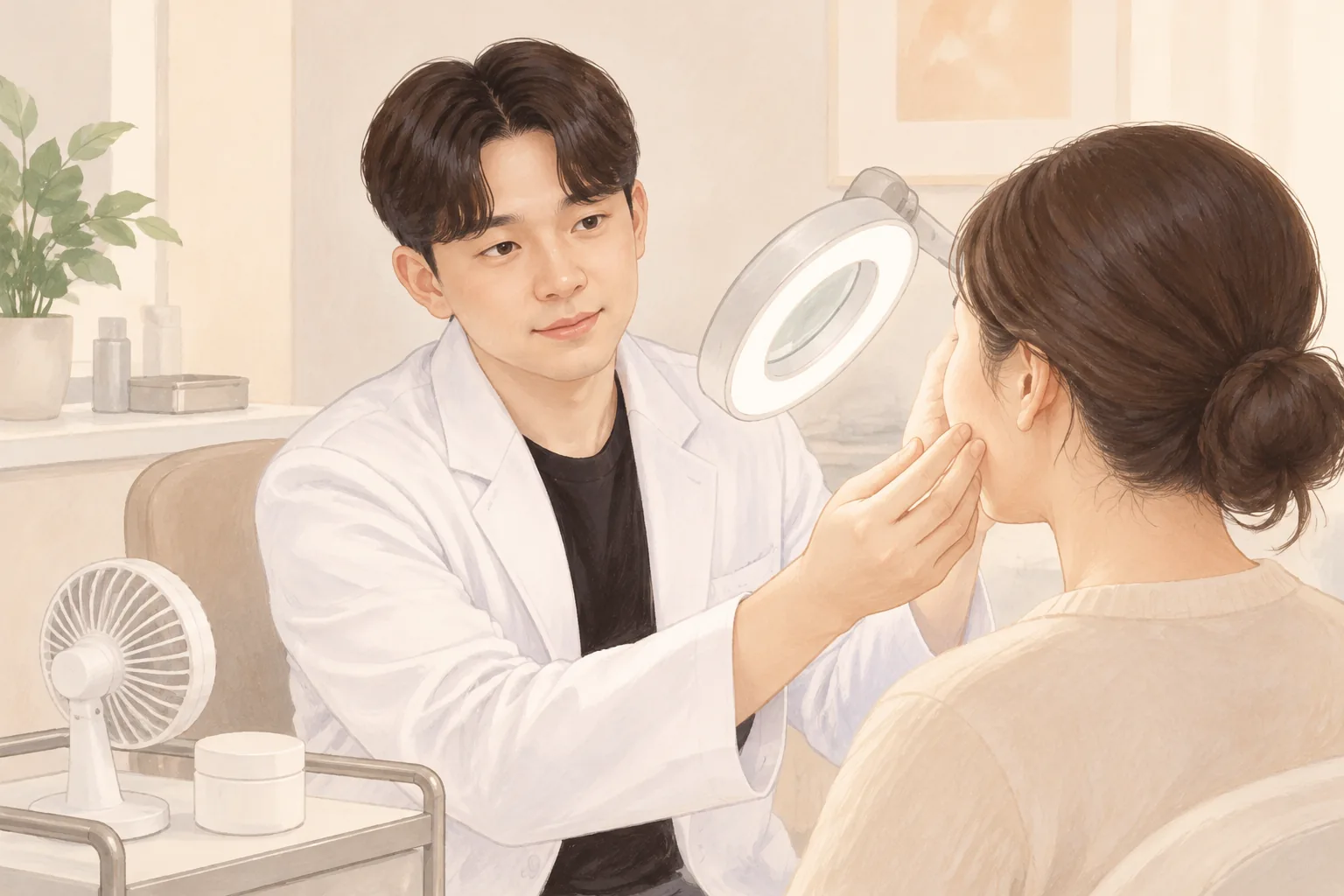
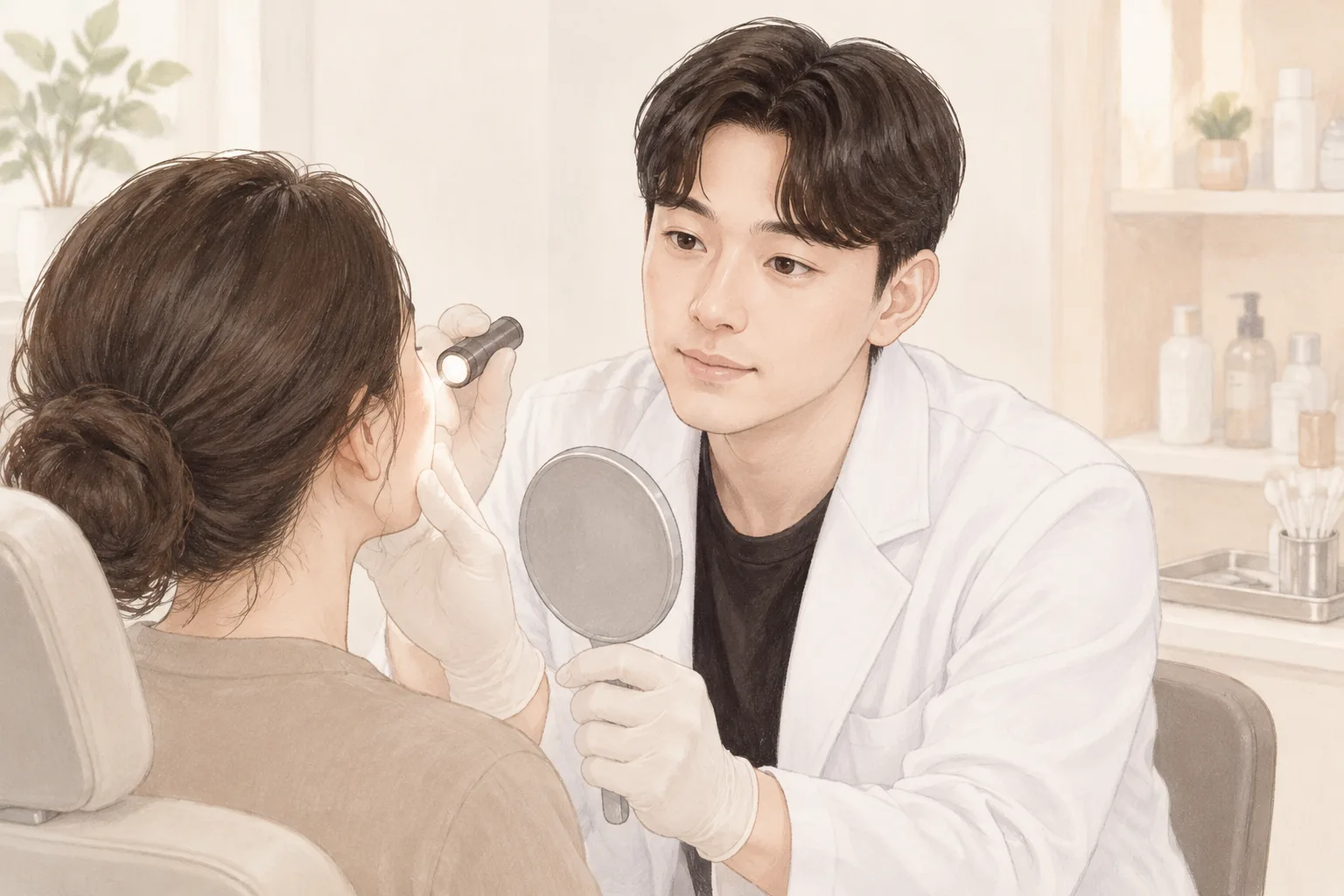
Doctor's examination and pigment type assessment UV exposure, hormonal changes and lifestyle habits are added to the record, and the doctor examines the skin directly to assess the pigment type. Even brown spots that look similar to the eye sit in different layers, so the approach differs.
Treatment by the doctor The doctor selects from the clinic's devices according to pigment type — such as PicoPlus (pigment), Vbeam (vessels) and erbium YAG laser (skin surface) — and adjusts intensity and combination. Whether a method using broad-wavelength light suits this skin is also judged together in consultation.
Recovery and progress check Response after the procedure is checked and the next interval is set. If scabs and redness last longer than expected, the condition is reviewed first rather than moving the next session earlier.
Four steps your doctor sees to in person
From the diagnostic device to the treatment bed, the doctor you first consult takes care of everything.
01
Precision diagnosis
In a private diagnosis room the whole face is photographed, recording even skin conditions that are hard to see with the eye.
02
Skin analysis
The doctor goes through your pore, pigmentation, wrinkle and firmness results with you on screen and explains what comes first.
03
One-to-one design
With your skin, the balance of your face, the change you want and your schedule in view, you decide the treatment and its extent together.
04
Treatment by your doctor
The doctor who consulted you performs the treatment from start to finish in a private treatment room. No one takes over halfway.
“I take injection pain seriously.”
Co-Director Dr. Lee Dong Hun
Many people hesitate over injection treatments because they hurt. So we went back over everything, from the anesthetic to the products used.
Careful numbing, unhurried timingWe allow plenty of time for a special numbing cream to take full effect, and add anesthetic injections for the treatments and areas that need them.
Fine needles, finished quicklyInjection treatments use fine needles, and the doctor finishes them personally in a short time, adjusting along the way by watching how you are doing.
Even the product formulation countsThe same treatment can feel more or less demanding depending on the product, so we take that into account too.
The anesthetic method and whether it is used are decided after an examination, according to the treatment, the area and your condition. How much it hurts varies from person to person.
Aftercare and side effects
Calming On the day of the procedure, avoid saunas, strenuous exercise and alcohol, and wash lightly with lukewarm water. Do not rub; pat dry.
Moisturizing When skin is dry, recovery slows. Apply moisturizer often, and postpone exfoliation and scrubs for the period you are advised.
UV protection For at least 2 weeks after the procedure, apply SPF 50+ sunscreen, and outdoors reapply about every 2 hours. Light coming indoors is also a stimulus to weakened skin.
Checking progress Do not touch scabs; let them fall off on their own. If redness and stinging last more than 3 days or worsen, do not endure it — come in.
Common reactions are redness, heat sensation, swelling and stinging, and thin scabs may form. Pigment in the treated area may temporarily darken. Rarely, hypopigmentation where skin color fades, blisters, infection or scarring may occur, or pigment may rise again over time. Most resolve during recovery, but if blisters form or pigment feels darker instead, postpone the next session and have it checked.
Frequently asked questions
I have both sun spots and melasma — is IPL alone enough?
Mixed cases are common, and then it is difficult to address everything with one method. Crisp epidermal sun spots and widely spread melasma have different targets, so intensity and interval must be set separately. Using strong intensity on the melasma side can darken the pigment, so the basic approach is lower intensity split across sessions. The order is set after examining pigment layer and distribution in the examination. For areas where pigments overlap, dividing priorities rather than treating everything at once puts less burden on the skin.
Does IPL work with just one session?
The advised number is about 1–3 sessions at 2-week intervals, and this varies with pigment depth and response. There are not many cases where pigment disappears in one go; it is closer to a method where tone evens out as sessions accumulate. Especially for pigment that recurs often, like melasma, several sessions and UV protection are needed together. Rather than judging after one session, adjusting intensity while watching response between sessions is also better for reading results.
Can I wear makeup right after the procedure?
If scabs have formed, reduce stimulation until they fall off. Covering scabs with makeup or rubbing them off damages the new skin underneath and easily leaves pigmentation. If there is only thin scabbing or redness, start lightly within the range you are advised. Which applies is decided by the skin condition right after the procedure. Start after checking that redness and stinging have settled and no scabs have formed. When removing makeup, do not rub — pat it off — and postpone exfoliation and scrubs until before the next session. If skin response differs from what you expected, it is safer to come in and have it checked rather than covering it up.
Should I avoid IPL if my skin tone is darker?
If skin tone is darker or recently tanned, melanin in the epidermis absorbs light along with the target, increasing the risk of pigmentation. That does not make it impossible; a method of lowering intensity, lengthening the interval and watching response is used. If you have a history of post-inflammatory pigmentation developing easily, tell the clinic first in consultation. Even with the same skin tone, the plan differs with pigment location and response to past procedures.
How do I choose a good place for IPL?
Look at the order of the consultation rather than the device name. The criteria are whether they first check whether your pigment is in the epidermis or has spread into the dermis, whether they recommend only the procedures needed, and whether they explain pain, recovery period and aftercare precautions. It also helps to see whether it is a place you can return to if discomfort arises after the procedure. The more specific the explanation of pigment type in consultation, the clearer the basis for setting intensity and interval.
At a glance
Table 2 At a glance
Item
Key point
What IPL does
Targets epidermal pigment and shallow vessels together with broad-wavelength light
Concerns it suits
Sun spots and freckles scattered in the epidermis, skin with overlapping pigment and redness
Concerns to be careful with
Melasma spread into the dermis, dark or tanned skin tone
Common sessions and interval
Example advised is 1–3 sessions at 2-week intervals, adjusted by response
Recovery
Low power: a few hours to the same day; with scabs: 7–10 days
What decides the result
Pigment depth and intensity, interval, and UV protection
Sources and references
서울아산병원 레이저 시술 안내https://www.amc.seoul.kr/asan/healthinfo/management/managementDetail.do?managementId=537
This article offers general health information. It is not a substitute for diagnosis or treatment based on your own condition, so please talk through your situation with a doctor.