How melasma develops, what worsens it, the truth about laser treatment, why results depend on pigment depth, and before-and-after care.
Written by ATTITUDE Clinic Editorial Team
When you see brown patches spreading faintly across both cheeks, you may wonder, "Why does it keep getting darker?", "Is avoiding sunlight really all it takes?", or "I heard laser treatment for melasma makes it worse — is that true?" Melasma is not explained by a single cause, and it often fades and darkens again in cycles. This article walks through why melasma develops, what makes it worse, and why the same trigger produces different results in different people.
The bottom line first
Melasma is a condition in which melanocytes, the cells that give skin its color, become overactive and produce and accumulate more melanin than needed. UV light, visible light, heat, hormonal changes, and stress all act together on top of this (American Academy of Dermatology melasma treatment guide). That is why an approach that only temporarily reduces pigment tends to darken again over time, and the triggers behind it need to be reduced as well. Using lasers for melasma is not a problem in itself; the problem is raising the intensity without first checking how deep the pigment sits. Once you know what the aggravating factors are, you can judge treatment timing, intensity, and daily care by the same standard.
Why melasma develops: pigment cells waking up too much
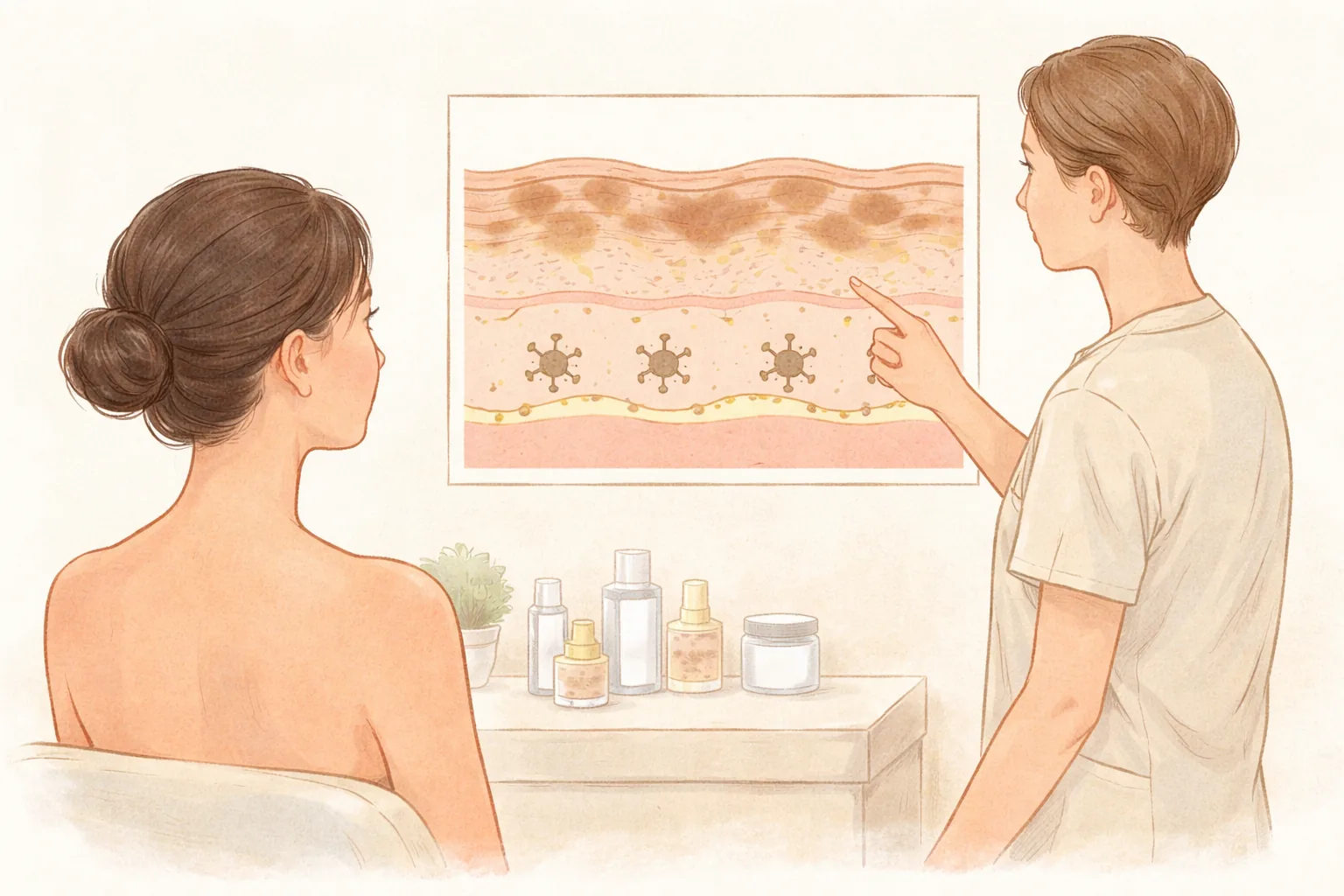
In the basal layer of the skin sit melanocytes, the cells that give skin its color. When these cells are stimulated by UV light, heat, inflammation, or hormonal changes, they produce more melanin to protect the skin. But when this protective response becomes excessive in a particular area and continues for a long time, the color does not spread evenly and remains as patches. This is why melasma is hard to view as a simple clump of pigment (Melasma, freckles, sun spots, age spots — are they all the same?).
Even with the same amount of sunlight, some people develop melasma, some just get more small spots, and some see no change. This is because the amount of melanin produced and the way it is distributed differ from person to person. When a period of hormonal change overlaps, such as pregnancy or taking oral contraceptives, pigment rises more easily. In fact, according to the American Academy of Dermatology, melasma triggered by pregnancy or medication can fade when the trigger goes away, but it can also last for years or a lifetime (Melasma: Diagnosis and treatment).
Melasma is classified as epidermal, dermal, or mixed depending on the depth at which the pigment sits. Pigment close to the epidermis responds relatively quickly, but pigment that has descended into the dermis does not reduce well with approaches that only treat the surface. This is why identifying what kind of pigment it is and at what depth it sits comes before designing treatment.
What makes melasma worse
The biggest factor is light. UV light stimulates the skin to produce more pigment, darkening existing melasma and creating new patches. But it is not only UV. Visible light can also worsen melasma, and the American Academy of Dermatology notes this effect is especially pronounced in darker skin tones (Melasma: Self-care). UV and visible light do not disappear on cloudy days or indoors, so protection becomes basic daily care regardless of whether you go outside.
Heat cannot be ignored either. Stimuli that raise skin temperature, such as saunas, jjimjilbangs, long hot showers, or intense exercise, can dilate blood vessels and re-stimulate pigment cells. This is why melasma is described as a condition arising from a complex tangle of UV light, heat, and hormones. Harsh skincare products are the same. Products that sting or burn after application are a sign they are irritating the skin, and that irritation can darken pigment further. The American Academy of Dermatology recommends using gentle, fragrance-free products (Melasma: Self-care).
Hormones and stress are also aggravating factors. Pregnancy, oral contraceptives, and stress can trigger or darken melasma (Melasma: Diagnosis and treatment). When repeated friction or strong exfoliation is added on top, the skin barrier weakens and creates an environment where pigment rises more easily. If the area has widened and the color deepened over the past few months, consider it an active state, and during this period it is safer to avoid strong stimuli and approach with intervals.
Tanning beds should also be avoided. The American Academy of Dermatology advises that indoor tanning devices and sunlamps can worsen melasma and make treatment ineffective (Melasma: Self-care). A tan may look like a healthy color, but for skin with melasma it is a choice that goes directly against the direction of care.
Does laser treatment really make melasma worse?
This question comes with conditions. Not all lasers are bad for melasma. However, if you raise the energy to erase melasma quickly, the cells that produce pigment can be stimulated to make more melanin, or rebound hyperpigmentation can actually darken it. This is the pattern where it looks temporarily lighter, then becomes darker than before over time (Melasma, freckles, sun spots, age spots — are they all the same?).
Why does this happen? Lasers work on the principle of selective photothermolysis, in which wavelength and intensity are adjusted so energy is absorbed only by targets such as pigment or blood vessels — concentrating energy on the target while touching the surroundings less. Even with the same heat, concentrating it on the target becomes treatment, but spreading it too widely and excessively becomes a burn (Does frequent laser treatment really thin the skin?). Melasma is a state in which pigment cells are already sensitized, so the threshold for "excessive" is lower than for other pigment conditions.
That is why melasma is approached with lower energy divided across multiple sessions rather than one strong pass, with sun protection and trigger management in between. Conversely, laser treatment does not necessarily make melasma worse. The American Academy of Dermatology notes that studies have found better results when laser or light treatment was added for people already using sun protection and topical medication (Melasma: Diagnosis and treatment). In the end, what makes the difference is not the name of the device, but whether the intensity and intervals were set after checking at what depth your melasma sits and how sensitive it is.
Why results differ even with the same laser
Lasers used for pigment treatment reach different depths in the skin depending on wavelength, and the intensity of stimulation the skin receives varies with energy level. The wavelength suited to small spots sitting shallow in the epidermis and the approach to melasma spread into the dermis cannot help but differ (Spots, redness, scars — can lasers do it all?). The depth and distribution of pigment, how quickly it has darkened recently, skin tone and sensitivity, and response to previous treatment all make a difference.
Table 1 Why results differ even with the same laser
Category
Layer where it sits
Approach
Related devices (per clinic guidance)
Age spots
Epidermis (thickened outer layer)
Remove the raised lesion
Erbium YAG laser, etc.
Freckles, spots
Epidermal basal layer
Focus on individual spots and combine with sun protection
In summary What determines the outcome in melasma is not which device was used, but at what depth the pigment sits and whether the intensity and intervals matched that depth were followed. When low energy is divided across multiple sessions rather than one strong pass, and sun protection in between moves alongside it, the extent to which pigment rises again is reduced. Even with the same device, how output and target response are set makes it an entirely different treatment.
If this sounds like you
When the date is fixed, like a wedding or a photo shoot
If you have an important event, it is better to tell us the date first. Working backward from the schedule, we can adjust the treatment type, intensity, and start timing. Treatments that form crusts usually take 7–10 days for the crusts to fall off, so if a shoot is imminent, a plan with lower intensity suits better (Spots, redness, scars — can lasers do it all?).
When you want steady management but fear irritation
For melasma, the goal of keeping it low for a long time often fits better than erasing it at once. The basic flow is repeating low energy and caring for protection and soothing between sessions. When the skin becomes sensitive, adjusting by lengthening the intervals is needed.
When your skin is sensitive or prone to redness
Some skin retains redness and heat for a long time even at the same intensity. If you have had stinging and redness from products you recently used or from previous treatments, tell us first during consultation. If skin reactions differ from expectations, a judgment to lower the intensity or postpone is needed (Does frequent laser treatment really thin the skin?).
If you are an international visitor on a short stay
If your stay is short, treatments with long downtime burden your schedule. Low-energy care that allows same-day return to daily life is more realistic than treatments requiring several days of recovery. It is better to receive a plan so you can continue the same principles (protection, moisturizing, intervals) after returning home.
Tell us before your consultation Your recent UV exposure and outdoor activity level, medications you are taking and whether you use oral contraceptives, pregnancy or breastfeeding plans, skincare products you are using (including retinol and acids), whether you have had redness or hyperpigmentation from previous treatments, and important upcoming events (wedding, photo shoot, travel, business trip).
How ATTITUDE Clinic proceeds
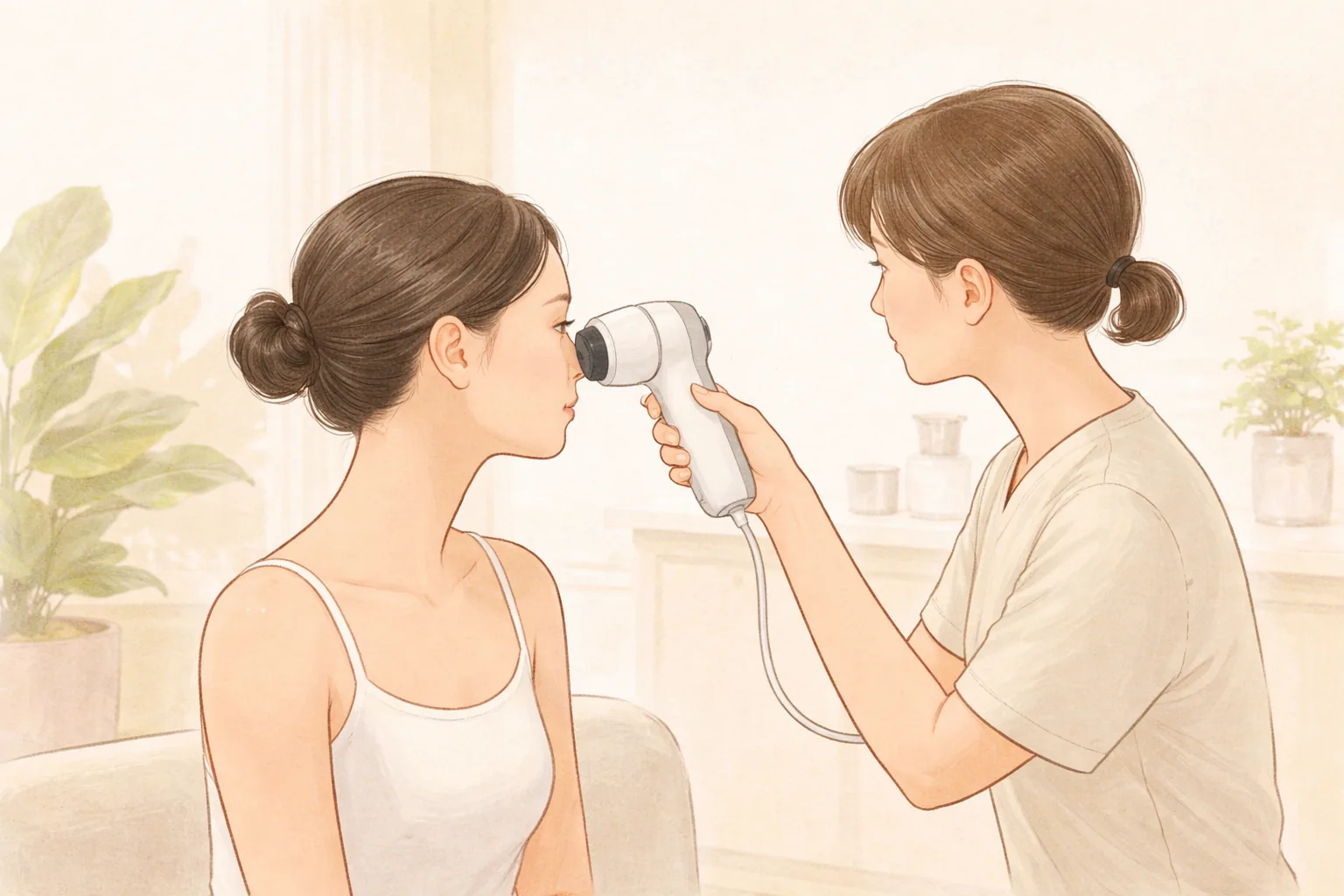
AI skin analysis record — We record and organize the distribution of pigment and skin condition to support consultation. The analysis tool only records and organizes information and does not make a medical diagnosis; the doctor determines the pigment type through examination (Melasma, freckles, sun spots, age spots — are they all the same?).
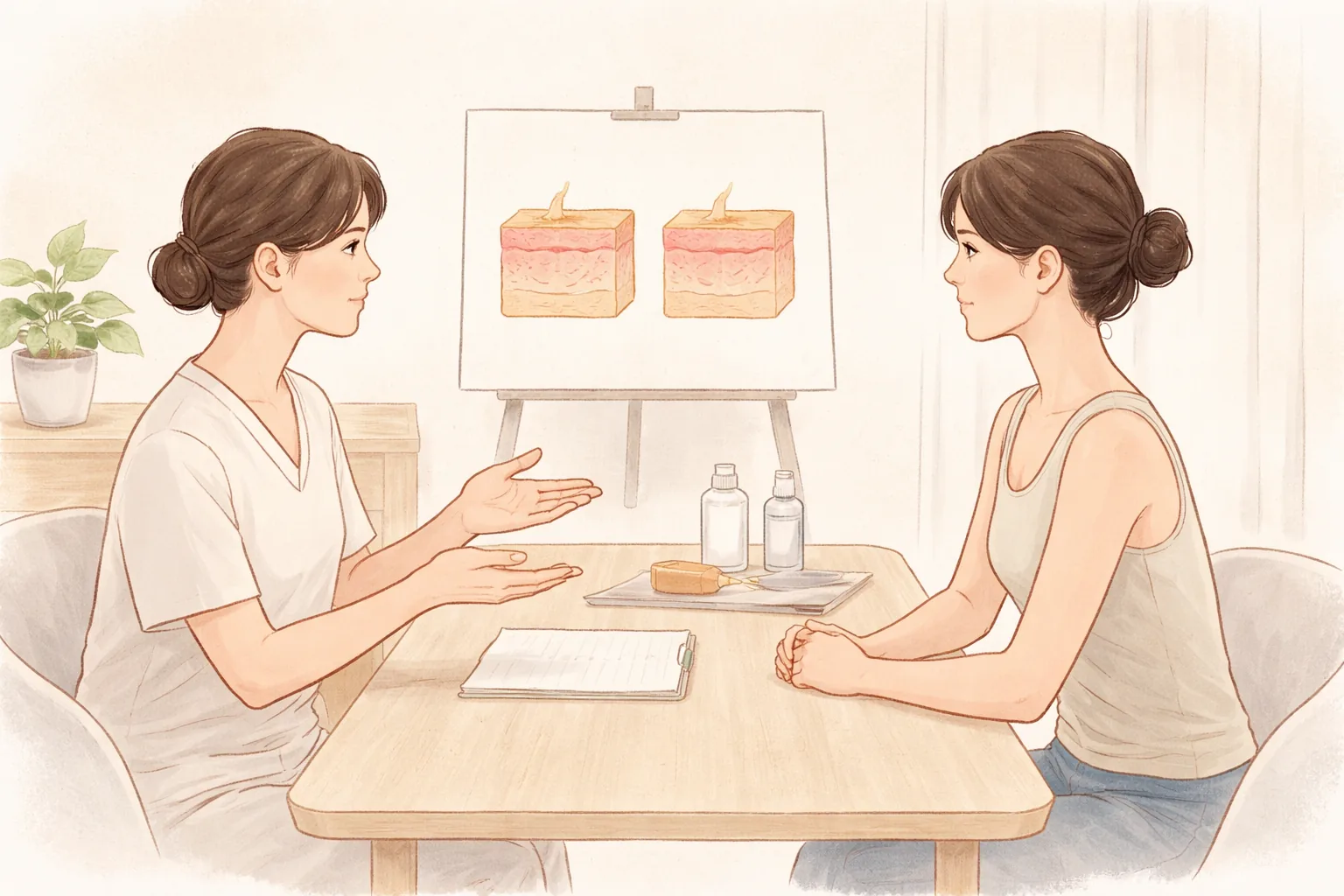
Doctor consultation to interpret type and cause — Adding lifestyle factors such as UV exposure and hormonal changes and your concerns to the record, the doctor judges the pigment type and activity. Because the recent speed of darkening is reviewed together, the treatment order and timing can be set.
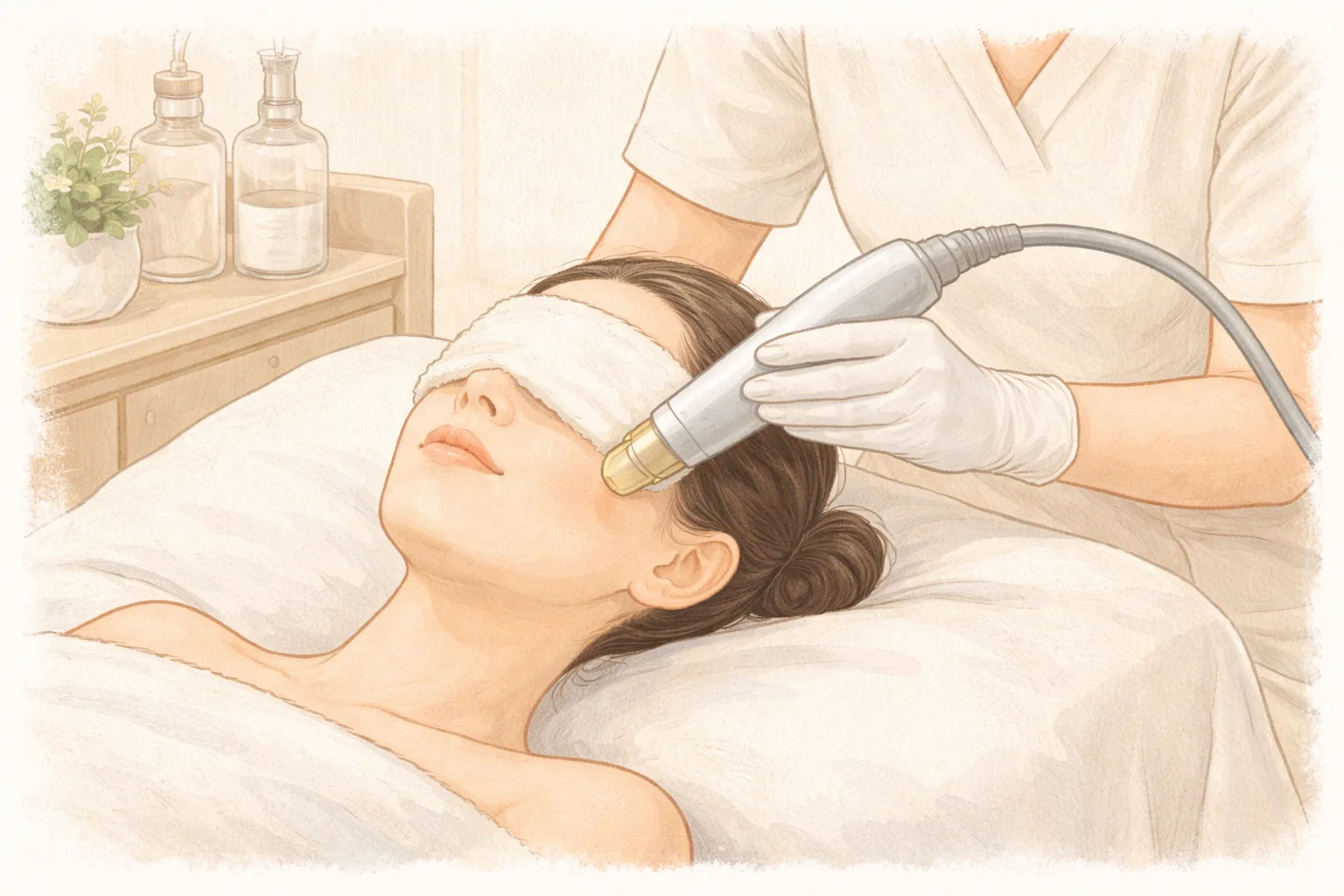
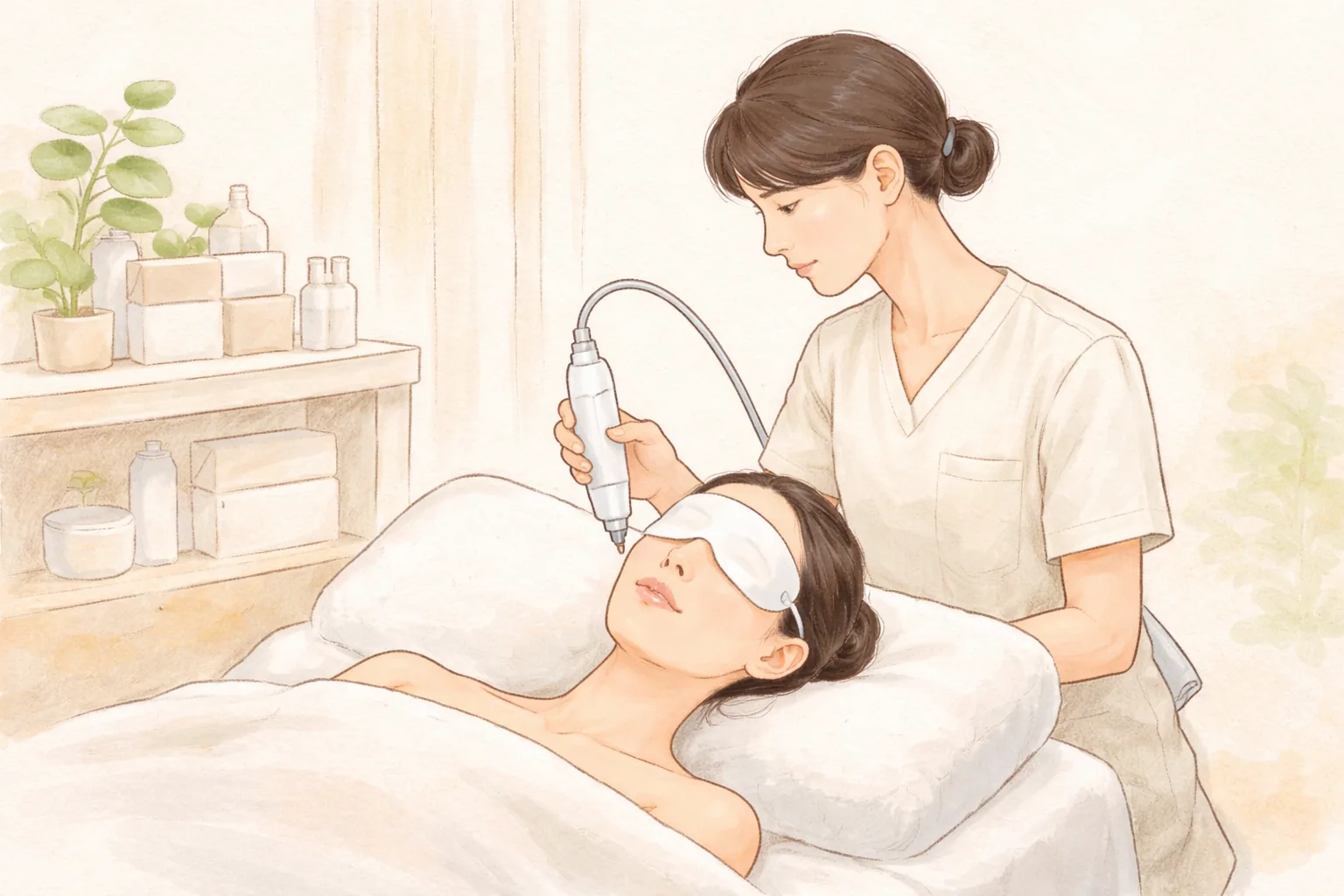
Treatment performed directly by the doctor — Among the devices we hold, including PicoPlus, Vbeam, and erbium YAG laser, the device suited to the pigment type is selected and the doctor directly adjusts intensity and combination. Melasma is treated cautiously with low-energy toning.
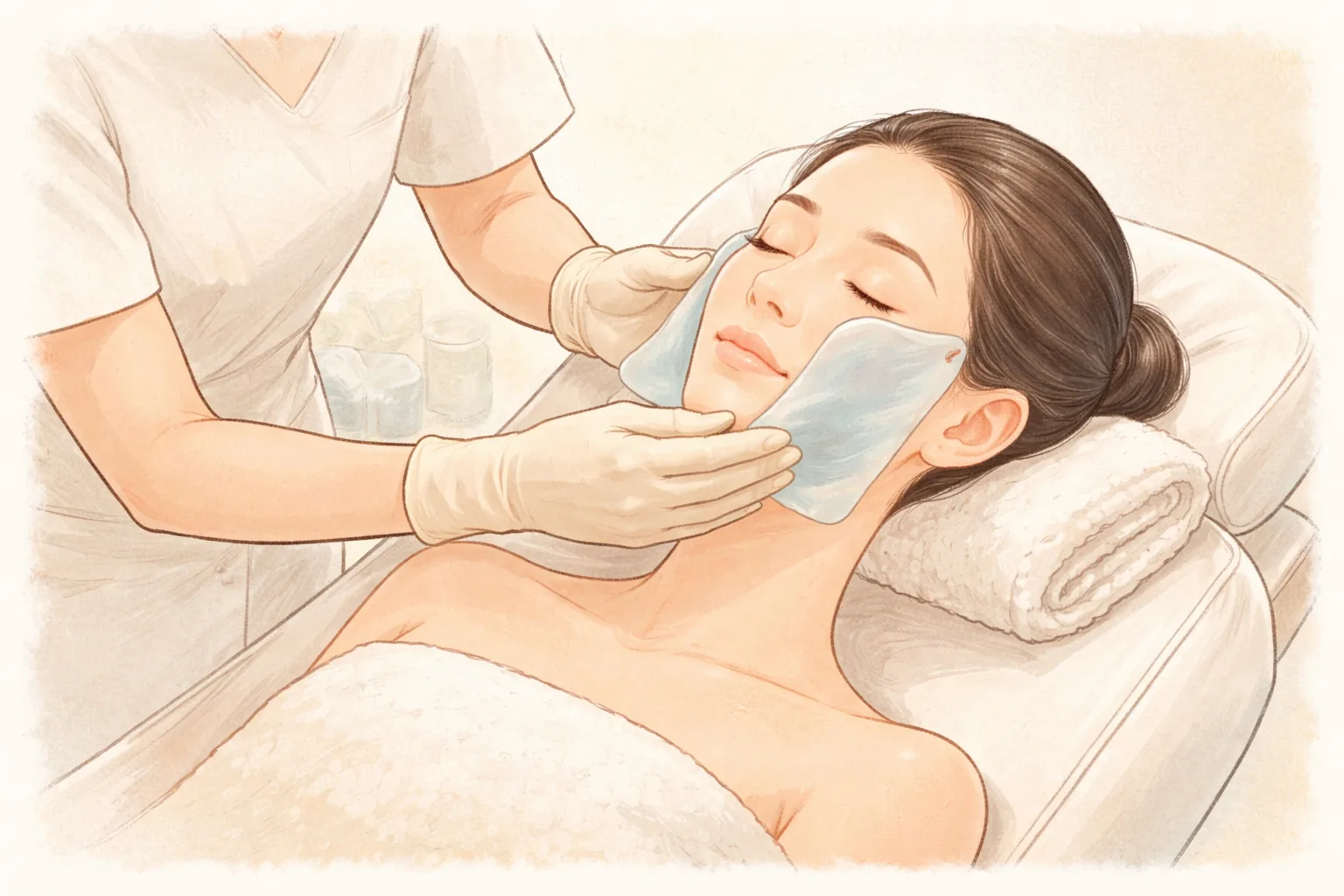
Recovery and care — After treatment, the skin becomes temporarily sensitive, so we guide you on protection, moisturizing, and avoiding heat stimuli. Rather than strong and frequent, we follow the principle of authentic products, accurate dosing, and fair pricing, proceeding only as much as needed at an intensity and interval suited to your skin condition (Does frequent laser treatment really thin the skin?).
Aftercare and side effects
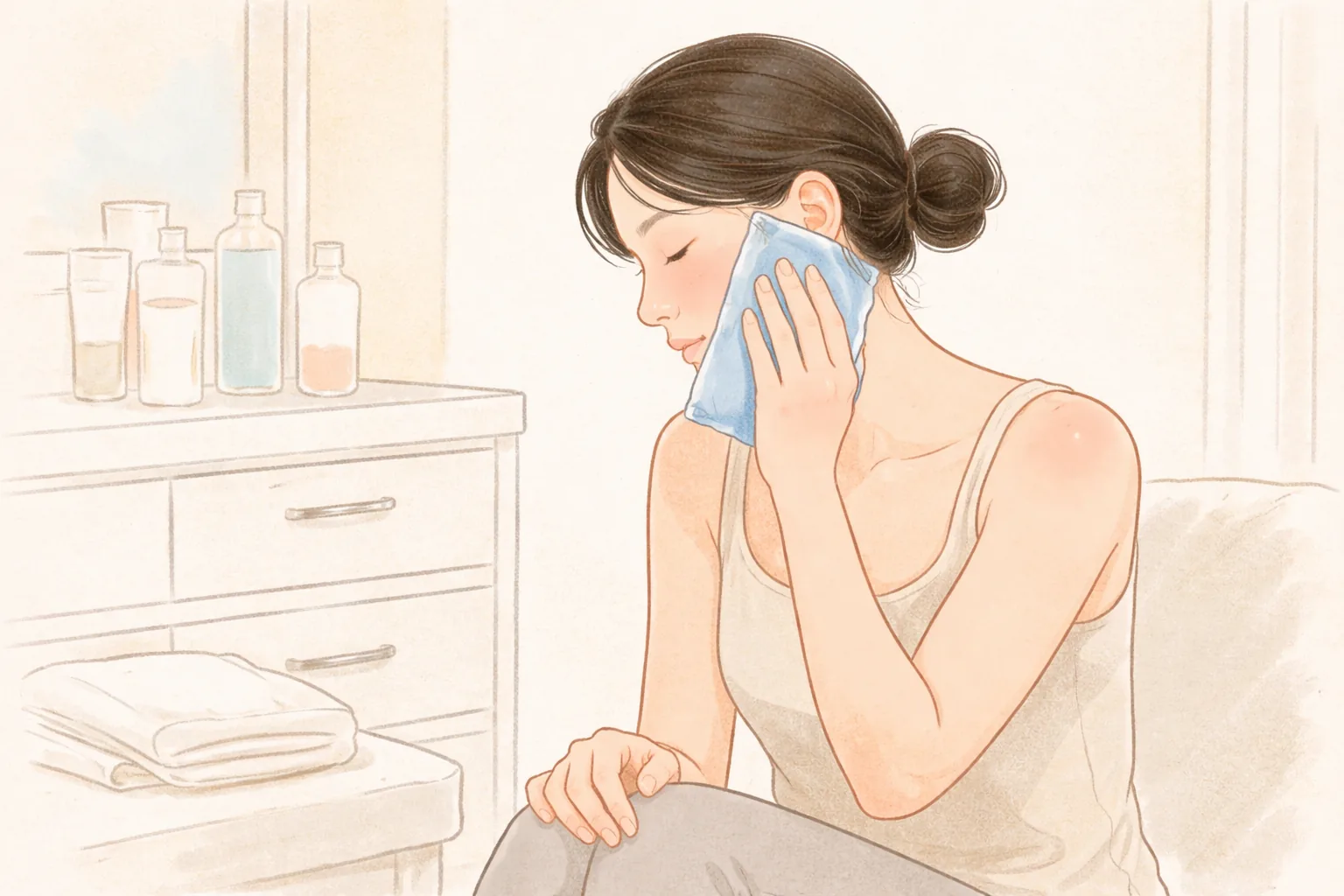
Soothing — On the day of treatment, use lukewarm water instead of hot, and wipe gently without rubbing. It is better to avoid stimuli that raise skin temperature, such as saunas, jjimjilbangs, and intense exercise, for 1–2 weeks (Spots, redness, scars — can lasers do it all?).
Moisturizing — Fill the skin barrier with a fragrance-free, gentle moisturizer. During the period when new skin is being built, avoid products that sting, and postpone exfoliation and scrubs for the period you are advised.
Sun protection — Right after treatment, the defense barrier is weakened, so apply more thoroughly than usual. Outdoors, reapply about every 2 hours, and covering with a hat and parasol is needed as well (Melasma: Self-care). For visible light protection, a tone-up formula with an SPF of 30 or higher and iron oxide also helps.
Checking progress — If crusts have formed, do not touch them and let them fall off on their own. If redness and heat last longer than expected or suddenly worsen, do not endure it and come in to be checked.
Commonly, the treated area may turn red or swell, sting, form crusts, or temporarily darken. Rarely, hypopigmentation, blisters, or scars may occur, and pigment may rise again over time. Small crusts that form after spot treatment usually fall off in 7–10 days (Melasma, freckles, sun spots, age spots — are they all the same?).
In the following cases, it is better to come in rather than wait: when redness or heat lasts more than 3 days or suddenly worsens, when blisters form, when fluid oozes from under a crust or pain increases, or when patches spread in a different color than before. If pigment darkens again quickly, a judgment to lengthen the treatment intervals or take a break is needed.
Frequently asked questions
How is melasma different from spots?
Melasma tends to have unclear borders and spread widely across both cheeks or the forehead, and pigment can descend into the dermis. Spots are small, have relatively distinct borders, and often concentrate in the epidermal layer. In reality, however, the two often overlap on one face or take an intermediate form, making it hard to divide them precisely from a mirror or photo. Because the approach differs depending on which layer the pigment sits in, distinguishing them requires an examination (Melasma, freckles, sun spots, age spots — are they all the same?).
Should I avoid laser treatment for melasma?
It is not something to avoid unconditionally. Studies have found better results when laser or light treatment was added for people already using sun protection and topical medication (Melasma: Diagnosis and treatment). However, melasma is sensitive to stimulation, so using strong energy at once can actually darken the pigment. That is why the basic approach is low energy divided across multiple sessions, with protection and trigger management in between. If your melasma is currently highly active, postponing may be the better judgment.
Are laser toning and spot lasers the same treatment?
Even with the same device, if output, treatment area, and target response differ, they should be viewed as different treatments. Melasma moves in the direction of gradually lightening by repeating low output over a wide area, while spots limited to the epidermis move in the direction of focusing on the lesion and using relatively higher output. Pigment close to the epidermis often suits shallow wavelengths, and pigment extending into the dermis often suits wavelengths that reach deeper. That is why examining pigment depth first at the diagnostic stage determines the outcome (Spots, redness, scars — can lasers do it all?).
How many sessions and what intervals for melasma treatment?
Melasma is rarely completed in a single session, so the general flow is repeating low energy and managing over time. If the intervals are too short, the skin does not have time to recover, so keep at least 1 week and adjust while watching skin reactions (Spots, redness, scars — can lasers do it all?). How many sessions are needed depends on the depth and activity of the pigment, skin tone, and daily UV exposure. Rather than setting the number in advance, adjusting the plan while watching progress is safer.
What should I look for when choosing a place for melasma treatment?
First, check whether there is a process to identify the pigment type and depth. Second, confirm whether the person who made the treatment plan also performs the treatment. Third, see whether they explain expected side effects, recovery time, and aftercare methods in detail. Fourth, whether they help decide what is needed now, what is not, and in what order, rather than recommending as many sessions as you want, becomes the criterion. It is also good to confirm that the analysis tool does not replace diagnosis.
At a glance
Table 2 At a glance
Item
Key point
Starting point of melasma
Melanocytes become overactive and produce and accumulate more melanin than needed
This article offers general health information. It is not a substitute for diagnosis or treatment based on your own condition, so please talk through your situation with a doctor.