Rosacea Treatment: VBeam vs V-Laser Pain, Anesthesia, and What Actually Changes How It Feels
What determines the pain of vascular lasers like VBeam and V-Laser, how numbing cream and intensity are decided, and what to prepare before and after rosacea treatment for face.
Written by ATTITUDE Clinic Editorial Team
The most common questions during a vascular laser consultation are "does it hurt a lot?" and "do you apply numbing cream?" Many people also assume VBeam and V-Laser are the same device, so they often wonder how to tell these similarly named machines apart. This article walks through what determines vascular laser pain, how anesthesia is decided, and what to prepare and watch for before and after treatment.
The short answer first
Pain is determined less by the device name than by wavelength (the property corresponding to the color of light), power, treatment area, body part, and individual sensitivity. Even with the same device, how it feels differs depending on whether the entire face is swept broadly or a small area is treated intensively. Topical anesthesia before the procedure can reduce discomfort, and the anesthesia method and intensity are decided during consultation based on your skin condition and pain sensitivity. The American Academy of Dermatology recommends that you always ask about anesthesia during cosmetic procedure consultations (AAD guide).
Why do vascular lasers feel prickly?
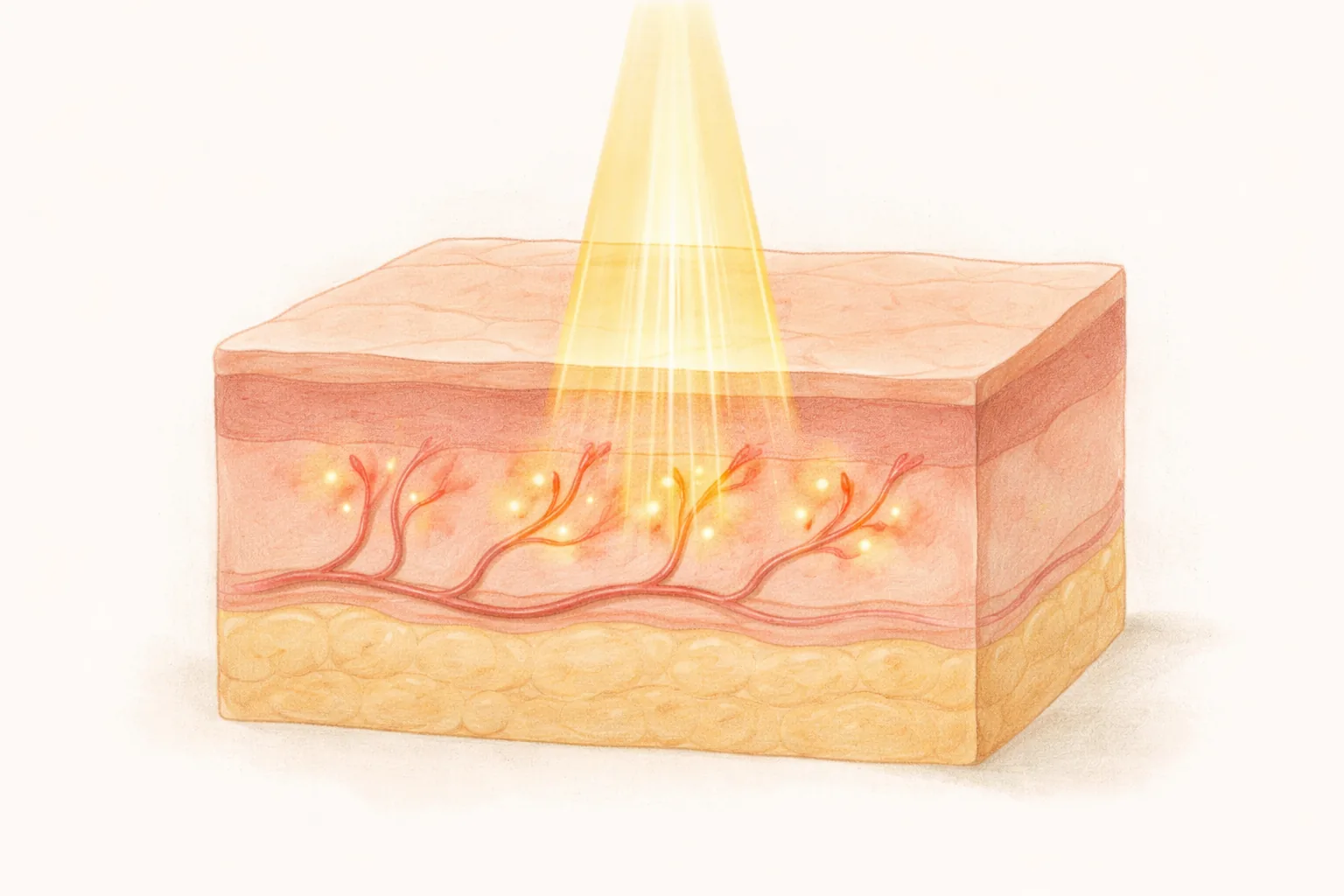
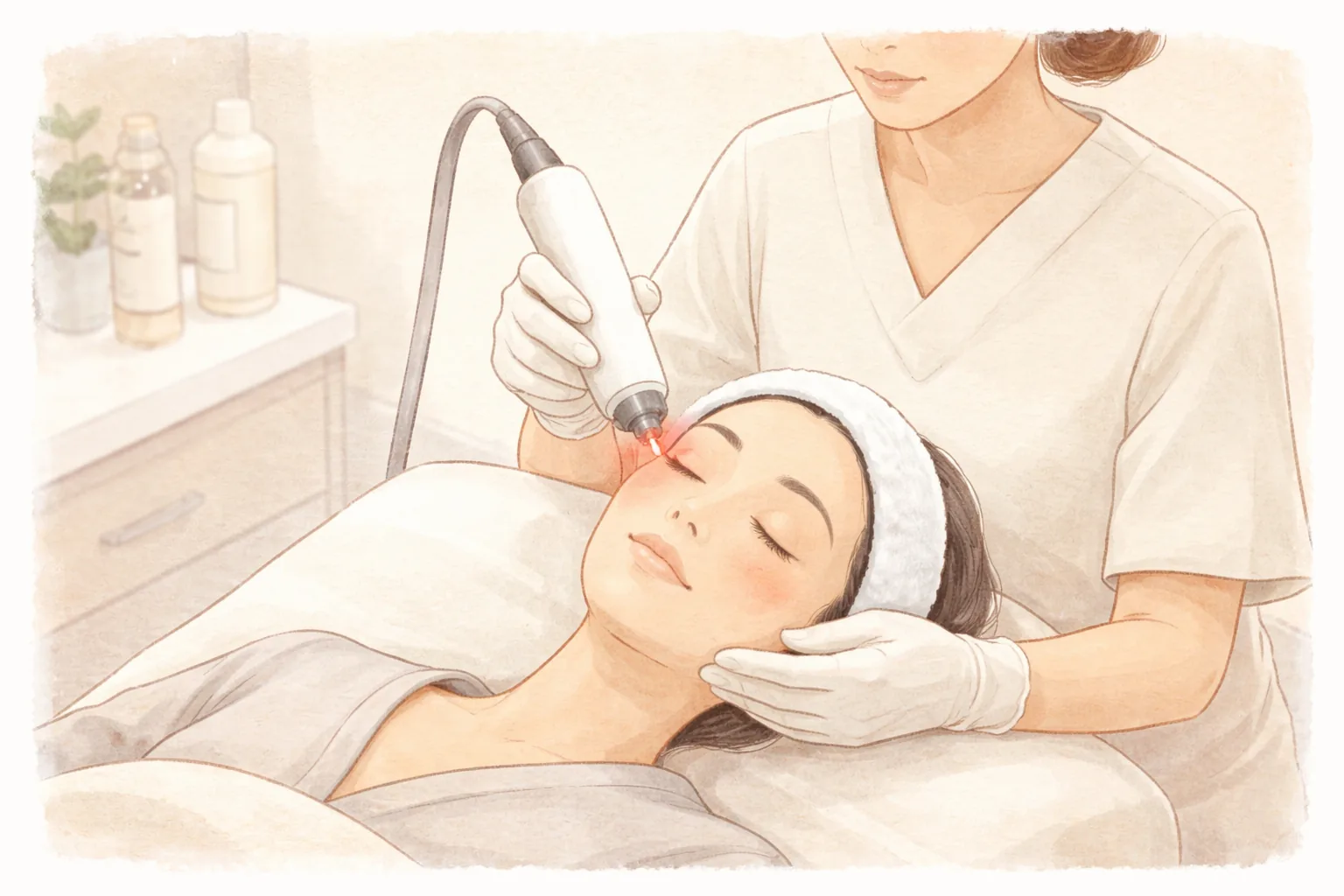
A laser is light energy gathered into a single wavelength. This light is absorbed only by specific targets that respond to that wavelength, and the absorbed energy converts into heat or shock. This principle of concentrating energy on the desired target while minimizing impact on surrounding normal skin is called selective photothermolysis (ATTITUDE Clinic column).
The target that vascular lasers aim for is hemoglobin bound to oxygen. By using the property that red blood absorbs certain wavelengths well, energy is concentrated on fine capillaries and red areas. The VBeam used at ATTITUDE Clinic for facial redness and vascular lesions is a vascular laser with a 532nm wavelength that addresses redness related to shallow vessels (laser comparison).
So why does it feel prickly? The heat that warms the vessel does not stay only in that spot; it also stimulates pain-sensing nerves in surrounding tissue. This is why it is described as a sensation like being lightly snapped with a rubber band, or as a prickly warmth. Lasers with very short pulse durations are designed to reduce the time for heat to spread, thereby reducing both surrounding damage and pain, but this does not mean there is no pain at all.
Pain varies greatly depending on the type of laser, intensity, treatment area, and individual sensitivity. Even with the same procedure, some areas may feel more prickly than others (column).
Are VBeam and V-Laser the same device?
They are not. They are separate vascular lasers with similar names but different manufacturers and wavelengths. A similar name does not mean the settings are the same either; rather than concluding which is better, the first step is to choose the wavelength and intensity that match the depth from which your redness originates.
Even within the same face, dark spots come from pigment, redness from blood vessels, and rough texture from the skin surface, so the devices used to approach them differ. That is why, rather than asking "which laser is good," we first check "where does my concern come from" (laser comparison).
The felt pain is not determined by the device name alone either. Even with the same vascular laser, the sensation differs depending on wavelength and power, treatment area, and how the surface is handled before the laser touches the skin. In the end, settings tailored to your skin condition determine both the result and the discomfort. Whether a laser feels burdensome also depends more on who receives it, with what settings, and how often, than on the type (column).
What conditions increase pain?
Even within the face, skin thickness, distance to the bone, and the location of nerves differ, so sensation varies by area. Even at the same intensity, treating a large area continuously accumulates burden, and repeatedly treating a small area makes that spot feel more sensitive.
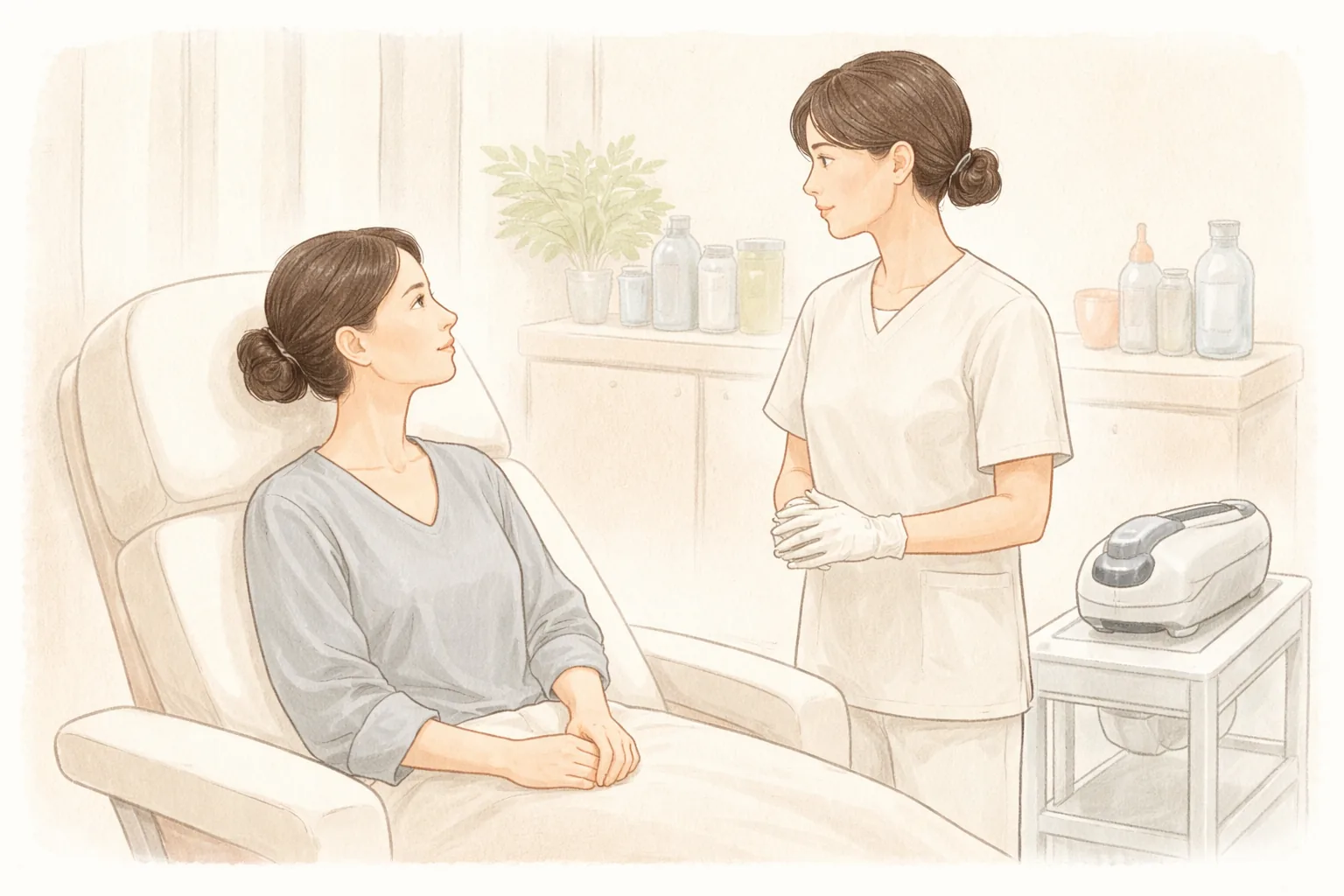
If you are unusually sensitive to pain or have had a difficult experience with a previous procedure, it is better to tell the clinic in advance during consultation. Based on that information, the intensity and anesthesia method are adjusted. If the sensation becomes hard to tolerate during the procedure, you can speak up immediately and the intensity can be lowered (column).
Medications you are taking are also something to check. The American Academy of Dermatology states in its microneedling guide that treatment is postponed if you have recently been sunburned, have a skin infection, have painful acne, or are taking isotretinoin (AAD guide). The criteria differ by procedure type, but the flow of checking your skin condition and current medications during consultation is similar.
How are anesthesia and intensity decided?
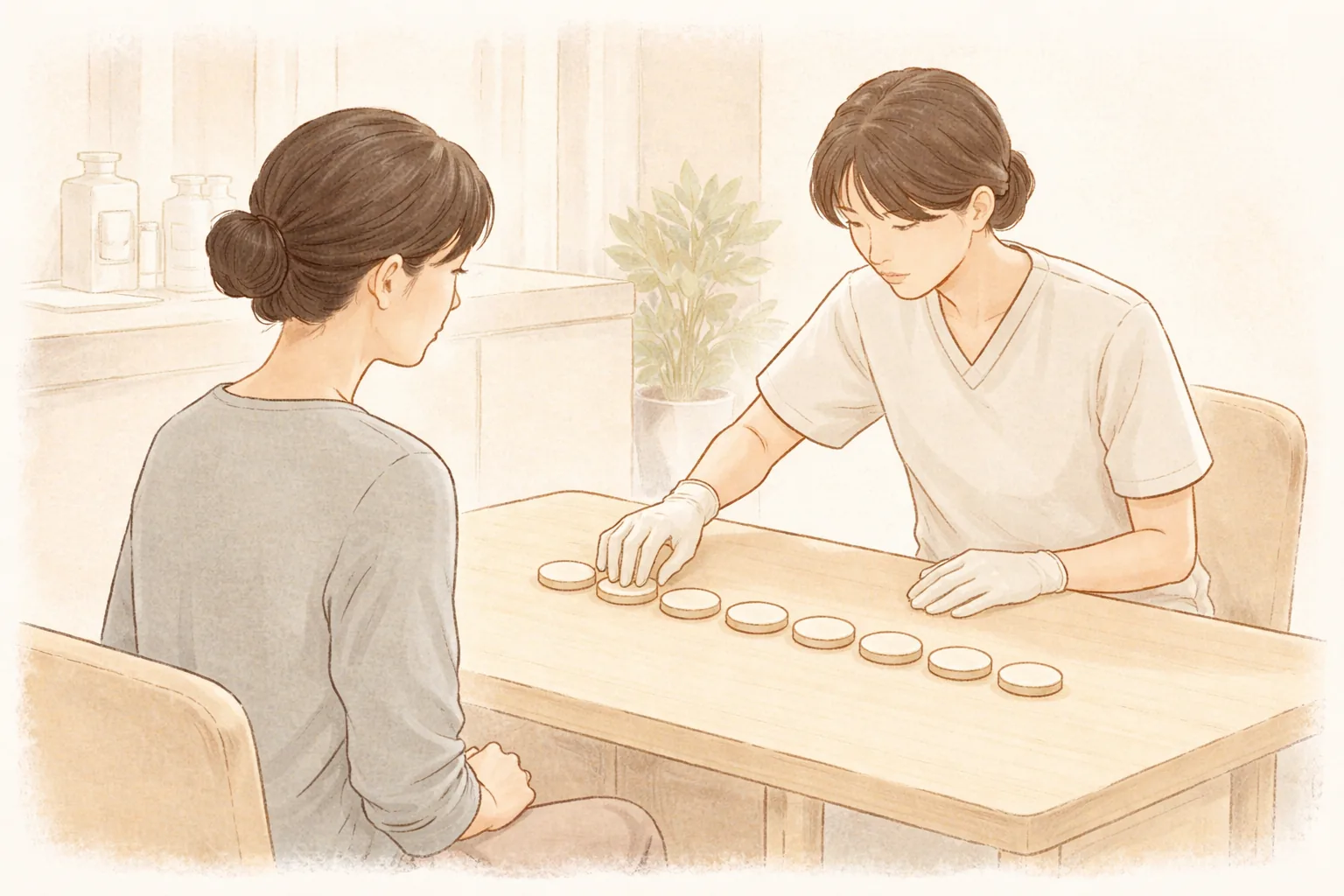
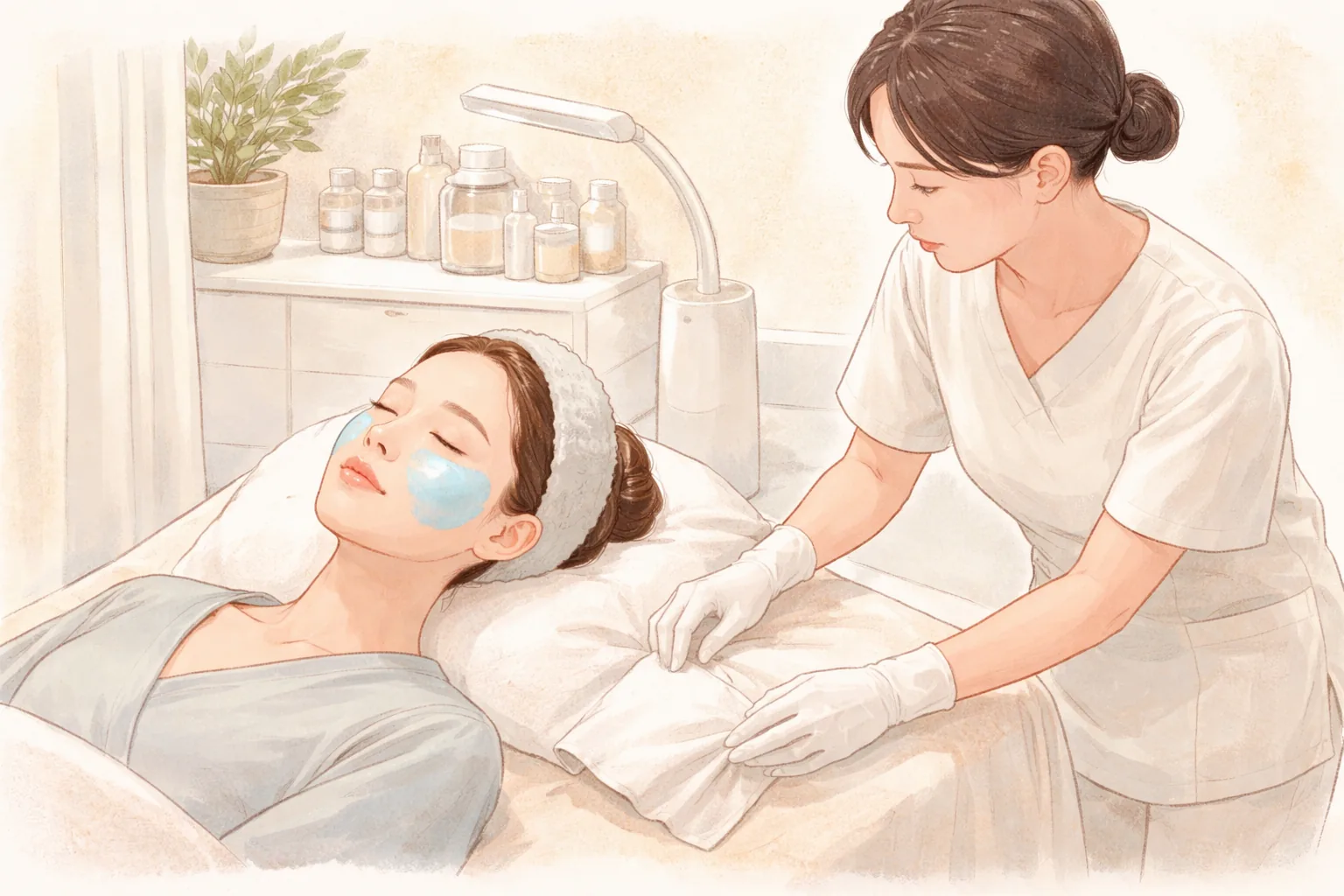
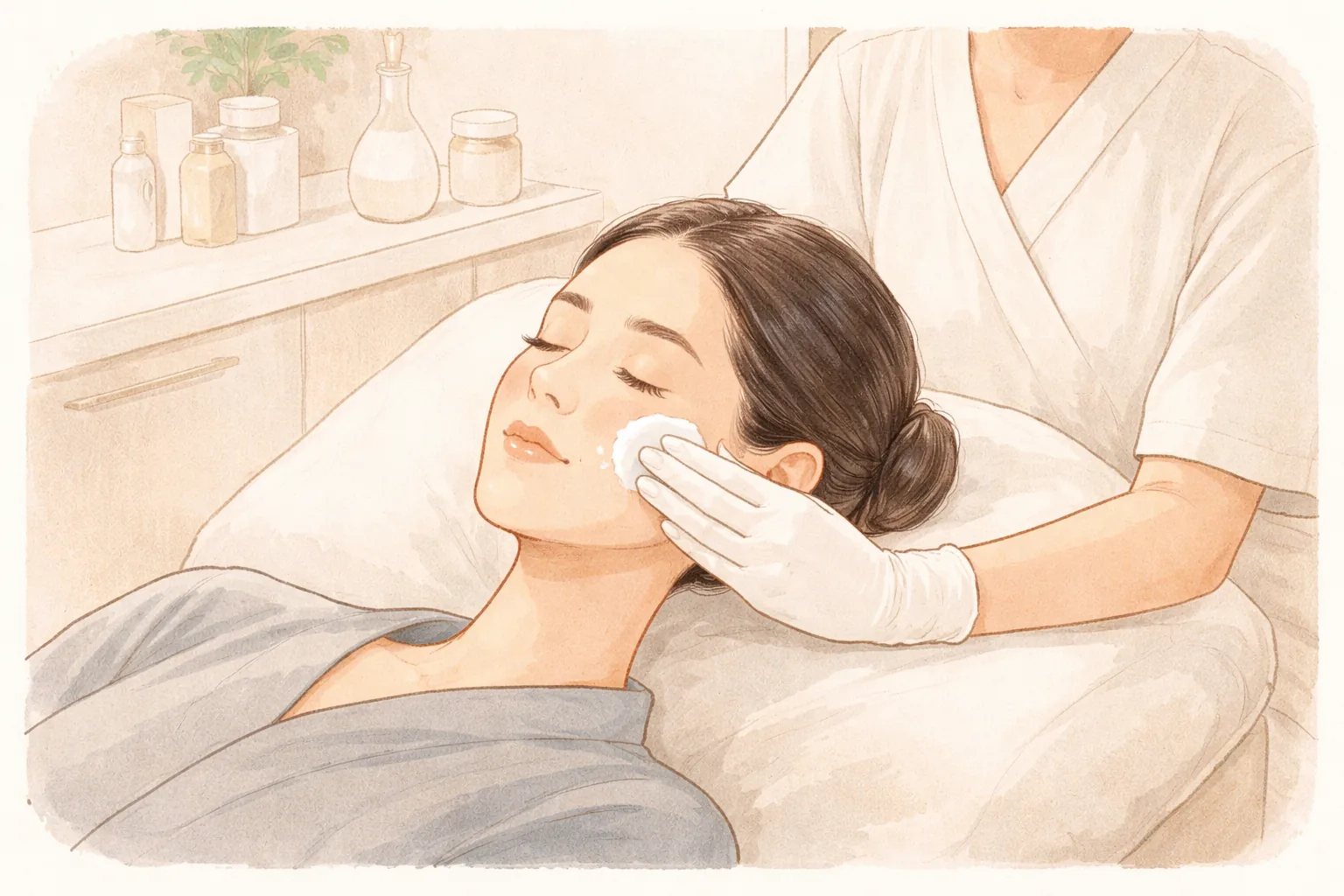
Topical anesthesia is a method of applying cream to the skin and letting it absorb for a certain time to dull the surface sensation. It is less burdensome than injections and is often used for vascular lasers, but it is not applied the same way to every procedure. The anesthesia method varies depending on the area, intensity, and procedure time, and it may be skipped if deemed unnecessary.
ATTITUDE Clinic adds schedule, pain sensitivity, and skin history to the analysis record to decide the procedure type, intensity, and timing together, and after reducing discomfort with topical anesthesia or other methods as needed, the doctor performs the procedure directly (process). Using stronger anesthesia does not mean a better procedure. If the intensity is raised excessively while anesthesia is working well, pain may be reduced but the burden on the skin can increase, so intensity and anesthesia are adjusted together rather than separately.
The American Academy of Dermatology recommends that during consultation you ask about the practitioner's qualifications and experience with this procedure, their experience with your skin tone and age group, realistically expected results, recovery period, and anesthesia (AAD guide). Pain and anesthesia are items to check together within this list.
Even for the same cause, the immediate reaction and recovery period after treatment differ depending on which laser is used. The lasers used at ATTITUDE Clinic are summarized below by target and recovery burden.
Table 1 How are anesthesia and intensity decided?
Laser
Main target
Common immediate reactions
Recovery burden
Picosecond low-power toning
Pigment
Temporary redness, prickling
Hours to same day
Picosecond high-power (spot removal)
Pigment
Crust formation and shedding
About 7–10 days
Erbium fractional low-power
Surface, pores
Redness, sandpaper-like texture
3–5 days
Erbium fractional high-power
Scars, pores
Swelling, oozing, crusting
7–14 days
VBeam
Blood vessels
Redness, swelling, possible bruising
Redness and swelling for a few days, bruising for 1–2 weeks
Swipe sideways to see the whole table.
In summary Vascular laser pain is a difference created by settings and area, not by the device name. Whether topical anesthesia is used and the intensity are decided during consultation, and the most reliable way to adjust is to speak up immediately if you feel uncomfortable during the procedure. If you repeat treatments while recovery time remains, the burden shifts more toward side effects than pain.
How many sessions and at what intervals?
For facial redness and vascular concerns, 3–5 sessions at 4–6 week intervals are commonly cited as examples (laser comparison). The number and interval vary depending on the degree and extent of redness and your skin condition, so they are decided after confirmation at the first consultation.
Keeping the interval is also connected to pain. If the same area is treated repeatedly before recovery is complete, the burden on the skin barrier accumulates, and the possibility of side effects such as burns or pigmentation increases (column). Conversely, if you continue after sufficient recovery, the burden is lower even at the same intensity. That is why the schedule is set based on recovery intervals, not "stronger if it hurts" or "more frequent if urgent."
If this applies to you
If a ceremony or photo shoot is a few weeks away
Redness and swelling may remain for a few days immediately after the procedure, and VBeam can cause bruising. If bruising occurs, it can take 1–2 weeks to fade, which can be problematic if it overlaps with your schedule (laser comparison). If you tell us the date first, the intensity and timing can be adjusted within the range that will recover by then. It is better to avoid scheduling a first-time procedure right before a ceremony.
If you are unusually sensitive to pain
If you mention your sensitivity in advance, the anesthesia method and intensity can be set accordingly. A difficult experience with a previous procedure is also important evidence. If a spot hurts unusually during the procedure, do not endure it—let us know at that moment (column).
If you want consistent management
Rather than going strong all at once, managing periodically while keeping the intervals at which the skin recovers is less burdensome. A plan that sets goals and schedules only the necessary procedures at the right times is helpful (column).
If you are a short-stay visitor
Redness or swelling immediately after the procedure may overlap with your remaining schedule. If you tell us your return date and upcoming schedule in advance, we can discuss the intensity and treatment area accordingly (column).
Please tell us before consultation Whether you have been exposed to a lot of UV recently, whether you have medications or cosmetics you are taking or applying, whether you have had sensitive skin after a previous procedure, whether you have an important schedule such as a ceremony or photo shoot, and how sensitive you usually are to pain.
How ATTITUDE Clinic proceeds
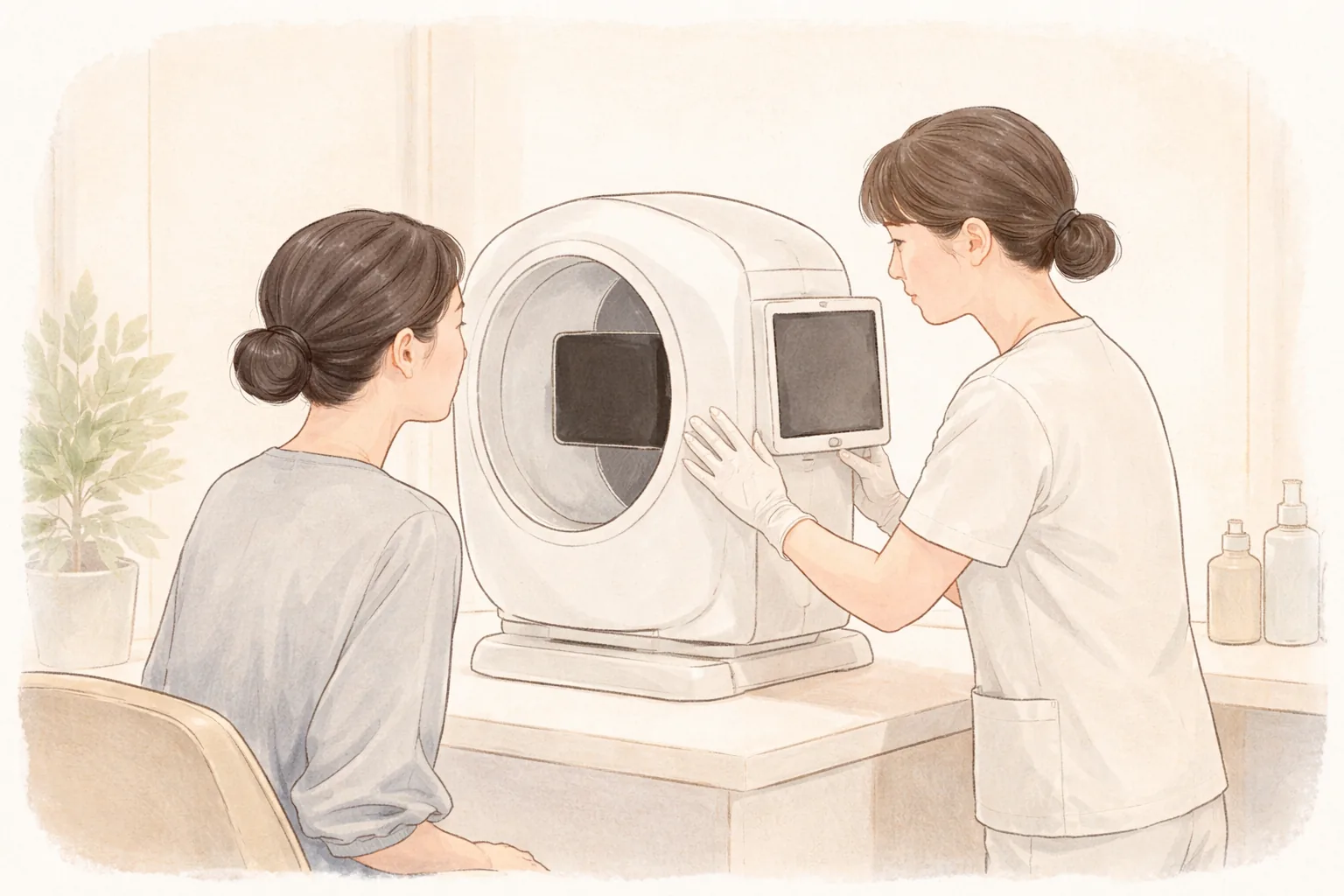
AI skin analysis record — Current skin condition such as pigment, redness, texture, and pores is recorded with an analysis tool, and based on that record the doctor determines the cause of your concern. The analysis tool records and organizes information to assist consultation; it is not a medical diagnosis.
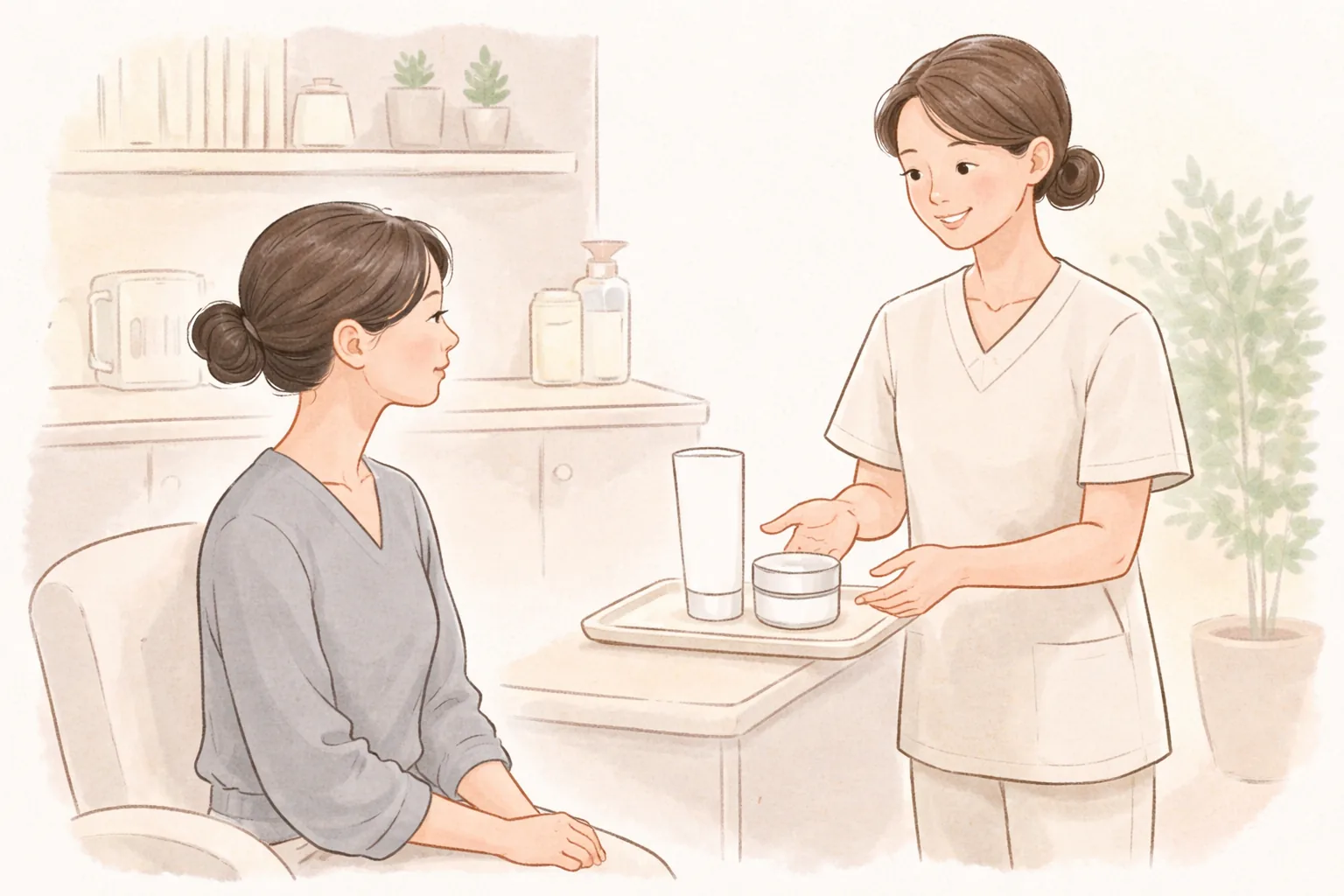
Direction design through doctor consultation — Schedule, pain sensitivity, and skin history are added to the analysis record to decide the procedure type, intensity, and timing together. Whether to use topical anesthesia and which area will be treated at what intensity are also decided at this stage.
Procedure performed directly by the doctor — After reducing discomfort with topical anesthesia or other methods as needed, the doctor performs the procedure directly. The principle is not to recommend unnecessary procedures.
Recovery guidance and follow-up — After the procedure, we guide you on UV protection, moisturizing, and irritation to avoid, and if redness or pain lasts longer than expected, we check again.
The devices ATTITUDE Clinic uses for this topic include the 532nm vascular laser VBeam, 1064nm Genesis toning, PicoPlus, and erbium fractional (treatment guide). The principles of authentic products, accurate dosing, and fair pricing apply to lasers as well (column).
Aftercare and side effects
Soothing — Immediately after the procedure, redness and heat remain. Since the skin takes time to cool itself, avoid strong stimulation during this period and soothe it in the way you are guided.
Moisturizing — After the procedure, the skin is temporarily sensitive. Filling in moisture makes recovery easier.
UV protection — For at least 2 weeks, apply SPF 50+ sunscreen and reapply about every 2 hours outdoors. It is better to avoid saunas, jjimjilbangs, and intense exercise for 1–2 weeks (laser comparison).
Follow-up — If redness and heat last longer than expected or pain worsens, do not endure it—visit the clinic for a check (column).
Side effects can occur even with appropriate settings. Redness, heat, swelling, and prickling are common, and VBeam can cause bruising. Temporary pigmentation can occur, and it is more likely especially if your skin is darker or tanned. Rarely, blisters, hypopigmentation, infection, scarring, or recurrence of pigment may occur (column).
If redness or stinging lasts more than 3 days or suddenly worsens, or if bruising remains after 2 weeks, it is safer to contact us for a check rather than wait (laser comparison).
Frequently asked questions
Does rosacea treatment for face with VBeam hurt?
Yes. However, the degree varies greatly depending on the laser type, intensity, treatment area, and individual sensitivity (column). It is often described as a prickly warmth or a light snapping sensation, and even with the same procedure, some areas feel more sensitive. Topical anesthesia before the procedure can reduce discomfort, and if any spot becomes hard to tolerate during the procedure, you can speak up immediately to lower the intensity. We cannot promise there will be no pain at all, but the principle is not to leave it as a procedure you must endure.
Are VBeam and V-Laser the same device?
No. They are separate vascular lasers with similar names but different manufacturers and wavelengths. Rather than concluding which is superior, it is more important to choose the wavelength and intensity that match the depth from which your redness originates. ATTITUDE Clinic uses the 532nm VBeam for facial redness and shallow vascular lesions (laser comparison). During consultation, we recommend asking how the settings matched to your skin are determined, rather than focusing on the device name.
Is topical anesthesia always necessary?
Not always. The anesthesia method varies depending on the area, intensity, and procedure time, and it is skipped if deemed unnecessary. The American Academy of Dermatology recommends confirming whether anesthesia will be used during cosmetic procedure consultations (AAD guide). ATTITUDE Clinic decides whether to use topical anesthesia after considering pain sensitivity and the treatment area together during consultation, and the doctor performs the procedure directly (process). The purpose of anesthesia is to reduce pain, not to allow higher intensity.
If bruising occurs after the procedure, how long does it last?
VBeam is a procedure that can cause bruising. If bruising occurs, it can take 1–2 weeks to fade, and redness and swelling often subside within a few days (laser comparison). The degree of bruising depends on the treated area, intensity, and skin condition. If you have an important schedule, telling us the date in advance allows the settings to be adjusted in a direction less likely to leave bruising. If it remains after 2 weeks, please visit for a check.
For vascular lasers, what should you look for when choosing a clinic?
There are a few things to check beyond the device list. Whether they first check before treatment whether your concern comes from pigment, blood vessels, or the surface; whether they recommend only necessary procedures and do not set the number of sessions or intensity excessively; whether they sufficiently explain pain, recovery schedule, and aftercare precautions during consultation; and whether it is a place where you can get a follow-up check if you feel uncomfortable after the procedure (column). The American Academy of Dermatology recommends asking during consultation about the practitioner's qualifications, experience with this procedure, experience with your skin tone and age group, recovery period, and cost (AAD guide).
At a glance
Table 2 At a glance
Item
Key point
Factors determining pain
Wavelength, power, treatment area, body part, individual sensitivity
Anesthesia
Reduce discomfort with topical anesthesia etc.; method and intensity decided during consultation
VBeam vs V-Laser
Separate devices with different manufacturers and wavelengths; settings determine the felt sensation
Common reactions and downtime
Redness, heat, swelling, prickling; VBeam can cause bruising
Common number of sessions and intervals
Facial redness and vessels: 3–5 sessions, 4–6 week intervals
Aftercare
UV protection and moisturizing; avoid saunas and exfoliation during the guided period
This article offers general health information. It is not a substitute for diagnosis or treatment based on your own condition, so please talk through your situation with a doctor.