Shurink and Thermage on the Same Day: How to Decide Order and Interval
When combining Shurink HIFU and Thermage FLX, here is how order and interval are decided, plus eye Thermage protection and recovery care. Thermage before and after expectations explained.
Written by ATTITUDE Clinic Editorial Team
Many people wonder whether Shurink and Thermage can be done on the same day, and whether changing the order changes the results. The two treatments sound like they do the same thing, but they act differently inside the skin. This article explains what decides the order and interval when combining them, and what extra checks are needed for thin areas like around the eyes.
The conclusion first
Combining Shurink and Thermage is a combination that is actually used. Deep layers are handled by HIFU like Shurink, while relatively shallow layers and broad areas are handled by RF like Thermage. Whether to do both on the same day or leave an interval of days to weeks depends on skin sensitivity, recovery time, and the treatment area. The order is not a fixed answer either; it is decided by looking at where sagging occurs and skin thickness. Below, we look at what decides this one by one.
What each treatment does inside the skin
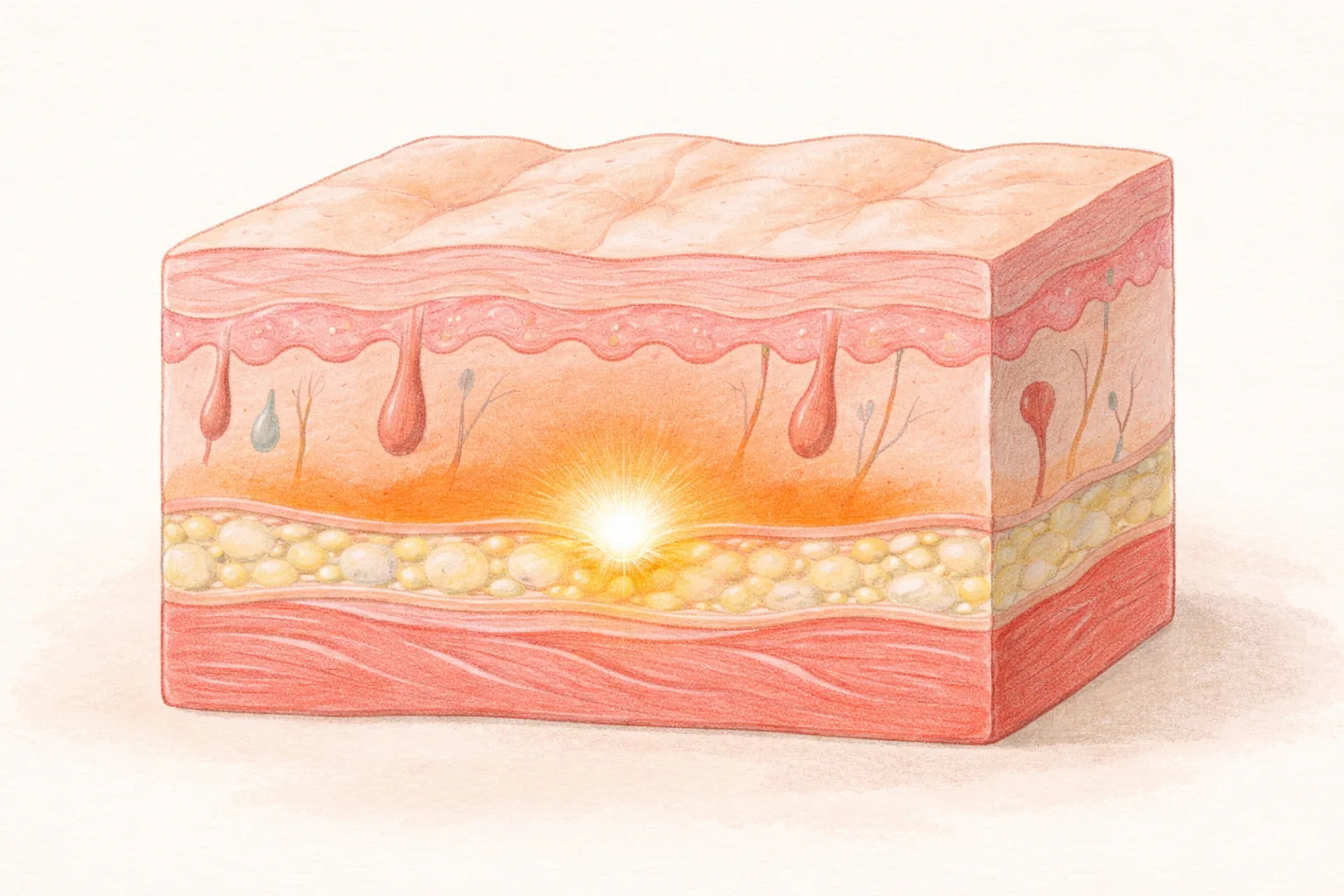
Shurink uses HIFU (high-intensity focused ultrasound). It focuses ultrasound energy to a point like a magnifying glass concentrating light, creating small thermal points at depths set by cartridge from the dermis to the SMAS layer. The SMAS layer is a thin sheet that supports the facial muscles and skin, and it loosens with age. These thermal points are thought to slightly contract collagen and gradually begin remodeling. The ATTITUDE Clinic column also groups Shurink and Ultherapy under this HIFU category.
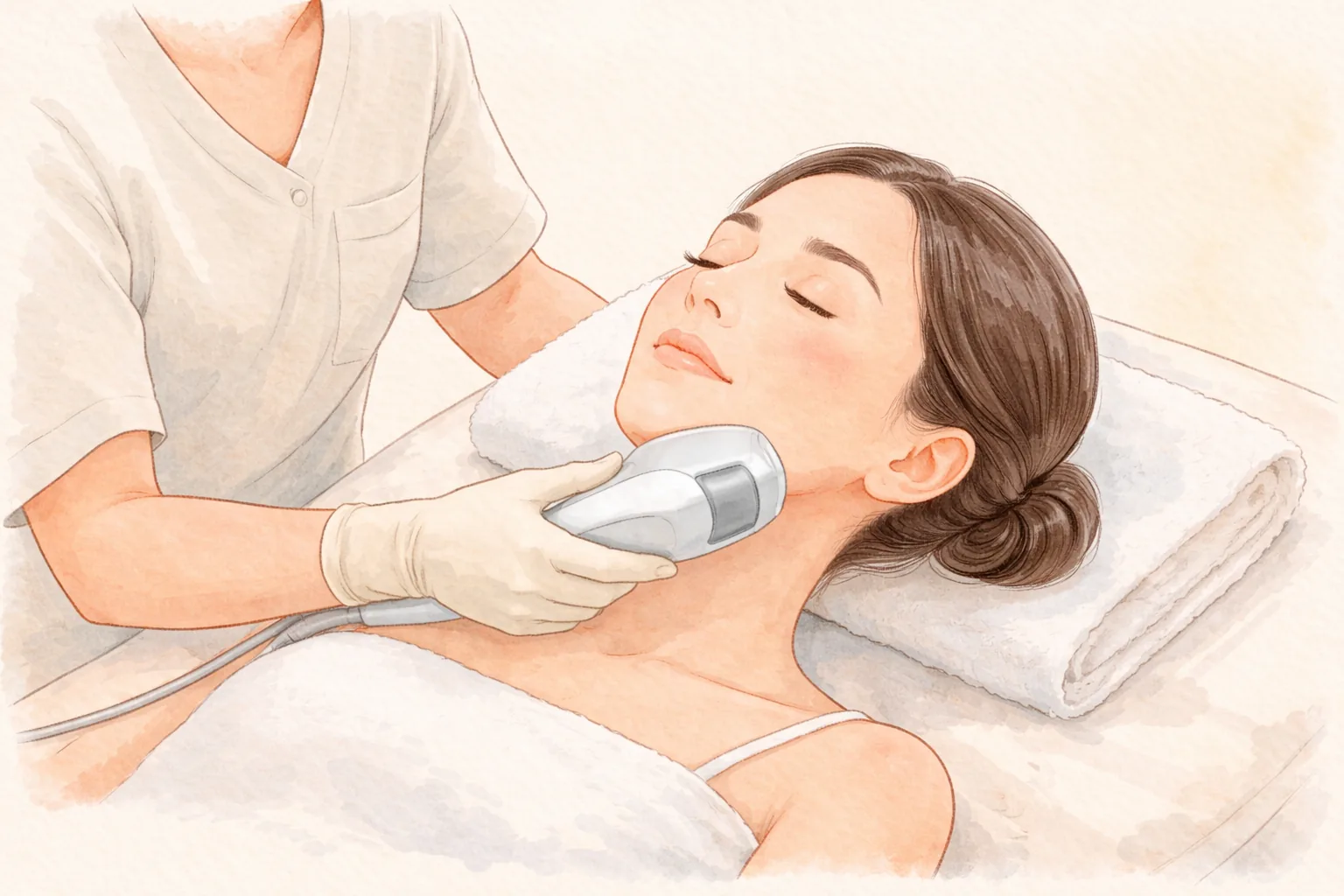
Thermage uses RF (radiofrequency). Electrical energy passes through skin tissue and turns into heat, and unlike HIFU which penetrates at a point, it heats a broad area from the dermis to the subcutaneous fat layer at once. According to DermNet NZ, Thermage-type treatments deliver RF to the collagen layer with a dedicated tip to contract collagen, and over about 6 months new collagen grows and the skin becomes firmer.
In other words, the two treatments are not competitors but tools that handle different layers. HIFU is relatively suited to deep, localized sagging, while RF is relatively suited to elasticity and skin texture over broad areas.
Same day versus split sessions: what differs
Doing them on the same day means going through recovery once and saving time. On the other hand, the heat stimulation to the skin overlaps at once. The ATTITUDE Clinic column explains that even with the same combination, recovery and perceived results can differ depending on whether it is done all at once or split up.
Three things mainly decide this. First, how sensitive the skin is. Second, how much recovery time is available. Third, the area treated that day. On a day when the whole face is treated broadly, splitting sessions and checking progress is less burdensome than doing it all at once. Without checking these three, you cannot say same-day is always better or splitting is always better.
What decides order and interval
Order is usually decided by the depth the heat needs to reach and the area treated that day. If deep-layer sagging is the main concern, HIFU is placed first, and if elasticity and skin texture over broad areas are also concerns, RF is included in the same plan. However, which one goes first depends on skin thickness and sensitivity, so deciding in consultation is safer.
Interval is decided by recovery speed and the next schedule. Thermage-type treatments can leave redness and swelling for 1–2 hours, or at most a few days, according to DermNet NZ. During this period the skin barrier is temporarily weakened, so the next treatment is generally scheduled after the skin has calmed. Shurink-type treatments can also leave redness and mild heat sensation for a few days after heat stimulation. If the two are done on the same day, they are managed within one recovery period; if split, the next interval is decided after checking the progress of the first treatment.
The repeat schedule varies greatly between individuals and is not fixed in one session. The ATTITUDE Clinic column advises that the repeat timing is decided by the doctor after checking progress, roughly around 1 year.
Table 1 What decides order and interval
Category
What it does inside the skin
Concerns it suits
Perceived course
Shurink (HIFU)
Small thermal points at set depths from dermis to SMAS
Deep sagging, jawline
Large immediate change is rare, and if there is change it appears over 2–3 months
Thermage FLX (RF)
Broad heating from dermis to subcutaneous fat
Elasticity over broad areas, skin texture
Initial firm feeling (some swelling) followed by further change over 2–6 months
Eye Thermage (eye RF tip)
Narrow-range heating of thin layers around the eyes
Fine lines around the eyes, eyelid elasticity
Performed with a dedicated tip for a narrow range and protective equipment
Swipe sideways to see the whole table.
In summary Shurink and Thermage handle different layers, so they can be combined. Whether to do them on the same day or split them is decided by skin sensitivity, recovery time, and the area treated that day. Order is not a fixed answer either; it is a matter of design based on looking at the skin.
If this applies to you
When a wedding or shoot is a few months away
Thermage-type treatments can show gradual change over 2–6 months after the initial firm feeling, and Shurink-type treatments also show change over 2–3 months if there is any. It is less rushed to plan with more than two months of leeway rather than right before a big event. If the schedule is tight, it is better to first decide on the one thing your skin needs now rather than cramming two treatments into the same day.
When you want consistent management
Rather than doing it once and stopping, the usual flow is to check progress and decide the repeat timing. Repeats are decided by the doctor around roughly 1 year, but this varies with the skin's recovery capacity and lifestyle habits. Bringing records of previous treatments to the next visit helps decide whether to continue the same combination or change the intensity.
When your skin is sensitive or reddens easily
If heat stimulation overlaps, redness and mild heat sensation can last longer than usual. In this case, splitting sessions to observe the reaction is less burdensome than doing both on the same day. Telling the clinic at consultation how easily you redden and your recovery time after previous treatments helps match intensity and interval.
International visitors on a short stay
If your stay is short, you cannot allow much recovery time. Your stay schedule should be included in the decision of whether to do them on the same day or split them. Telling the clinic in advance whether you have important plans while redness remains after treatment allows the plan to be adjusted.
Please tell us before consultation
Strong UV exposure and travel schedule within the last 2 weeks
Medications you are taking (aspirin, blood thinners, etc.) and active ingredients applied to the skin
Records of previous lifting, injection, and laser treatments (device, shot count, date, reaction)
Schedules where redness after treatment would be a problem, such as weddings or shoots
Pregnancy or breastfeeding status, and whether you are being treated for a skin condition
How ATTITUDE Clinic proceeds
AI skin analysis record: Skin condition is recorded and organized so the doctor and patient look at the same information together. The recording tool is a reference and does not make a medical diagnosis.
Doctor consultation: Concerns, lifestyle habits, and previous treatment experience are added to the record to decide together whether Shurink or Thermage is needed, and the order and intensity. Previous treatment records are reviewed if available.
Treatment performed directly by the doctor: The doctor performs the treatment according to the plan and adjusts while observing skin reactions during the procedure.
Recovery and care: After treatment, redness and swelling progress are checked and the next visit timing is advised. ATTITUDE Clinic lists devices such as Ultherapy, Shurink, Thermage FLX, and Eye Thermage in its treatment list.
Aftercare and side effects
Soothing: Heat sensation may remain right after treatment, so cold compresses can help. Confirm the method with the medical staff.
Moisturizing: This is a period when the skin barrier is temporarily weakened, so pay more attention to moisturizing than usual.
UV protection: Exposure to UV during this period increases the risk of pigmentation, so apply sunscreen carefully.
Checking progress: Check whether redness and swelling subside within a few days. Increasing pain or blisters should be checked without waiting.
Side effects, from common ones, include temporary redness, swelling, small bruising, and temporary numbness or reduced sensation. They usually subside within a few days. Rarely, burns, blisters, small scars, temporary facial muscle weakness, and unwanted fat-layer volume loss can occur. DermNet NZ advises that the reported side effect rate for Thermage-type treatments is less than 1%, including swelling, redness, and risk of burns, blisters, and scars.
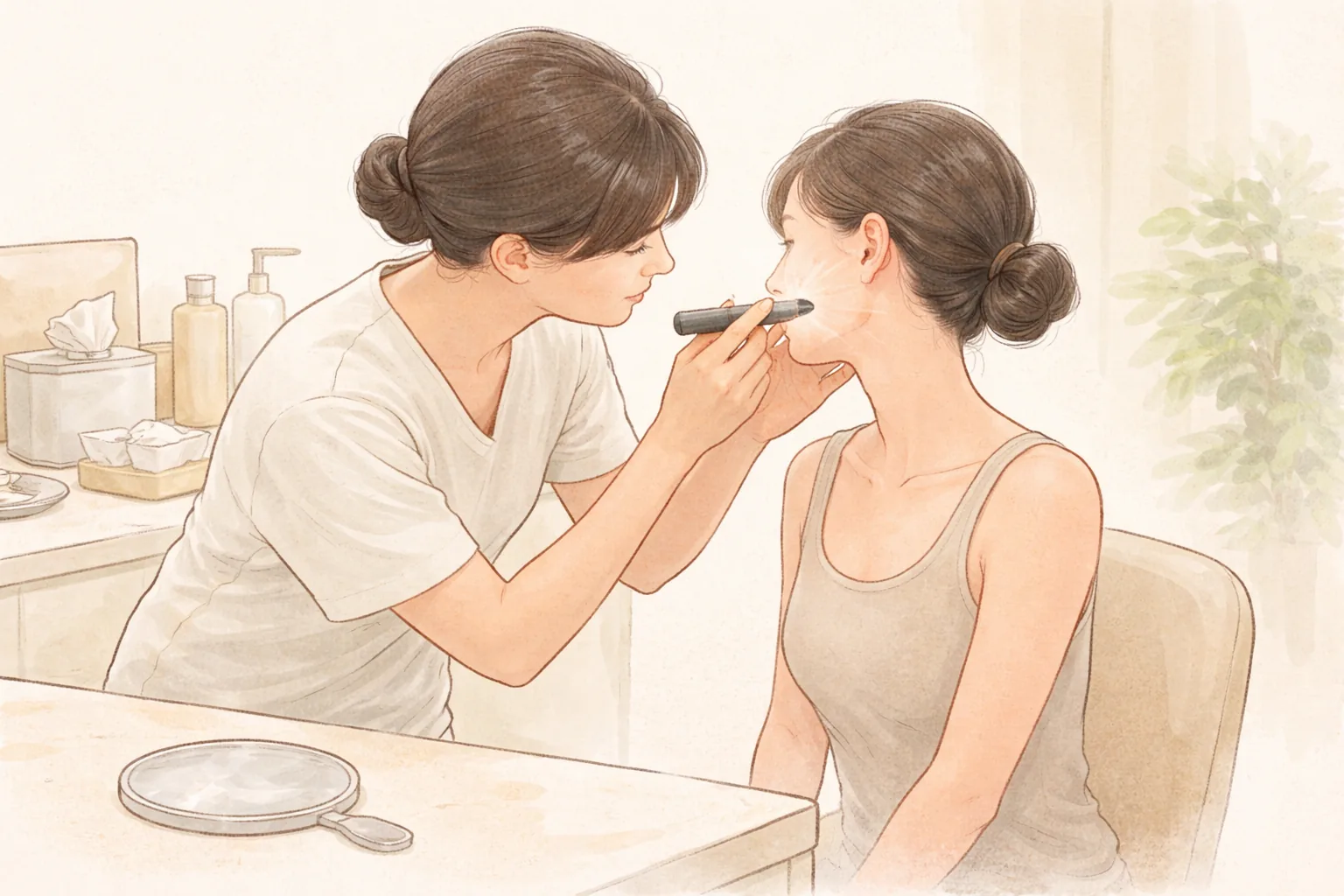
When treating around the eyes, protective equipment is important. The US FDA medical device adverse event report includes reported cases of eye burns after Thermage treatment, and the manufacturer emphasizes that an appropriately sized plastic eye shield should be used for eyelid treatment, and that metal shields can conduct RF energy to the eye and are not suitable for Thermage. If you plan eye-area treatment, how the shield type and size are matched is something to confirm at consultation.
Frequently asked questions
Can Shurink and Thermage be done on the same day?
It is advised as a possible combination. Deep layers are handled by HIFU like Shurink, while shallow layers and broad areas are handled by RF like Thermage. However, whether to do both on the same day or split them with an interval depends on skin condition. Telling the clinic at consultation how much recovery time you have and how sensitive your skin is helps plan. It cannot be said that doing it all at once is always better or always worse.
How is the price of 600 shots of Thermage decided?
Pricing is set by shot count, and how many shots go into the whole face depends on the area and skin condition. Even with the same 600 shots, the plan differs depending on where and how much is treated, so it is more accurate to check the full scope at consultation rather than comparing prices by shot count alone. The ATTITUDE Clinic price list discloses amounts by shot count, and VAT is separate. Narrow areas like around the eyes use a dedicated tip, so they are hard to view on the same shot basis as the full face.
How is Eye Thermage done around the eyes?
The eye area has thin skin and the eye is close, so the range is narrowed. Eye-area tips like Eye Thermage are made to treat a narrower area than face tips. During the procedure, equipment to protect the eyeball is used, and matching the shield type and size accurately is important. The US FDA adverse event report includes reported cases of eye burns even in procedures using shields, so it is safer to confirm eye-area treatment experience and protective equipment preparation at consultation.
Does changing the order of Shurink and Thermage change the results?
Which one goes first is decided by skin thickness, the location of sagging, and the area treated that day. There is no fixed answer; the order changes depending on whether deep or broad layers are judged to need stimulation first. Even with the same combination, recovery and perceived results can differ depending on whether it is done all at once or split up. The ATTITUDE Clinic column explains why order and interval are decided together at consultation.
What should you check when choosing a clinic for this treatment?
Look at whether the same doctor does the consultation and the procedure, whether they explain the devices used and whether they are authentic, and how they advise on progress and side effects after treatment. It is also worth checking whether the flow confirms skin condition first rather than only pushing shot count and price. Whether they review previous treatment records when you bring them is another criterion. The ATTITUDE Clinic column describes a flow where the doctor personally handles everything from consultation to procedure and decides together what is needed and what is not.
At a glance
Table 2 At a glance
Item
Key point
Combining
Deep layers by HIFU, shallow layers and broad areas by RF
Same day vs split
Decided by skin sensitivity, recovery time, treatment area
Order
No fixed answer; decided by skin thickness and location of sagging
Perceived course
Shurink over 2–3 months, Thermage over 2–6 months, gradually
Eye area
Dedicated tip and eye shield preparation matter; confirm shield type
Recovery care
Soothing, moisturizing, UV protection, checking progress in that order
This article offers general health information. It is not a substitute for diagnosis or treatment based on your own condition, so please talk through your situation with a doctor.