Skin Botox and Skin Boosters Together: Why Order and Spacing Matter
Can you get skin Botox and a skin booster on the same day? What decides the order and interval, plus recovery and warning signs, explained from a clinic perspective.
Written by ATTITUDE Clinic Editorial Team
Many people go in for skin Botox (microbotox) and then hesitate when they're asked whether they'd like a skin booster ("water glow" injection) as well. Both are injected into the skin, so doing them in one visit seems like it would save time and let recovery happen all at once. But the two treatments differ in what goes in, the depth they're placed at, and how the body responds. That's why the order and spacing of overlapping treatments change the pattern of swelling and marks.
The bottom line first
Getting both on the same day isn't always off-limits. But since both involve multiple needle injections, layering them in one spot concentrates marks and swelling at once and makes it hard to tell which one caused a reaction if one occurs. So whether to do them the same day, split them over a few days, or leave a few weeks between them is decided by the doctor based on skin thickness, sensitivity, and the ingredients and dosage used that day. If your schedule is tight, simply changing the order can change the recovery burden.
What do skin Botox and skin boosters each do in the skin?
A skin booster is a hydrating injection that mainly uses hyaluronic acid (HA). Hyaluronic acid draws water strongly, so when placed in the dermis (the layer where collagen is produced), the skin feels moist and bouncy. Rejuran, also grouped under skin boosters, is a PN (polynucleotide) product refined from salmon-derived ingredients; it is known to support the body's response to repair damaged tissue and stimulate cells that produce collagen.
Skin Botox uses the same botulinum toxin but places very small amounts divided into the superficial skin layer rather than the muscle. Injected into the muscle layer, it relaxes the muscle and smooths expression lines; placed shallowly, it barely reaches the muscle. The same drug does different things depending on the layer it's placed in.
Here's a common misunderstanding: because the name "skin booster" sounds like an ingredient, some people think skin Botox belongs to the same hydrating category. But one is an injection that fills with moisture, and the other is toxin placed shallowly in small amounts. Even with similar names, they do different things in the skin. Which ingredients are actually used in the skin booster will be explained during consultation.
What changes when you layer them on the same day?
Think of it as twice as many needle marks appearing at once. A skin booster leaves small bumps (papules) and swelling along the injection points, and these usually settle within a day to a few days. Bruising can take more than a week to fade. When skin Botox's shallow injection marks overlap, two reactions proceed at the same time in the same area.
The American Academy of Dermatology (AAD) advises that cosmetic procedures carry risks like any medical procedure, so you should be informed of indications, risks, benefits, and alternatives during consultation before deciding whether to proceed. It also notes that results depend heavily on the practitioner's skill and experience (AAD guidance). On a day when two treatments overlap, it's more accurate to view these risks as converging in one area.
If your skin reddens easily, this difference feels bigger. When irritation piles up at once, it becomes hard to tell which treatment caused the redness, and you have less information for planning next steps. Until the injection marks heal, sun protection should be more thorough than usual — during this period the skin's barrier is temporarily weakened, so protection is important for recovering without pigmentation.
What decides the order and interval?
The first thing considered is skin thickness. Thin areas like around the eyes and mouth feel more irritated even with the same dose, while thicker areas like the cheeks and jaw have relatively more room. Whether your skin is sensitive and whether you bruise easily also factor into the order.
Whether a treatment opens the skin surface matters too. Right after microneedling or ablative fractional laser, tiny channels temporarily form on the surface, while ultrasound (HIFU) or radiofrequency (RF) lifting acts beneath the surface without opening it. Injections differ from both because the needle pierces the surface, so overlapping with other treatments in an area where marks remain can lengthen recovery.
Each treatment's usual schedule is also part of the calculation. Skin boosters are typically done several times at 2–4 week intervals, then the interval is widened for maintenance sessions. A single session brings limited and temporary change, so multiple sessions are planned from the start. The maintenance period for skin Botox and the timing of your next visit are decided during consultation based on your skin condition.
Table 1 What decides the order and interval?
Treatment
What is injected
Layer placed
What to check in this combination
Skin Botox
Diluted botulinum toxin solution
Superficial skin layer
Concentration and depth, total dose during the same period
Skin booster
Hyaluronic acid-based hydrating injection
Dermis
Ingredients and dose, recovery speed of bruising and papules
Rejuran
PN product
Dermis
Proportion of regeneration goal, treatment interval
Exosome
Signaling substances sent by cells
Right after a surface-opening treatment
Delivery is limited with application alone
Swipe sideways to see the whole table.
In summary What determines the order isn't the treatment name but skin thickness, areas where irritation overlaps, and the ingredients and dosage used that day. Whether on the same day or split up, schedule around the combined recovery periods of both treatments.
How much recovery should you plan for?
Pain varies with the number of injection points and skin thickness. Multiple needle pricks cause stinging, and areas close to bone with thin tissue—forehead, around the eyes, around the lips—feel more sensitive than the cheeks or jawline. Anesthesia methods are explained during consultation.
Recovery is divided into marks, swelling, and bruising. Papules and swelling usually last a day to a few days, and bruising can last more than a week. Makeup is often possible from the next day once the injection marks have closed, but this depends on your skin condition that day. If you have a photo shoot or interview where your face will be seen, it's safer to count backward from that date and set your appointment accordingly.
If you do both treatments on the same day, these recovery periods overlap. If you tend to bruise for a long time, spacing them out is better for schedule management than piling two types of injections into one visit. Conversely, if you can't make time, you can split them starting with less sensitive areas.
In these situations
When a wedding or shoot is a few weeks away
If the date is fixed, secure recovery days before the treatment date. Factoring in that bruising can last more than a week and papules remain for a few days, it's better to finish one treatment first rather than piling both into the same day. The order—placing the one with longer swelling first—is decided during consultation.
When you have both dryness and fine lines
Filling with moisture and addressing skin texture are different goals. If you split the plan—filling with a skin booster first and placing superficial-layer care afterward—it's easier to see what changed at each step. Overlapping both at once mixes the changes and makes judgment difficult.
When your skin is sensitive and reddens easily
It's better to avoid days when irritation overlaps. If you can't tell which treatment caused redness, planning next steps becomes difficult and recovery lengthens. Doing one at a time and checking the response before moving to the next step suits sensitive skin.
When you want to finish in one visit during a short stay
If your stay is short, you may consider same-day treatment. In that case, choose a combination with shorter recovery, reduce the dose, and avoid areas that bruise for long. If you tell the clinic your departure date during consultation, they can calculate whether follow-up checks can be completed before then.
Please tell us before consultation Recent UV exposure such as outdoor activities or tanning, medications you're taking (especially those affecting blood clotting), allergy history to treatments and ingredients, how long bruising or swelling lasted after previous treatments, pregnancy·breastfeeding status and plans, and any unavoidable important schedule.
How ATTITUDE Clinic proceeds
Skin condition recording and analysis Moisture, texture, redness, and how quickly marks from previous treatments healed are recorded with devices. Analysis tools organize information; the diagnosis itself happens in the consultation.
Consultation and planning with the doctor Decide what to do first, whether same-day treatment is possible, and how long to leave between sessions. The order is set alongside your schedule and recovery time.
Treatment performed by the doctor Proceed with the determined concentration and depth, and adjust injection volume within the range set during consultation. Products are genuine and doses are prepared to standard quantities.
Recovery guidance and next visit The next visit is scheduled according to the recommended interval, and the progress of marks and bruising is checked.
Four steps your doctor sees to in person
From the diagnostic device to the treatment bed, the doctor you first consult takes care of everything.
01
Precision diagnosis
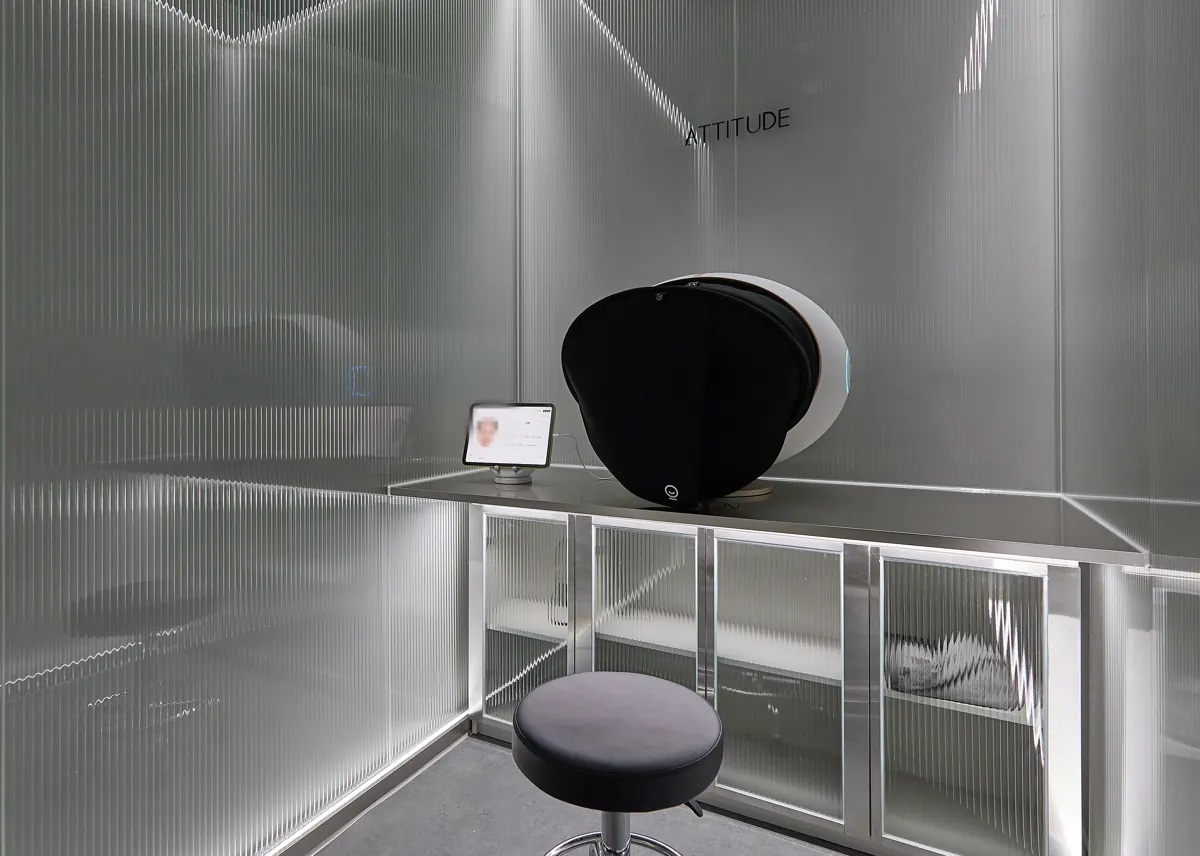
In a private diagnosis room the whole face is photographed, recording even skin conditions that are hard to see with the eye.
02
Skin analysis
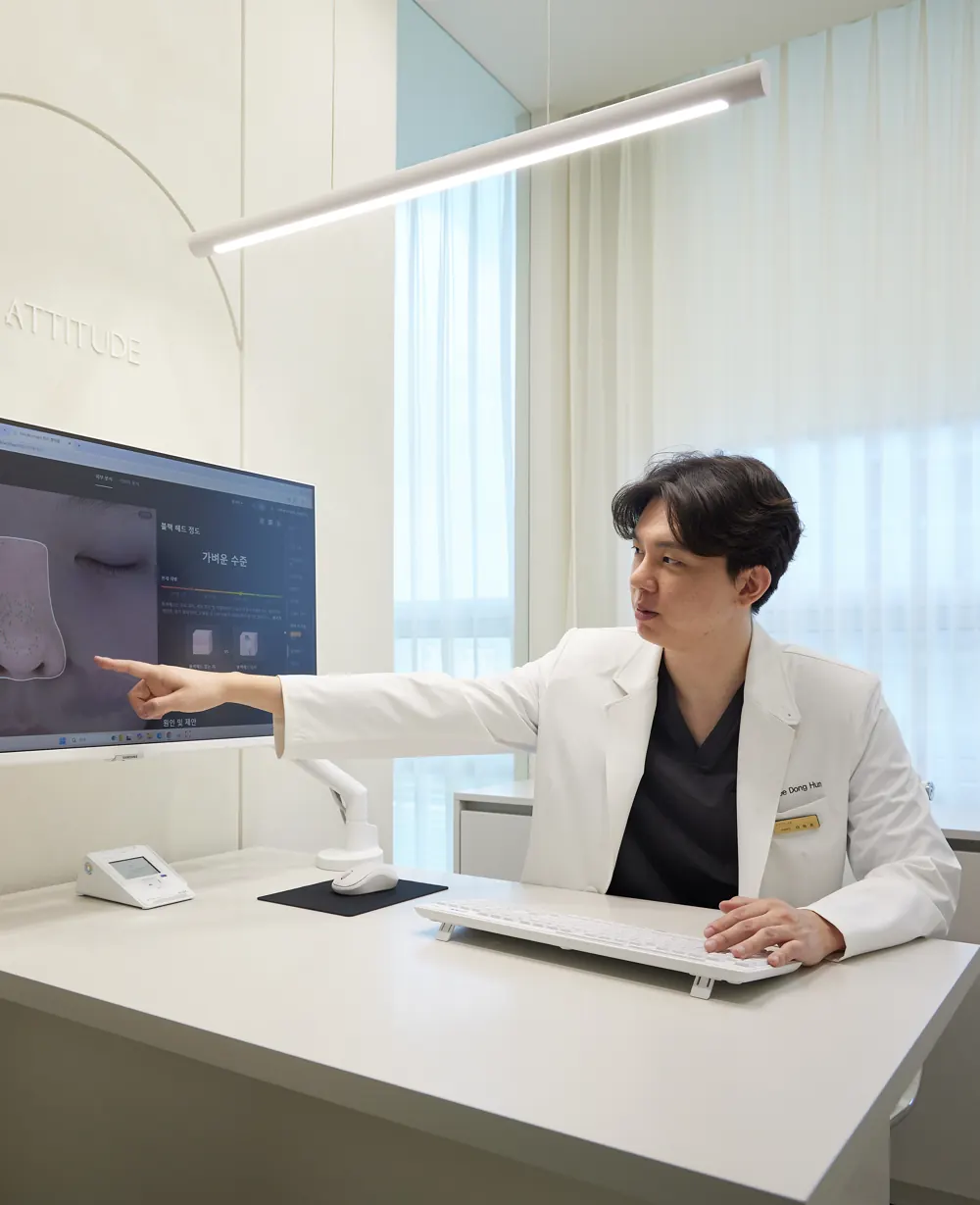
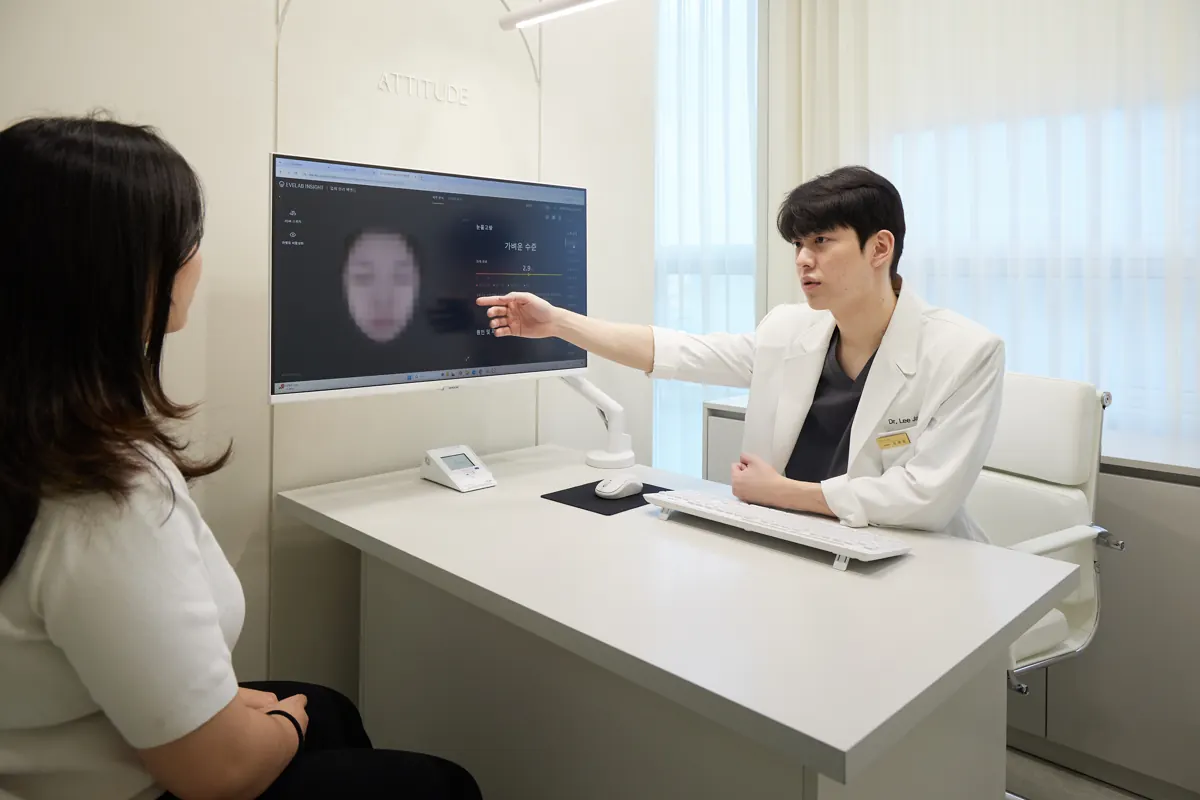
The doctor goes through your pore, pigmentation, wrinkle and firmness results with you on screen and explains what comes first.
03
One-to-one design
With your skin, the balance of your face, the change you want and your schedule in view, you decide the treatment and its extent together.
04
Treatment by your doctor
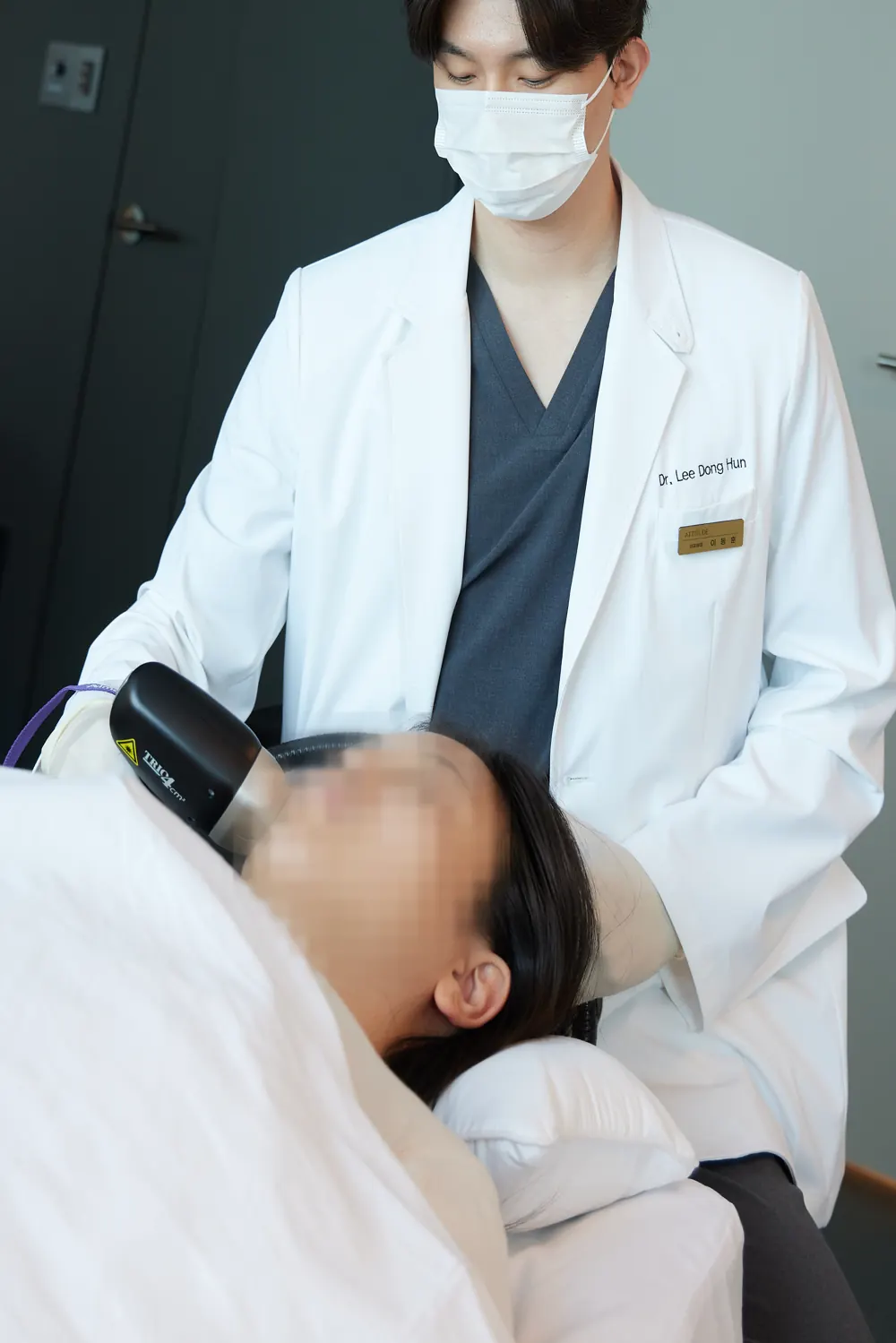
The doctor who consulted you performs the treatment from start to finish in a private treatment room. No one takes over halfway.
“I take injection pain seriously.”
Co-Director Dr. Lee Dong Hun
Many people hesitate over injection treatments because they hurt. So we went back over everything, from the anesthetic to the products used.
Careful numbing, unhurried timingWe allow plenty of time for a special numbing cream to take full effect, and add anesthetic injections for the treatments and areas that need them.
Fine needles, finished quicklyInjection treatments use fine needles, and the doctor finishes them personally in a short time, adjusting along the way by watching how you are doing.
Even the product formulation countsThe same treatment can feel more or less demanding depending on the product, so we take that into account too.
The anesthetic method and whether it is used are decided after an examination, according to the treatment, the area and your condition. How much it hurts varies from person to person.
The treatments used in this combination are skin boosters such as skin booster (hyaluronic acid) and Rejuran (PN), plus skin Botox. Skin Botox is offered in 3cc units for products such as Neurax, Coretox, Zeomin, Allergan, and Dysport, and the skin booster is listed per 1 session. Because the standard unit differs by item, simple comparison is difficult; check the list price and what's included together on the treatments and pricing page (all amounts exclude VAT).
Aftercare and side effects
Soothing Right after treatment, apply cold compresses so swelling doesn't rise. Follow the method instructed by the medical staff.
Moisturizing Use a gentle moisturizer to keep skin from feeling tight. Don't rub if flaking occurs.
Sun protection For 2–3 days after treatment, apply more thoroughly than usual. With a weakened barrier, pigmentation is more likely.
Check progress If marks or bruising last longer than expected or redness spreads, contact the clinic without waiting until the next day.
Common reactions are papules, swelling, tenderness when pressed, and bruising. Papules last a day to a few days, and bruising can last more than a week. Rarely, infection, allergic reaction, or small lumps can occur, and very rarely the injected material can block a blood vessel.
If pain progressively worsens, the injection site turns white, mottled, bluish-gray, or black, or you have vision changes, seek medical care immediately. During pregnancy and breastfeeding, treatment is generally not recommended, because data on the effects of the ingredients on the fetus or infants is not sufficiently established.
FAQ
Can I get skin Botox and a skin booster on the same day?
Whether it's possible depends on your skin condition and the ingredients and dosage used that day. Both involve multiple needle injections, so layering them in the same area creates marks and swelling at once and makes it hard to identify the cause if a reaction occurs. If your skin reddens easily or you bruise for a long time, spacing them by a few days to a few weeks is better for recovery management. If done on the same day, the doctor decides which goes first, and aftercare instructions are adjusted to that order.
How is skin Botox different from regular Botox?
The depth and amount differ. Regular Botox places a relatively larger amount into the muscle layer to reduce muscle movement, while skin Botox places diluted toxin in very small amounts across many points in the superficial skin layer. So the risk of awkward expressions is lower, but the effect is shallower and shorter-lasting. If you're also planning wrinkle Botox in the same period, the total dose should be considered together, so it's good to mention other area treatments during consultation.
When do effects appear and how long do they last?
With a skin booster, moisture shows as swelling subsides a few days after treatment rather than immediately, and collagen-related changes appear gradually over weeks. A single session is limited and temporary, so several sessions are usually done at 2–4 week intervals before moving to maintenance. The reason maintenance periods vary between people is that the rate of collagen production and breakdown differs, influenced by age, UV exposure, and smoking. The maintenance period for skin Botox is explained during consultation based on your skin condition.
How many days after treatment can I wash my face and wear makeup?
Makeup is often possible from the next day once the injection marks have closed. Recovery speed varies between people, so it's more accurate to be guided by your condition on the day of treatment. Wash gently, and avoid saunas, intense exercise, and alcohol on the day. Papules last a day to a few days and bruising can last more than a week, so building that period into your schedule in advance gives peace of mind.
What should I check during consultation when choosing a clinic?
First, ask how many times they've performed this treatment and how much experience they have with your skin tone and age group. Then check expected results, recovery time, risks and alternatives, and how many sessions are needed. The AAD also recommends receiving this information during consultation. For price, look at the standard unit and what's included rather than just the total; compare with the understanding that units differ—skin Botox by 3cc, skin booster per 1 session.
At a glance
Table 2 At a glance
Item
Key point
Can they be done together?
The doctor decides based on skin condition and ingredients·dosage
Difference between the two
Skin booster fills with moisture; skin Botox places toxin shallowly in small amounts
What determines order
Whether the surface is opened, whether marks overlap in the area
Recovery
Papules·swelling a day to a few days; bruising can last more than a week
When to avoid
During pregnancy·breastfeeding, strong UV exposure before marks heal
Next visit
Explained during consultation according to the recommended interval
This article offers general health information. It is not a substitute for diagnosis or treatment based on your own condition, so please talk through your situation with a doctor.