Acne Scars vs. Enlarged Pores: How to Tell Indented Scars from Open Pores
Acne scars and enlarged pores have different causes beneath the skin. Learn how to tell indented scars from open pores, red marks from brown marks, what each treatment targets, and what to check in consultation and recovery. Includes Potenza microneedling and RF microneedling insights.
Written by ATTITUDE Clinic Editorial Team
When you look in the mirror at the spots where acne has been, it's often hard to tell whether it's an indented scar or just an enlarged pore until you touch it. Overhead lighting casts shadows that make pores look sunken, and shallow scars look as small as pores. The two concerns may look similar, but what happens beneath the skin is different, so even the same treatment leads to different results.
The short answer
Indented acne scars are hollows left after inflammation breaks down the pore wall and tissue doesn't fill the space enough. Enlarged pores are a normal structure that looks noticeably larger due to sebum secretion, loss of elasticity, and repeated irritation. Scars are targeted by rebuilding tissue and smoothing texture, while pores are managed by controlling sebum, elasticity, and the pore wall. Red or brown marks are color problems without indentation, so they need a different approach from both.
Both look like holes, but what's happening beneath the skin?
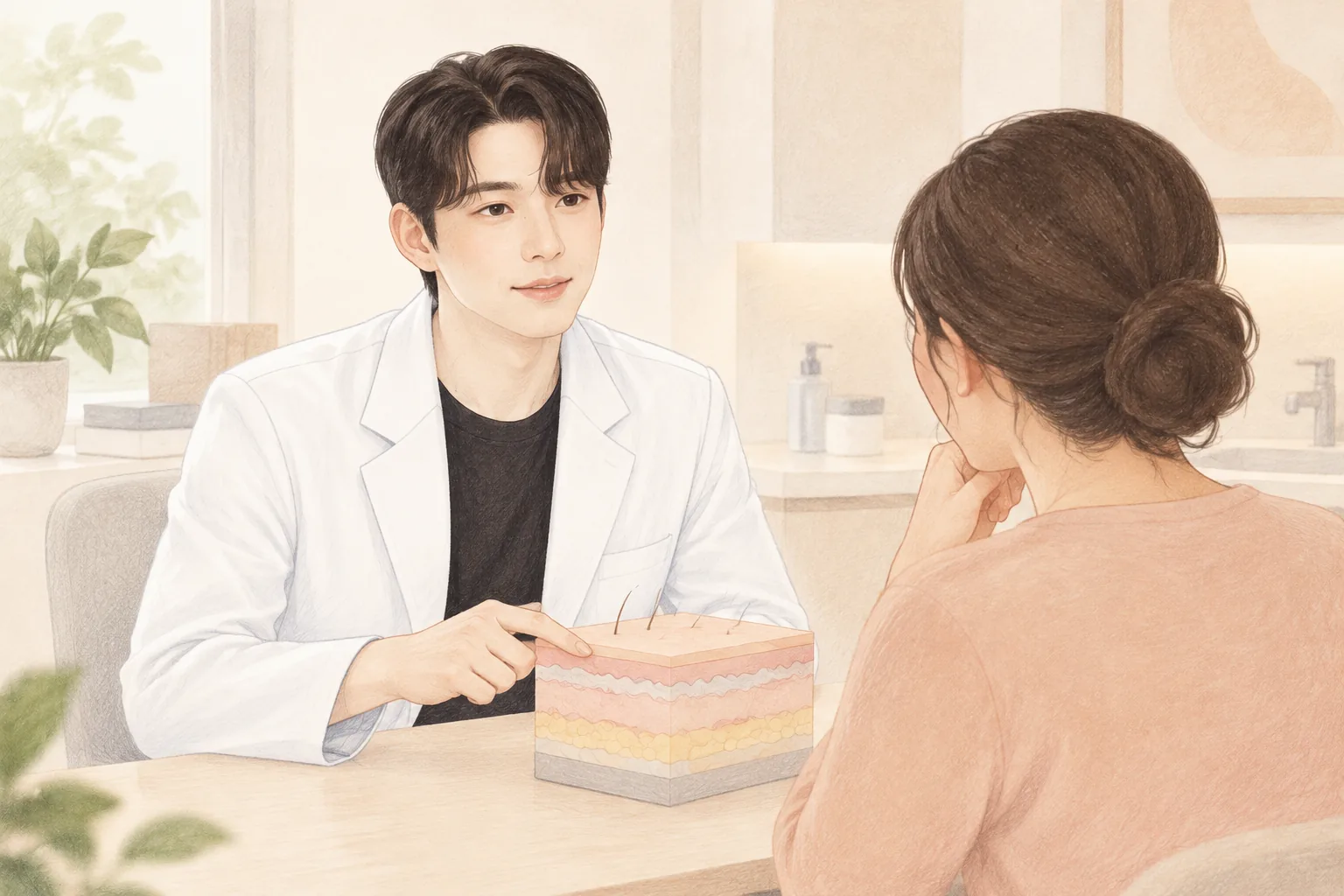
Acne starts inside the pore. Sebum and dead skin cells block the pore opening, and inflammation makes the pore wall swell. According to Cleveland Clinic, acne scars begin when this inflammation breaks down the pore wall. If inflammation is shallow, the mark is shallow and heals quickly, but if inflammatory contents leak into surrounding tissue, deeper scars remain. The skin tries to fill the area with collagen (a protein fiber that supports the skin); if collagen is insufficient, it sinks, and if too much accumulates, it becomes raised.
Pores are different. A pore is a channel through which hair and sebum exit the skin, a structure everyone has. Three factors make this channel look wider: excess sebum physically stretches the opening; as we age, collagen and elasticity decrease, surrounding skin sags, and shadows appear; and repeated damage to the pore wall from acne or extraction leaves it enlarged even after healing. ATTITUDE Clinic column also lists these three reasons for prominent pores.
Light also plays a role in confusing the two. Hollows look darker when they receive light, and enlarged pores look deeper because oxidized sebum appears black. On the same face, it's common to see sebum-type pores on the nose and T-zone, sagging pores on the cheeks, and scar-type pores where acne was squeezed. Breaking it down into scars as lost tissue and pores as widened channels makes the approach much clearer.
Why do some people get scars while others just get enlarged pores?
Not everyone with acne gets scars. Cleveland Clinic notes that about 80% of people aged 11 to 30 experience acne, and one in five of them develop scars. The difference comes from how deep and how often inflammation occurs, and how well the body fills the wound with collagen.
Several factors increase scarring. Deep inflammatory lesions like red, painful papules, pus-filled pustules, and hard nodules beneath the skin are more likely to scar. Squeezing with hands is also risky. The extraction process tears the pore wall and spreads inflammation to adjacent tissue, leaving irregularly shaped pores even after healing. ATTITUDE Clinic column explains that damaged pores remain structured in a way that makes them easily blocked by sebum again.
If acne is still active, there's another step. The American Academy of Dermatology (AAD) recommends controlling acne before starting scar treatment, because new inflammation creates new scars. Whatever treatment you receive, whether acne is calming down is the starting point for results. Age, skin tone, and number of scars are also considered when planning treatment.
How do you tell red marks from indented scars?
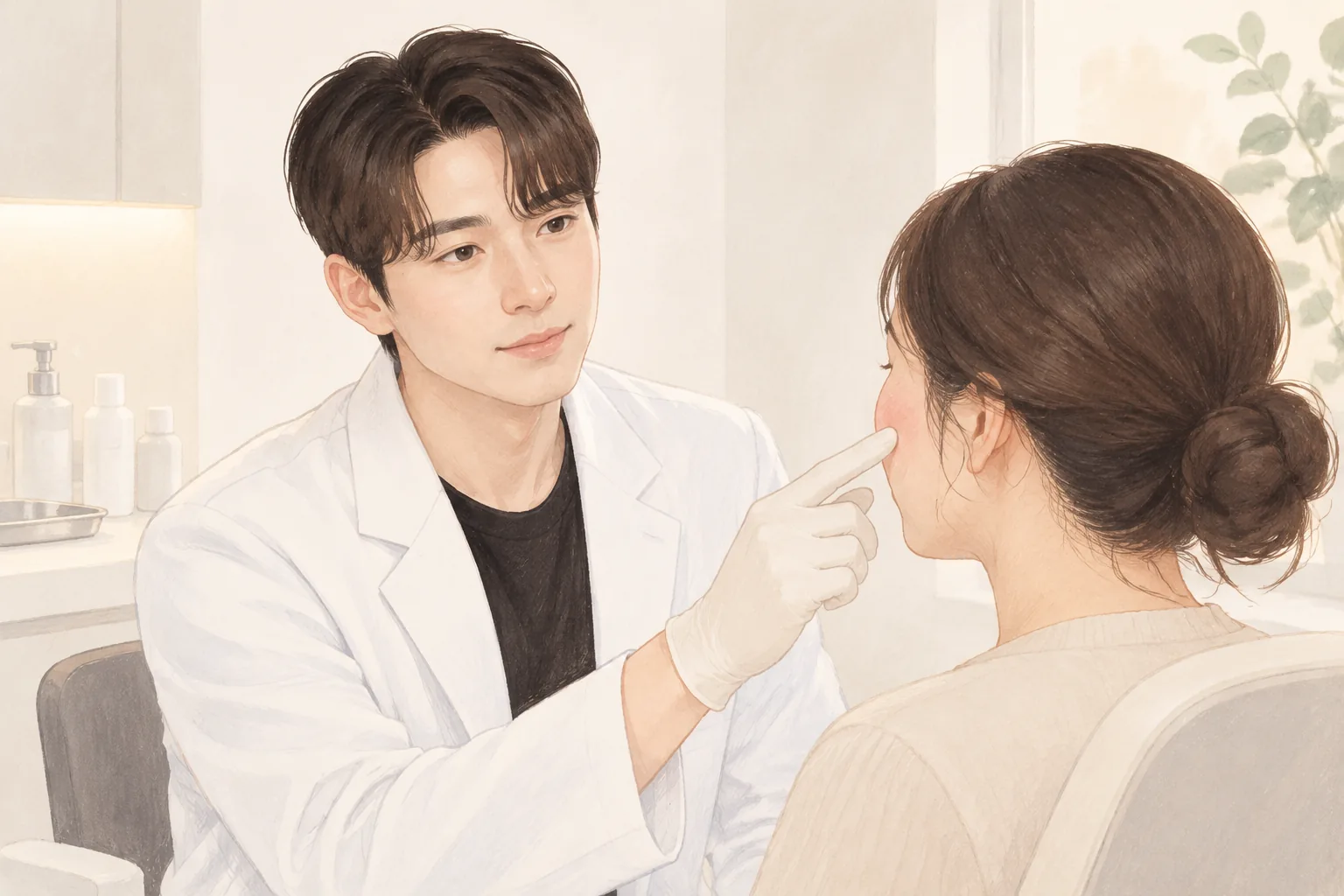
Sometimes fingertips are more accurate than a mirror. Gently sweep over the mark. If it feels like a dip, it's a scar with tissue loss; if it's flat but discolored, it's a mark. Shine a light from the side to reveal hollows better.
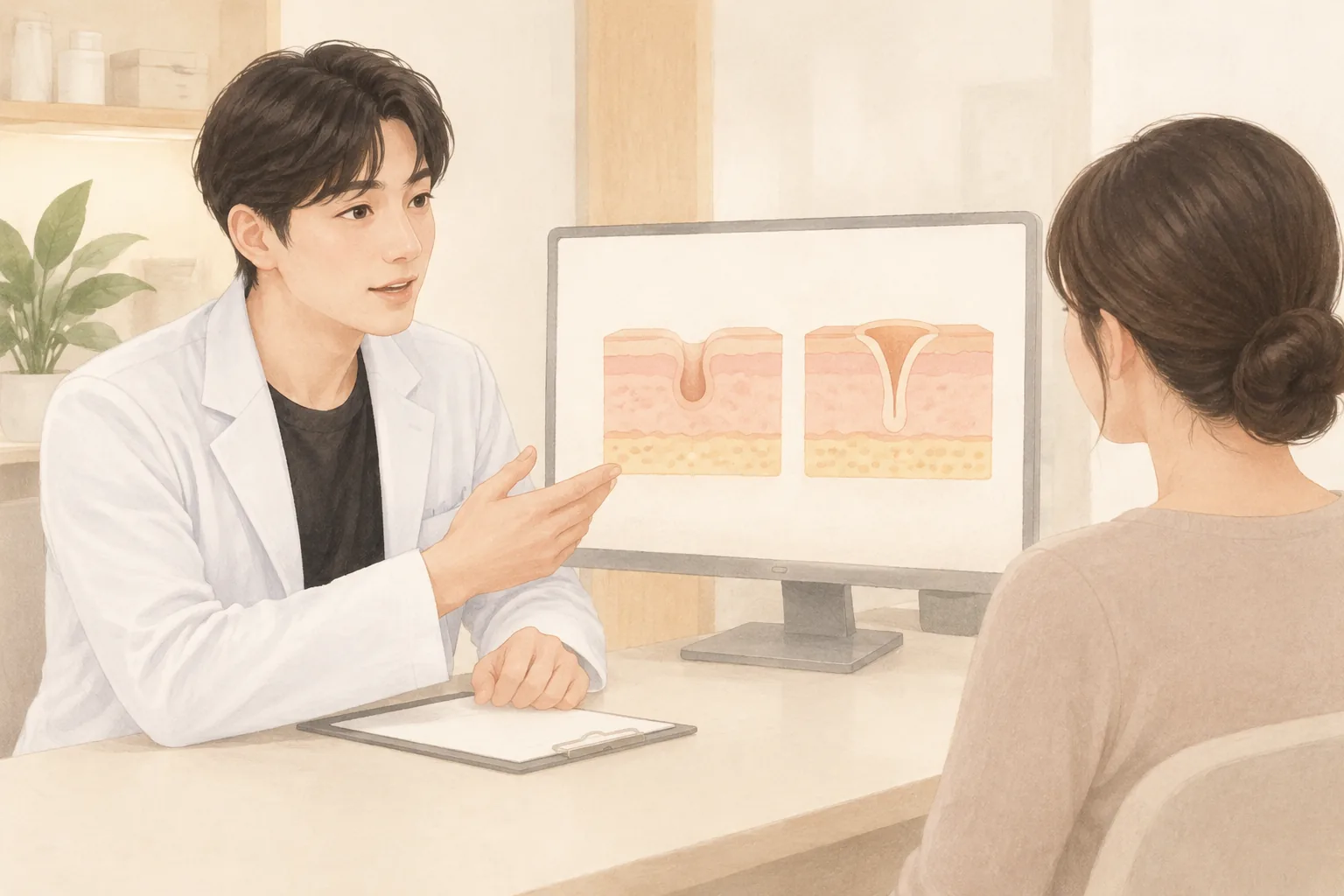
Scars have shapes. Cleveland Clinic classifies indented scars as icepick (wide at top, narrowing like an awl), rolling (gently sloping borders giving a wavy appearance), and boxcar (distinctly bordered rectangular depressions), and separately describes raised hypertrophic and keloid scars. The AAD also notes that icepick and rolling scars are not treated the same way. That's why depth and borders determine treatment intensity and combination.
Marks that are only color fall into two groups. Red marks are closer to expanded blood vessels where inflammation has passed, while brown marks are pigment left after inflammation. Cleveland Clinic's scar severity classification also treats stage 1 as 'red but flat scars' separately. Flat red marks and indented scars have entirely different treatment goals, and tissue-filling treatments do not remove color.
So which treatment targets what?
Before the treatment name, look at where the treatment delivers energy. Based on selective photothermolysis (the principle of targeting energy to a specific target while sparing surrounding tissue) introduced in ATTITUDE Clinic's column, even the same laser targets different things depending on wavelength. That's why pigment-targeting lasers and vessel-targeting lasers are different devices. Laser principles guide
RF microneedling works differently. Fine needles penetrate the dermis and generate heat directly at the desired depth, not light. In ATTITUDE Clinic's treatment guide, Potenza is introduced as a treatment that delivers RF directly to the dermis via fine needles to help improve pores and scars, and erbium fractional is introduced as a micro-peeling treatment to help improve pores and scars. See here. Intensity also varies with needle depth, tip, and mode.
Number of sessions and intervals depend on the goal. Cleveland Clinic states that general microneedling for scars requires about four to six sessions. This describes needling to stimulate collagen broadly; RF microneedling devices deliver heat differently, so these numbers can't be directly applied. Actual sessions are determined by scar type, extent, and skin response.
In summary Indented areas target tissue filling; brown marks target pigment; red marks target blood vessels; enlarged pores target sebum, elasticity, and the pore wall. If multiple concerns overlap, dividing them into steps rather than doing everything at once reduces skin burden.
In these situations
If a wedding or photo shoot is weeks away
Treatments targeting indented scars may leave redness and crusts for a few days, so count backwards from the date. Scheduling a first-time treatment right before a wedding overlaps recovery with your plans. Tell us the date at consultation and we'll adjust intensity and timing accordingly.
If you want a consultation near Sinsa Station with a short stay
When your stay is limited, aftercare is the biggest variable. Tell us your return date and next schedule, and we'll plan within recovery time to avoid excessive intensity. If consultation and treatment are done on the same day near Sinsa Station, getting recovery instructions in writing helps after you return home.
If your skin is sensitive and easily reddened
Some people stay red longer even with the same settings. If you've had sensitive skin after previous treatments, be sure to mention it. We adjust by lowering intensity or increasing intervals.
If you want to manage scars and pores over time
Dividing sessions with recovery intervals is less taxing on the skin than a single strong session. We also decide at consultation whether to address scars first or manage sebum and pores first.
Before consultation, please tell us Recent sun exposure, medications you're taking, exfoliating ingredients you're using, any experience of sensitivity after previous treatments, acne squeezing habits, and important dates like weddings or photo shoots. Even for the same treatment, timing and settings vary based on this information.
How ATTITUDE Clinic proceeds
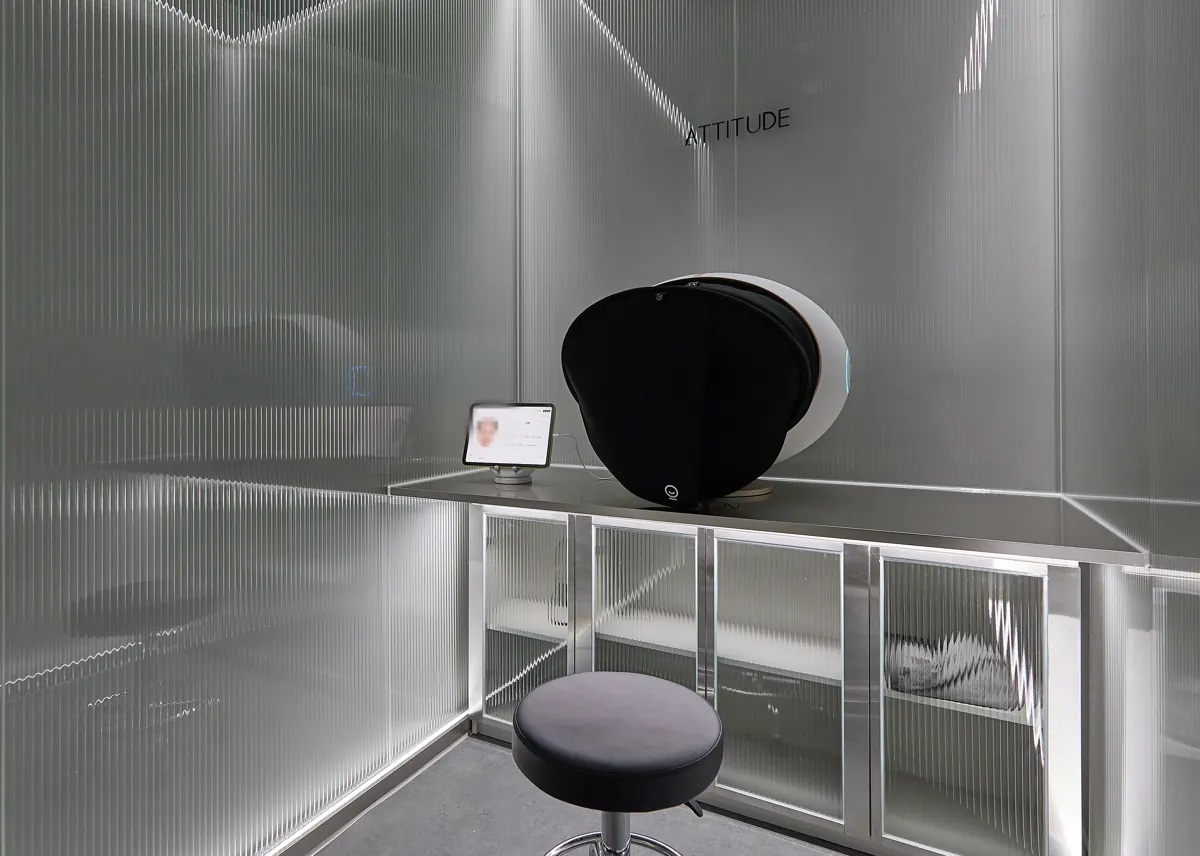
Record with AI skin analysis We organize skin condition, pores, and mark distribution with photos and records. The analysis tool records and organizes information to assist consultation and is not a medical diagnosis; the doctor makes the judgment.
Doctor consultation for classification and cause interpretation We add acne history, squeezing habits, current medications, and schedule to the analysis records to distinguish indented scars from enlarged pores and check for color marks.
Doctor-performed treatment Based on the classification, the doctor combines devices such as Potenza, erbium fractional, PicoPlus, and VBeam as needed and performs the treatment personally. If pain is a concern, topical anesthesia reduces discomfort.
Recovery and follow-up We explain in advance how much redness, heat, and crusting to expect right after treatment, and set the next visit based on recovery.
Four steps your doctor sees to in person
From the diagnostic device to the treatment bed, the doctor you first consult takes care of everything.
01
Precision diagnosis
In a private diagnosis room the whole face is photographed, recording even skin conditions that are hard to see with the eye.
02
Skin analysis
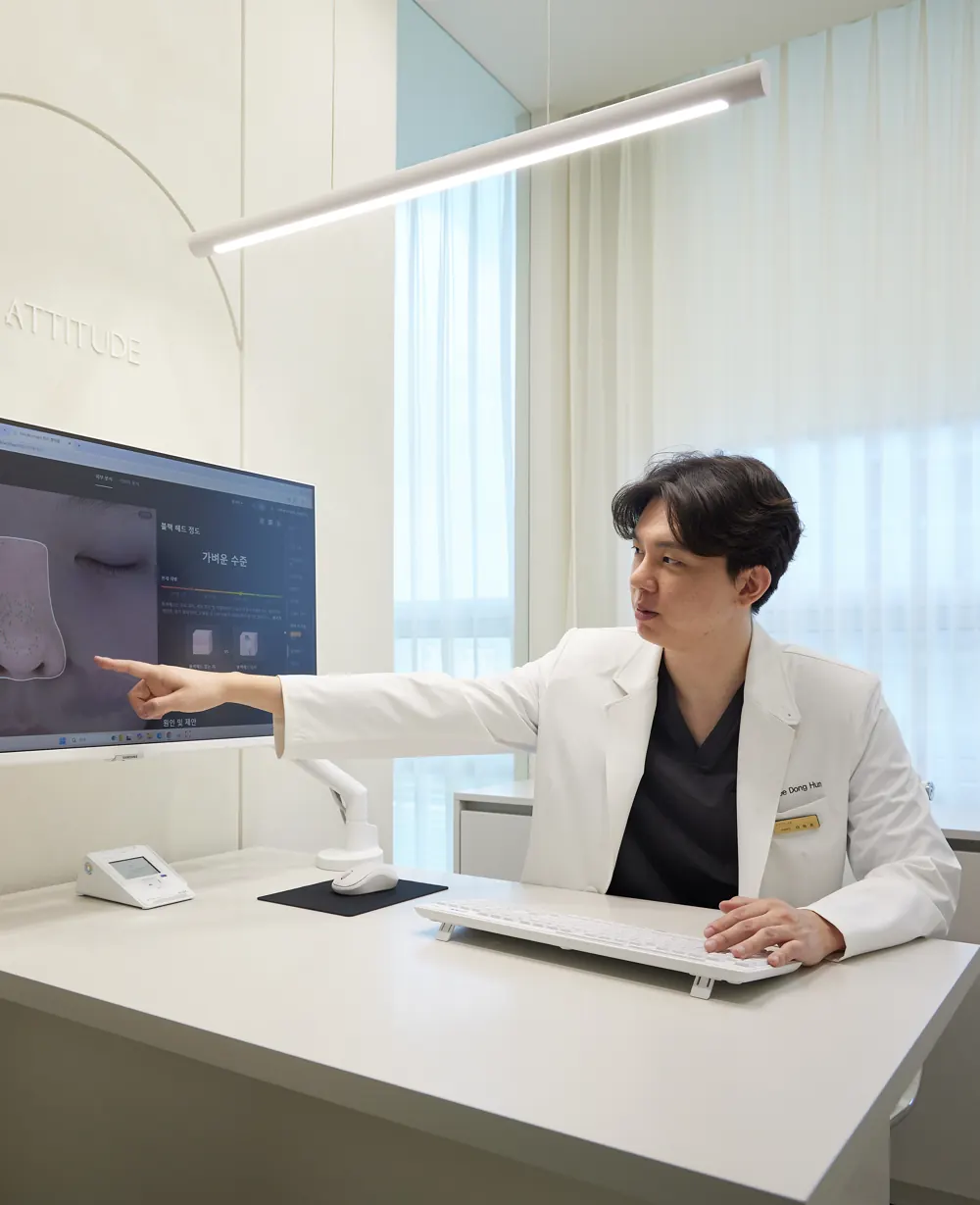
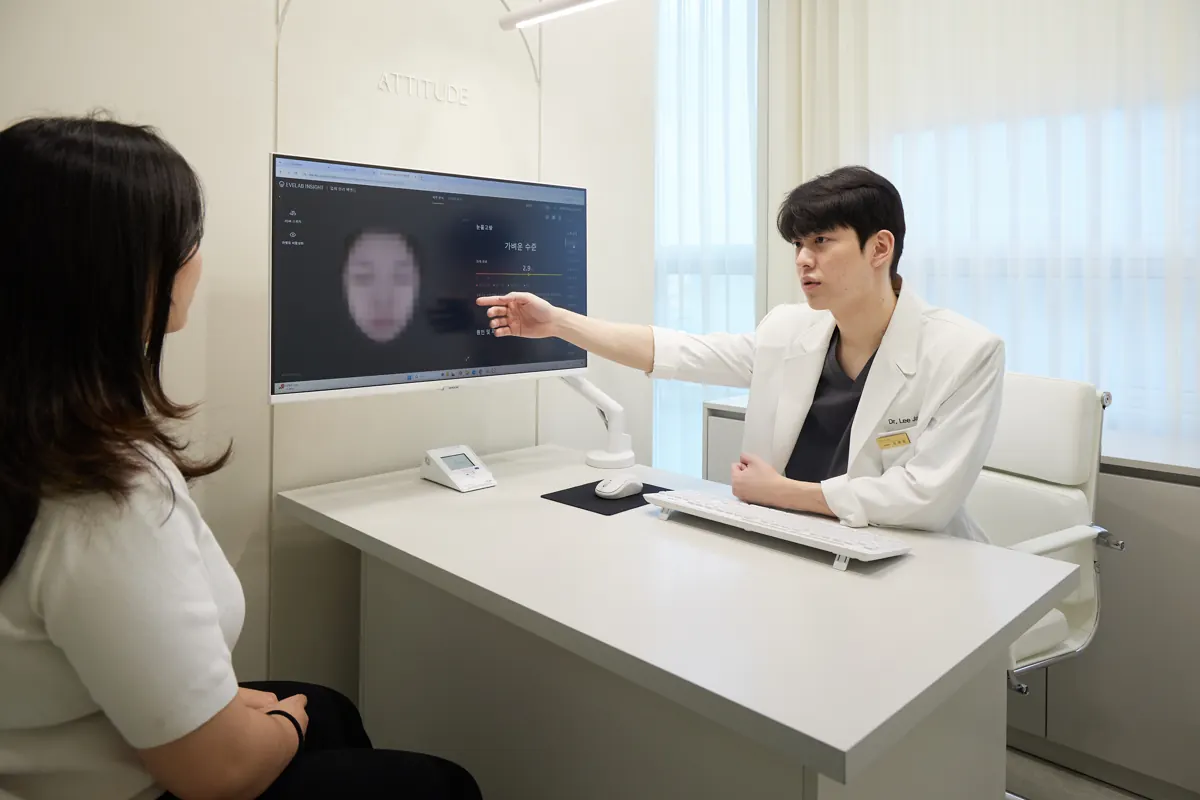
The doctor goes through your pore, pigmentation, wrinkle and firmness results with you on screen and explains what comes first.
03
One-to-one design
With your skin, the balance of your face, the change you want and your schedule in view, you decide the treatment and its extent together.
04
Treatment by your doctor
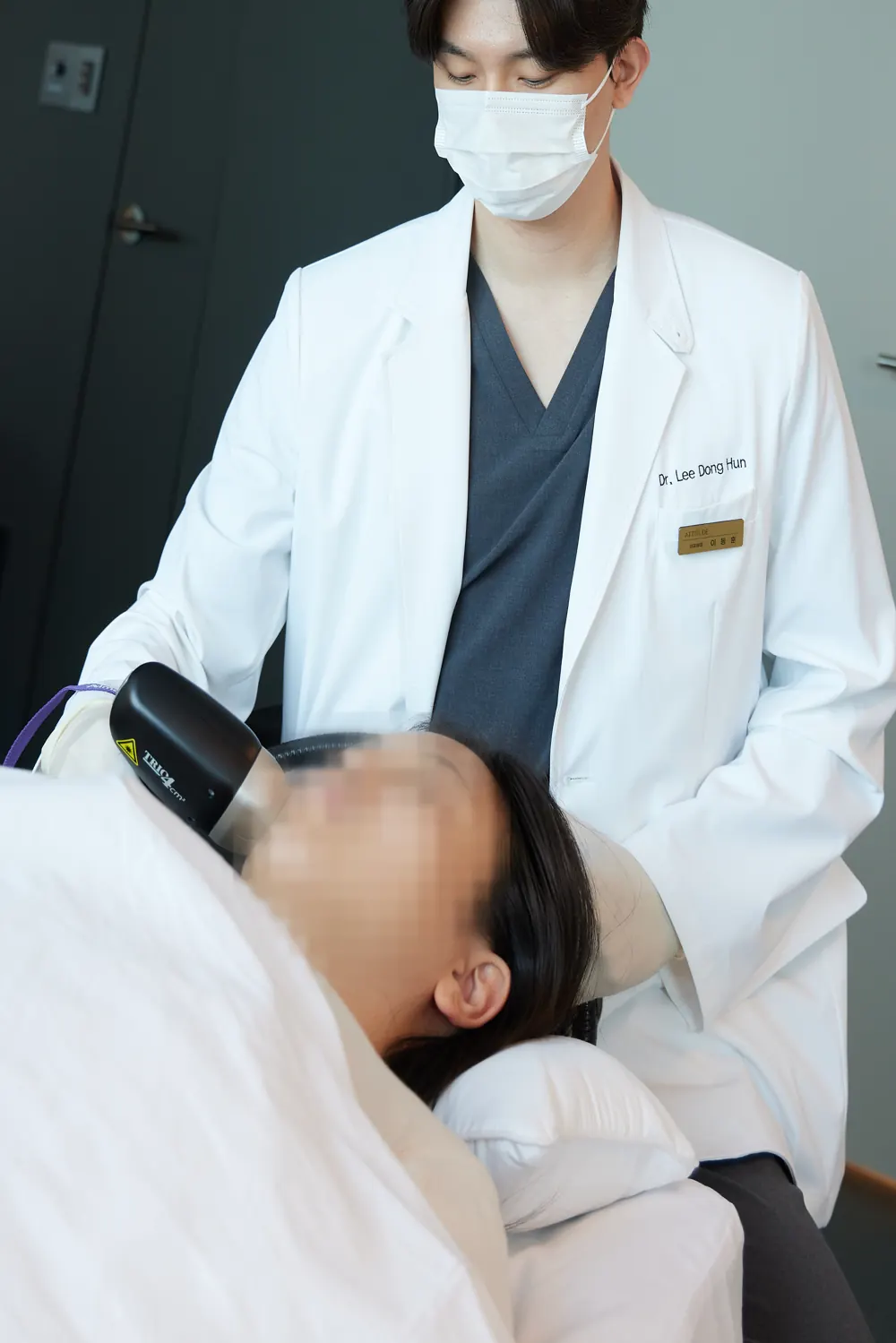
The doctor who consulted you performs the treatment from start to finish in a private treatment room. No one takes over halfway.
“I take injection pain seriously.”
Co-Director Dr. Lee Dong Hun
Many people hesitate over injection treatments because they hurt. So we went back over everything, from the anesthetic to the products used.
Careful numbing, unhurried timingWe allow plenty of time for a special numbing cream to take full effect, and add anesthetic injections for the treatments and areas that need them.
Fine needles, finished quicklyInjection treatments use fine needles, and the doctor finishes them personally in a short time, adjusting along the way by watching how you are doing.
Even the product formulation countsThe same treatment can feel more or less demanding depending on the product, so we take that into account too.
The anesthetic method and whether it is used are decided after an examination, according to the treatment, the area and your condition. How much it hurts varies from person to person.
ATTITUDE Clinic follows the principles of genuine products, proper dosage, and fair pricing. We do not overuse sessions or intensity for quick results, and we perform only what is needed for your classification. Treatment prices are listed in the Treatments & Pricing guide excluding VAT.
Aftercare and side effects
Soothing On the day of treatment, cleanse gently and avoid saunas, alcohol, and hot water. If you feel heat, cool compresses help.
Moisturizing Dryness makes crusts lift early and increases irritation. Apply moisturizer thinly and often, and do not pick off crusts with your hands.
Sun protection Healing skin is sensitive to UV and prone to pigmentation. Use sunscreen when going out and reduce midday outings.
Follow-up We monitor how quickly redness fades and changes in mark color. If recovery is slower than expected, we adjust settings at the next visit.
Common reactions include redness, swelling, dot-like marks, dryness, and thin crusts. After Potenza or erbium laser, these usually subside within a few days to 1 week. Temporary pigmentation or breakouts may occur, and rarely burns, infection, or scarring. Injectable treatments can cause bruising and swelling, and rarely nodules, infection, or allergic reactions.
There are signs to contact us without waiting. If blisters, oozing, pus, or worsening pain occur, if redness doesn't decrease beyond 1 week, or if mark color newly darkens, don't wait for your next appointment—get it checked.
Frequently asked questions
Do indented scars and enlarged pores need different treatments?
Because goals differ, combinations differ. Indented scars are approached by delivering heat or stimulation to the dermis to build collagen, while enlarged pores are managed by controlling sebum and elasticity and refining the pore wall. However, in real faces the two often overlap, so one treatment may target both. The proportion is decided at consultation after assessing scar depth and pore type.
Can I get scar treatment while acne is still active?
Calming inflammation comes first. The AAD advises controlling acne before starting scar treatment and including management to prevent new acne. If inflammation continues, new scars form next to treated areas. Once acne is controlled, scar and pore treatment results are more predictable.
Do red and brown marks go away with the same treatment?
Causes differ, so approaches differ. Red marks involve expanded blood vessels, brown marks involve residual pigment, so the targeting lasers differ. Since tissue isn't lost as in indented scars, color-focused treatments are considered before tissue-filling ones. If it's unclear whether it's a mark or scar, we assess fingertip texture and skin condition at consultation.
Can pores be completely eliminated with treatment?
Pores are a normal structure, so elimination is hard to set as a goal. By controlling sebum and helping collagen regeneration to manage surrounding elasticity, improvement toward less prominence can be expected. However, pore number and innate size are largely genetic, so the range of change varies. Setting the goal as 'make less visible' rather than 'eliminate' reduces the gap between expectations and results.
What should I ask first in a pore/scar consultation?
Comparing only prices puts different conditions side by side. Even for the same pore/scar category, pricing varies by device and tip used, number of sessions, area covered, and whether VAT is included. At consultation, check whether they first identify whether your concern is pigment, blood vessels, or tissue, whether they tell you which treatments you don't need, and whether they explain side effects and recovery time. Whether they can follow up if you have discomfort after treatment is also a criterion.
At a glance
Table 2 At a glance
Item
Key point
Indented scars
Depressions from tissue loss when inflammation breaks the pore wall; shapes include icepick, rolling, boxcar
Enlarged pores
Normal structure made prominent by sebum, loss of elasticity, repeated irritation
Color-only marks
Red marks from blood vessels, brown marks from pigment
This article offers general health information. It is not a substitute for diagnosis or treatment based on your own condition, so please talk through your situation with a doctor.