
04 — Injectables
Rejuran
A PN skin booster that supports the skin's own repair

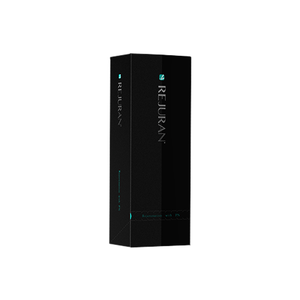
Rejuran places PN (polynucleotides) purified from salmon into the dermis to support an environment in which the skin repairs itself. It is a common choice for texture, fine lines and thinning skin, and comes as Healer, HB, S and Eye for different goals.
From KRW 160,000 · excl. VAT
- Method
- PN skin booster injection
- Treatment time
- About 20–30 min
- Numbing
- Numbing cream
- Back to routine
- Marks for about 1–3 days
What it is
What is Rejuran?
Rejuran is a PN injectable from PharmaResearch. Rejuran Healer is for overall texture and firmness, Rejuran HB is a formulation designed to be more comfortable, Rejuran S is for depressed scars and Rejuran Eye is for the thin skin around the eyes.
Rejuran HB for the lips is offered separately for that delicate area. Product and amount are chosen after examining your skin and areas of concern.
How it works
How it works

PN placed in the dermis is known to support an environment in which skin cells recover and make collagen. Rather than filling volume like a filler, it strengthens the skin's base, so changes appear over several weeks and it is usually planned as a course.
Is it right for you
Is it right for you?
A good fit when
- Your skin has become thinner with more fine lines
- Your texture is rough and your skin feels run-down
- You want to strengthen the skin alongside lasers or lifts
- You want care for thin areas such as around the eyes or lips
Talk to your doctor first if
- You are allergic to salmon or fish-derived ingredients
- You are pregnant or breastfeeding
- There is inflammation or active acne in the area
- You take medication that makes you bleed easily
Pricing
Rejuran pricing
Rejuran HealerRejuran Healer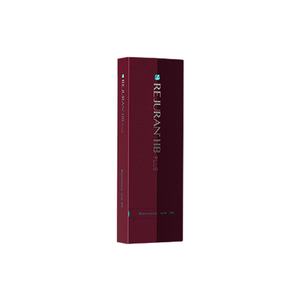 Rejuran HBRejuran HBRejuran HB — lipsRejuran HB LipRejuran SRejuran S
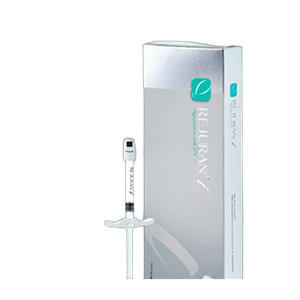 Rejuran EyeRejuran i
All prices exclude VAT.
The process
How a visit works
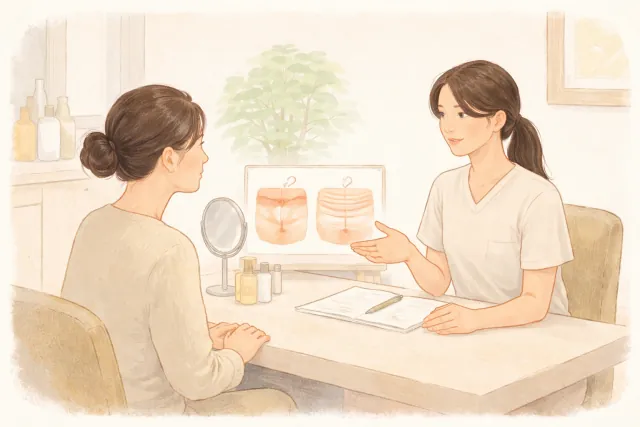
Consultation & AI skin analysis
An AI skin analysis records where your skin is today; one of our co-directors then examines you and decides whether to treat, how strongly and where.
Preparation
After cleansing, numbing cream is applied and left to work fully.
Treatment
A fine needle places small amounts densely in the dermis. It can feel prickly and achy.
After your visit
After a calming finish you go home with instructions while the marks settle.
Aftercare
Recovery & aftercare
- Small raised marks and redness usually settle within one to three days.
- Bruising is occasional and fades in about a week.
- On the day, avoid rubbing the face hard, saunas and heavy drinking.
Sessions & spacing
A course of about three sessions two to four weeks apart is usual, with maintenance intervals set afterwards according to your skin.
Your doctors
Seen by our two co-directors
At ATTITUDE, co-directors Dr. Lee Jae Min and Dr. Lee Dong Hun examine you themselves and decide with you what is needed, what is not, and in what order.

Dr. Lee Jae Min
Co-Director
Dankook University College of Medicine
Korean Aesthetic Surgery and Laser Society (ASLS) · Korean Association for Laser Dermatology and Trichology (KALDAT) · Korean Academy of Facelift & Contouring (KAFC)

Dr. Lee Dong Hun
Co-Director
Kyungpook National University School of Medicine
Korean Aesthetic Surgery and Laser Society (ASLS) · Korean Association for Laser Dermatology and Trichology (KALDAT) · Korean Academy of Facelift & Contouring (KAFC)
Questions
Frequently asked questions
When will I see results from Rejuran?
Texture changes appear over several weeks and are best judged after completing a course. Results vary.
How do Healer and HB differ?
Both are PN-based, but the formulation and composition differ. We choose after considering your comfort and areas of concern.
How long do the marks last?
Small raised marks appear at the injection points and usually settle within one to three days.
Is it the same as a salmon DNA injection?
Rejuran is PN, while products commonly called salmon injections are PDRN — different substances. We choose or combine them according to your goals.
Journal
Further reading from our Journal
Explore